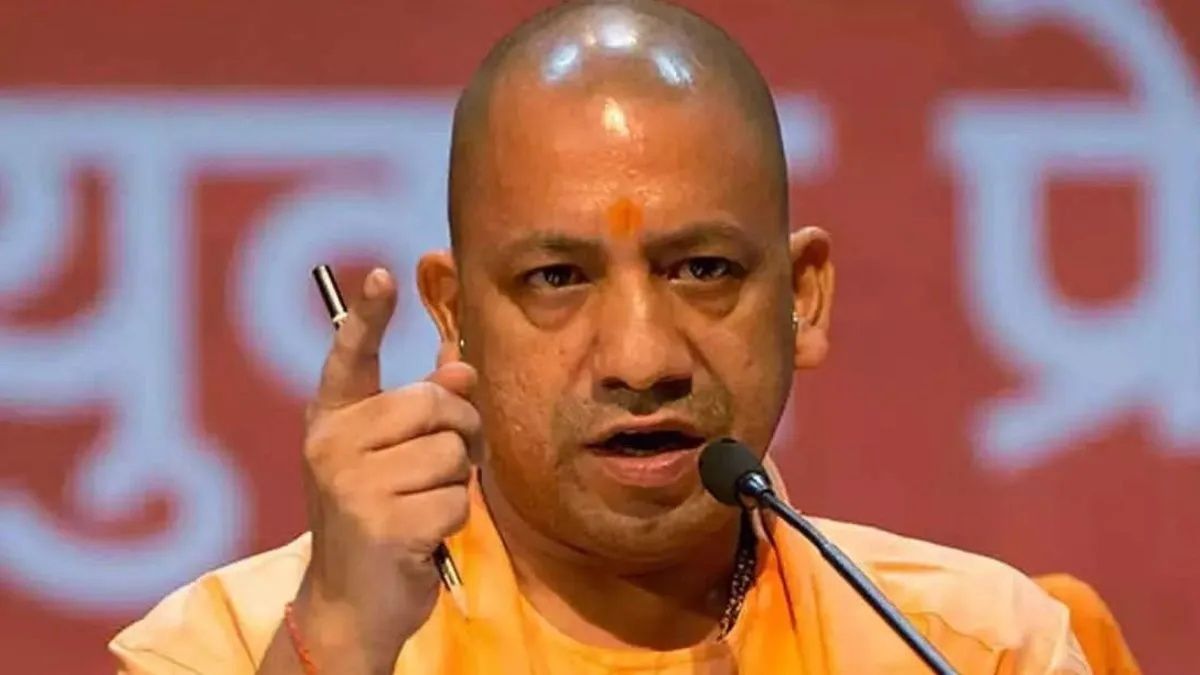
Uttar Pradesh Chief Minister Yogi Adityanath has declared that those who interfere with the faith of ordinary people will face stern consequences, following the registration of a first information report in the high-profile donation theft case involving the Shri Ram Janmabhoomi Teerth Kshetra temple complex in Ayodhya. Speaking at a public event in Deoria on Friday, where he presided over the foundation stone-laying ceremony for various development initiatives, the Chief Minister emphasised that the state government would swiftly implement recommendations made by the special investigation team tasked with examining the matter.
The donation case at the Ayodhya temple has drawn considerable attention across India, particularly given the religious and political significance of the site. The newly constructed Ram Mandir, inaugurated in 2024, stands as one of the most important Hindu pilgrimage destinations in India and a focal point of national religious sentiment. For Malaysian readers familiar with the political economy of South Asian religious sites and their management, this case underscores the complexities of administering large-scale religious institutions where substantial public donations must be safeguarded while maintaining community trust.
In his address, Adityanath characterised the temple not merely as a place of worship but as a symbol representing the collective faith of India and the broader philosophical framework of Sanatan Dharma. He urged both the general public and devoted Ram devotees to refrain from questioning Ayodhya's significance or casting doubts on the sanctity of Lord Ram. The Chief Minister's framing of the investigation reflects an attempt to position government action as protective of public faith rather than investigative in nature, a rhetorical stance that carries implications for how institutional accountability and religious sentiment intersect in Indian governance.
Yogi Adityanath referenced his earlier visit to Ayodhya on June 19, during which he had already cautioned against making baseless allegations regarding the temple's operations. His statement that action would commence immediately upon receiving the special investigation team's report signals the state government's intention to demonstrate decisiveness in addressing the matter. This approach seeks to preempt potential criticism that the administration might be slow or reluctant to investigate concerns affecting such a prominent religious institution.
The Chief Minister directed pointed criticism at opposition political parties, particularly the Indian National Congress and the Samajwadi Party, characterising their representatives and supporters as lacking genuine concern for people's faith. Adityanath recalled Congress's historical opposition to the Ram Janmabhoomi movement and the temple's construction, noting that the party had fielded legal challenges and deployed lawyers to contest the project in court. He also referenced the Samajwadi Party's governance during previous terms, suggesting that some restrictions imposed on religious processions and celebrations reflected an anti-faith stance.
In his most pointed remarks, the Chief Minister enumerated historical incidents he attributed to mismanagement by these opposition parties, including alleged firing on Ram chant participants, restrictions on Krishna Janmotsav celebrations, bans on the Kanwar Yatra pilgrimage, and communal tensions during Durga Puja festivities. He specifically mentioned the Lar riot—a significant communal incident in Uttar Pradesh's history—as evidence of the opposition's failure to protect religious sentiments. These references serve a dual purpose: they reinforce the ruling Bharatiya Janata Party's electoral narrative of being the custodian of Hindu interests while simultaneously deflecting scrutiny from the current donation case by suggesting that opposition parties have no moral standing to raise concerns.
Yogi Adityanath's invocation of what the BJP terms the "double engine government"—referring to both state and central administrations run by his party—suggests that his administration views itself as fundamentally different from its predecessors. He claimed that the current government has halted the alleged plunder and corruption associated with previous Samajwadi Party rule, and implied that opposition parties now resort to unfounded allegations against Ram devotees and Ayodhya itself out of frustration at losing power and the resulting inability to continue their earlier practices.
The Chief Minister's appeal to Ram devotees carries significant weight within Uttar Pradesh's political culture, where Hindu religious sentiment remains a powerful mobilising force. By framing potential critics as lacking authentic faith or having hidden agendas, Adityanath attempts to create social and political pressure against those who might demand greater transparency in the temple's donation management. His warning that people should "not test the patience of Ram devotees" carries an implicit threat that public criticism of the institution could provoke backlash from religious constituencies.
Simultaneously, Adityanath's instruction to opposition parties to either present concrete evidence or cease making allegations reflects an awareness that the donation case raises legitimate questions about institutional accountability. His directive that political statements should pause while the investigation proceeds suggests recognition that heightened political rhetoric could complicate the investigation itself. This balancing act—combining rhetorical deflection with procedural reassurance—represents a strategy to manage a sensitive situation that touches on both public finances and religious sentiment.
For observers in Malaysia and Southeast Asia more broadly, this case illustrates how religious institutions in South Asia navigate the intersection of public trust, financial management, and political contestation. The Ram Mandir's prominence means that any suggestion of mismanagement affects not only institutional credibility but also broader questions about how major religious sites should be governed. Adityanath's emphasis on swift action and adherence to investigation team recommendations signals an awareness that institutional legitimacy requires demonstrated accountability, even while his broader rhetoric attempts to frame such accountability as secondary to protecting public faith.
The donation case also reflects broader patterns of temple management across India, where the combination of immense public generosity, pilgrimage tourism, and complex administrative structures creates challenges in ensuring transparent fund handling. How the Ayodhya temple administration addresses these questions will likely influence expectations and practices at other major pilgrimage sites across India and potentially influence discussions about religious institution governance more widely in the region.
Yogi Adityanath's statements ultimately serve multiple audiences simultaneously. To the ruling party's political base, they reaffirm commitment to protecting Hindu interests and institutions. To secular critics and opposition parties, they assert that the government is taking the matter seriously. To ordinary devotees, they promise that their trust and donations will be safeguarded. Whether this multi-directional messaging can maintain public confidence in both the investigation and the institution itself will depend largely on the findings and actions that follow from the special investigation team's recommendations.

