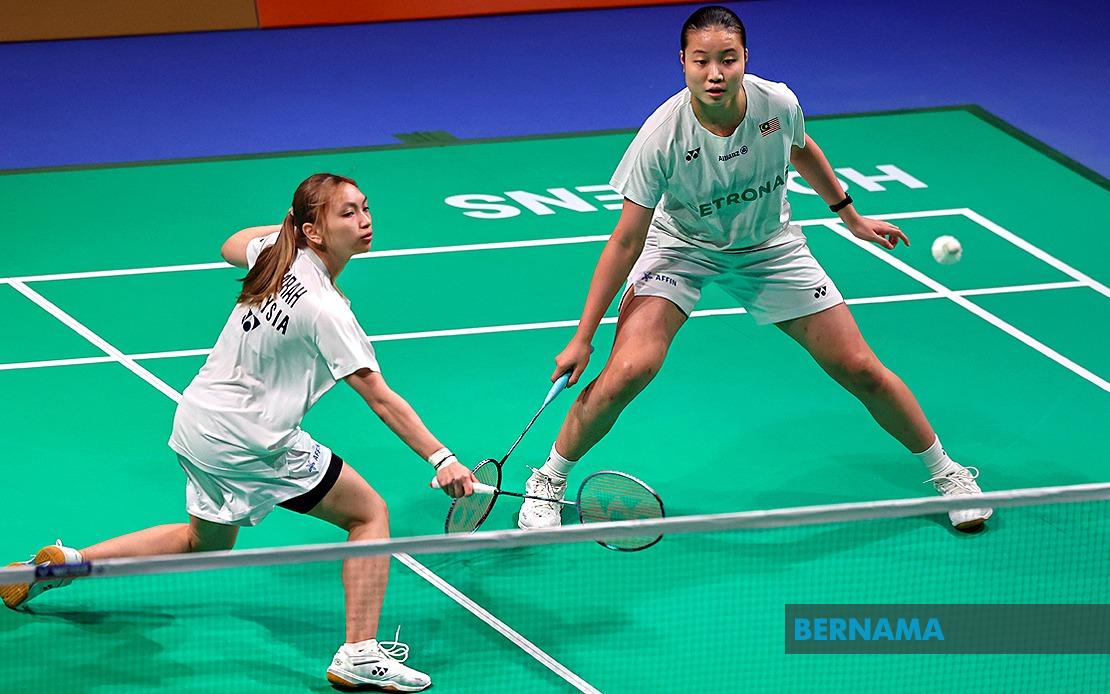
Teenage sensation Noraqilah Maisarah Ramdan and her doubles partner Low Zi Yu are charting a deliberate course through competitive badminton, rejecting the temptation to chase unrealistic milestones and instead committing to incremental progress that builds on their emerging strength at the international level. The 18-year-old Malaysian player articulated this philosophy during a recent training session in Kuala Lumpur, explaining that the partnership has opted for a step-by-step methodology as they map out their professional trajectory in women's doubles.
The pair's current ranking of 70th in the world standings serves as their launching point, and they have identified penetrating the top 50 as their immediate objective. This deliberate targeting reflects a maturity of approach uncommon among young athletes in the sport, prioritising sustainable growth over the pursuit of premature breakthroughs that might strain the partnership or invite overambitious commitments before the foundation is solid. Rather than fixating on distant aspirations, Noraqilah emphasised that consolidating their position within reachable boundaries allows them to build confidence and tactical cohesion.
While the top 32 threshold represents a significant milestone in professional badminton—unlocking access to premium international tournaments and higher-calibre competition—both players recognise that reaching that echelon requires time and purposeful development. The distinction between the top 50 and top 32 carries substantial implications for tournament entries and exposure, yet Noraqilah demonstrated prudent restraint in her commentary, underscoring that rushing toward that designation without proper groundwork could prove counterproductive. The pathway they have embraced mirrors the philosophy of many successful sporting partnerships: master each tier before ascending to the next.
Evidence of their upward trajectory materialised recently when Noraqilah and Zi Yu delivered a striking upset at the Australian Open, dismantling Taiwan's Hsieh Pei Shan and Hung En Tzu, a pair ranked eighth globally. This scalp represents far more than a single victory; it signals that the Malaysian combination has begun closing the gap to the elite tier of women's doubles players. The significance of defeating a top-ten partnership cannot be understated, particularly for competitors still establishing their credentials on the international circuit.
Noraqilah's reflection on this achievement illuminated the progress the partnership has made in a compressed timeframe. She contrasted their current capability with their performance from approximately two months prior, when encounters with Taiwanese opponents typically resulted in one-sided matches where Malaysia could barely muster sustained pressure. The transformation to competitive parity within such a brief window suggests that the coaching, physical conditioning, and tactical development have yielded tangible returns. This rapid acceleration hints at the potential embedded within the partnership, provided the trajectory continues uninterrupted.
The psychological dimension of Noraqilah's approach cannot be overlooked. By anchoring expectations to achievable milestones, she and Zi Yu protect themselves from the demoralising impact of shortfalls while maintaining momentum through accumulating positive results. Young athletes in high-profile sports frequently struggle with the disparity between aspiration and reality, leading to burnout or loss of confidence. The defensive realism that Noraqilah articulated suggests either coaching wisdom imparted by their support team or innate maturity about the long view required for a sustainable international career.
For Malaysian badminton, the emergence of competitive young partnerships in women's doubles carries strategic importance. The sport has long been a source of national pride, and replenishing the pipeline with talented duos ensures continued relevance in major tournaments. Noraqilah and Zi Yu's measured ambition represents the kind of sustained development that builds programs rather than relying on isolated heroic performances. Their willingness to embrace gradual advancement creates conditions for deeper integration into top-tier competition.
The Australian Open scalp over Hsieh and Hung suggests that tactical adjustments have been implemented effectively. Rather than attempting to match the experience and technical sophistication of established pairs through sheer athleticism, Noraqilah and Zi Yu appear to have refined their game to exploit specific weaknesses or neutralise particular strengths. This analytical approach to improvement distinguishes promising players from those who plateau early in their international careers.
Looking forward, the pathway outlined by Noraqilah contains implicit intermediate steps. Achieving the top 50 will require sustained competitiveness across multiple tournaments and geographical venues, testing their consistency beyond single impressive performances. The mental resilience demanded by this journey—maintaining composure during inevitable reversals while pressing forward through months of grinding progression—separates genuinely elite athletes from those whose potential remains unfulfilled. That Noraqilah and Zi Yu demonstrate awareness of these realities at such a young age augurs well for their prospects.
The partnership's cautious optimism also reflects realistic assessment of the competitive landscape. Women's doubles badminton remains dominated by established pairings with years of tournament experience, refined tactical systems, and substantial institutional support. Malaysian players must navigate this formidable terrain while building their own foundations, making the stepwise approach not merely prudent but essential. By setting targets at the top 50 and demonstrating measurable progress against world-class opponents, Noraqilah and Zi Yu have articulated a strategy grounded in both aspiration and pragmatism—qualities that typically distinguish those who sustain careers at the elite level from those whose performances flicker briefly before fading.

