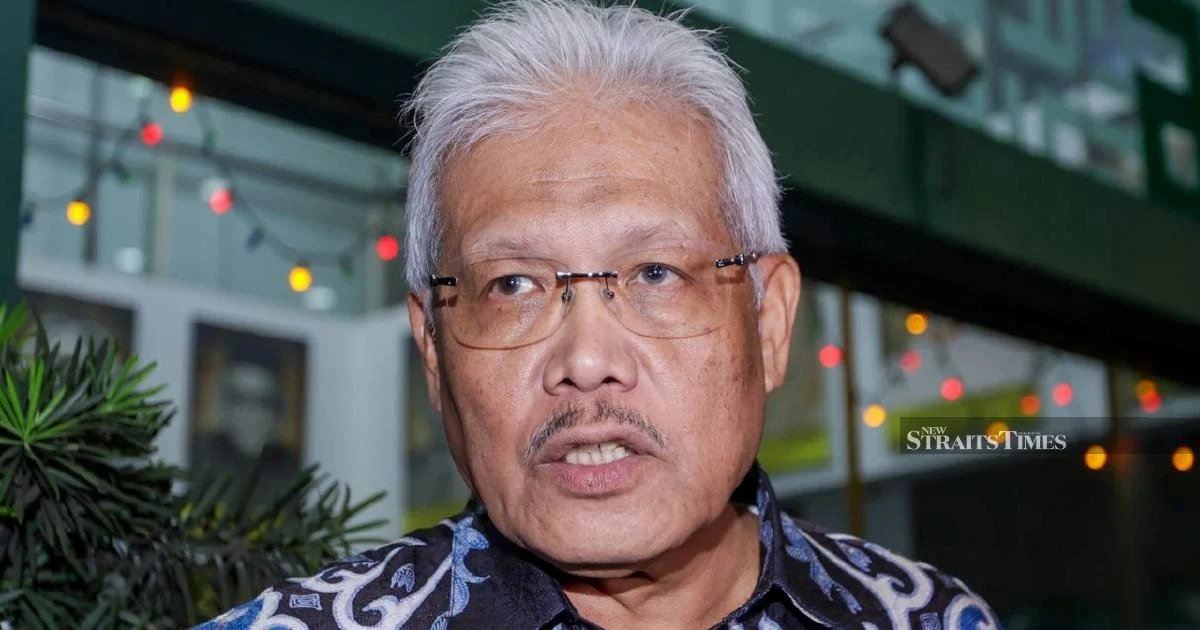
The government has confirmed that a formal notification designating Datuk Seri Hamzah Zainudin as opposition leader will be lodged with the Dewan Rakyat Speaker before parliament reconvenes. This procedural step represents a significant development in Malaysia's parliamentary architecture, establishing the official status of the opposition's principal representative within the legislative chamber.
The filing of this notice constitutes a formal acknowledgement of the opposition bloc's leadership structure and ensures that parliamentary protocols recognise Hamzah's role with all attendant privileges and responsibilities. Such formal notification is customary practice within Westminster-derived systems like Malaysia's, serving as the official record of opposition leadership and enabling the Speaker's office to coordinate parliamentary business accordingly.
Hamzah's appointment carries particular significance given the current political configuration in parliament. His designation formalises the opposition's institutional presence and establishes a clear channel through which the legislative opposition can engage with the government on matters ranging from parliamentary procedure to substantive policy debates. The timing of this notification, scheduled before the next sitting, demonstrates administrative readiness and adherence to parliamentary conventions.
The opposition leadership role carries considerable constitutional weight within Malaysia's system. The opposition leader traditionally serves as the principal spokesperson for non-government parliamentary members, orchestrates opposition parliamentary strategy, and holds significant influence over the legislative agenda. Recognition of this position through formal notification legitimises these functions and ensures they operate within the established framework of parliamentary governance.
From a practical perspective, the formal announcement clarifies succession and stability within the opposition ranks. In Malaysia's current political climate, where coalitions frequently undergo reconfiguration and party alignments shift, establishing clear leadership hierarchies through official channels provides certainty to both government and non-government parliamentarians. It also signals to the electorate that the opposition maintains cohesion and strategic direction despite broader political volatility.
The parliamentary leadership dynamics have implications extending beyond procedural formality. An officially recognised opposition leader strengthens the institution of parliament itself by ensuring robust scrutiny of executive action and fostering healthy democratic contestation. This institutional balance is particularly important in emerging democracies and post-transition systems like Malaysia's, where democratic institutions continue to consolidate and refine their functioning.
Hamzah's background and political trajectory inform the significance of his appointment. As a senior political figure with extensive parliamentary and ministerial experience, his elevation to opposition leadership represents a repositioning within Malaysia's political landscape. His capacity to command legislative opposition votes and coordinate diverse political interests across the non-government bench will prove crucial to the opposition bloc's effectiveness during the parliamentary term ahead.
The procedural notification also reflects current parliamentary mathematics. Opposition strength in the Dewan Rakyat carries implications for government legislative agendas, particularly on contentious matters requiring substantial majority support. A formally recognised opposition leader with demonstrated parliamentary standing enhances the opposition's ability to negotiate, propose amendments, and command media attention on legislative matters of public concern.
For Malaysian observers of parliamentary affairs, this development highlights the functioning of institutional mechanisms that often operate outside public view. The formal notification process exemplifies how Malaysia's legislative system manages succession, recognises opposition legitimacy, and maintains continuity of governance structures. These procedural elements, though seemingly technical, underpin the stability of democratic institutions.
The timing of the notification—before parliament's next sitting—ensures that all procedural requirements are satisfied before substantive legislative work resumes. This administrative foresight prevents any ambiguity regarding the opposition's official representation and eliminates potential disputes over parliamentary protocol or speaking rights. It demonstrates that both government and opposition blocs are prepared for the parliamentary session ahead.
Moving forward, Hamzah's formalised position as opposition leader will shape parliamentary dynamics during what promises to be an eventful legislative period. His role will encompass managing opposition contributions to key debates, coordinating responses to government bills, and representing non-government parliamentarians' concerns to the Speaker and broader parliamentary community. The success of his leadership will depend on his ability to maintain opposition cohesion while advancing legislative scrutiny objectives.
The notification process also carries broader implications for Malaysian democracy. It demonstrates the continuity of institutional practices even amid political transitions and restructuring. By ensuring formal recognition of opposition leadership through established procedures, Malaysia's parliament reinforces its identity as an institution with rules, traditions, and protocols that transcend individual political circumstances or personalities.
As parliament prepares to reconvene, the formal acknowledgement of opposition leadership will serve as a foundation for constructive engagement between government and opposition benches. This institutional clarity benefits not only parliamentarians but also the Malaysian public, which depends on a functioning legislature to scrutinise government actions and represent diverse political perspectives.

