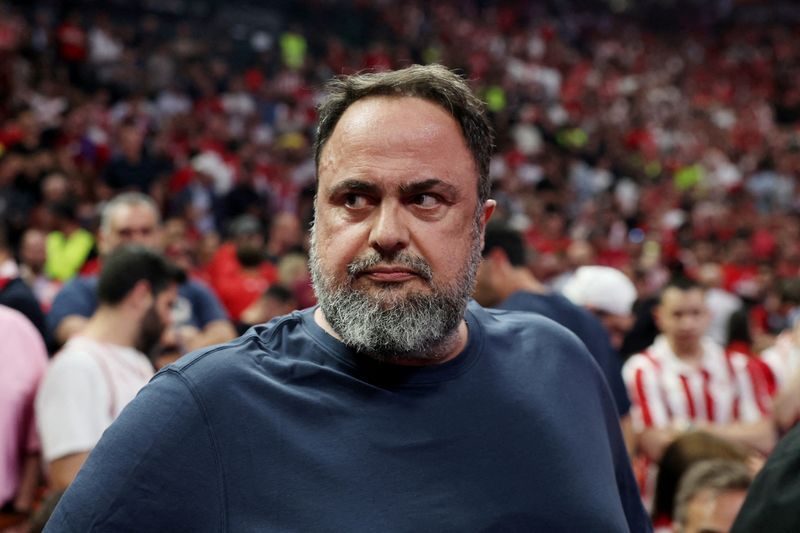
Evangelos Marinakis, the Greek shipping magnate who owns Nottingham Forest, has initiated legal proceedings in London's High Court against Crystal Palace and unidentified individuals over a banner that supporters of the London club displayed during a match. The lawsuit, filed on Monday, targets both CPFC Limited and those designated as "Persons Unknown," and marks an escalation in tensions between two Premier League clubs that have clashed over European football politics.
The legal action centres on a provocative banner that was held aloft by Crystal Palace supporters during their home fixture against Forest last August. According to media reports, the banner depicted Marinakis holding an object resembling a firearm to the head of Nottingham Forest midfielder Morgan Gibbs-White, accompanied by text that read: "Mr Marinakis is not involved in blackmail, match-fixing, drug trafficking or corruption." The imagery and accompanying message are highly inflammatory and appear designed to satirise the club owner through dark, menacing humour.
The incident stems from a significant regulatory controversy within European football. Crystal Palace were relegated from that season's Europa League to UEFA's third-tier Conference League competition after being found in breach of UEFA's multi-club ownership regulations. Nottingham Forest subsequently benefited from this sanction by taking Palace's vacated position in the second-tier Europa League, directly replacing the London club in the continental competition. This turn of events became a source of considerable frustration for Palace supporters and their club, creating a backdrop of animosity between the two sides.
Marinakis has faced persistent scrutiny and allegations throughout his tenure as a major figure in European football ownership. Beyond his acquisition of Nottingham Forest in 2017, he also holds controlling interest in Greek powerhouse Olympiacos, making him one of European football's most prominent multi-club owners. The allegations referenced on the Crystal Palace banner—involving match-fixing, corruption, drug trafficking, and blackmail—are serious criminal accusations that have circulated in various forms around Marinakis over the years. However, the Greek shipping executive has consistently and emphatically denied all such allegations.
The defamation claim highlights the increasingly contentious relationship between corporate football ownership and supporter activism. Marinakis's lawyers argue that the banner constitutes libel, seeking to establish that the inflammatory imagery and text cause serious reputational harm. The case reflects broader tensions within modern football, where wealthy international owners often clash with traditional supporter communities over questions of governance, competition integrity, and the direction of their clubs. For Malaysian and Southeast Asian readers, this case is instructive as it illustrates how disputes within European football governance can spill into public litigation.
Neither Marinakis's legal representatives nor Crystal Palace responded immediately to requests for comment regarding the lawsuit filed on Monday. This silence from both parties suggests the matter remains sensitive and that formal legal positions may still be under development. The forthcoming proceedings will likely involve detailed arguments about the interpretation of the banner's message, whether the accusations constitute statements of fact capable of being proven false, and the extent of any reputational damage sustained by Marinakis.
The case also raises questions about freedom of expression and the limits of supporter dissent in professional football. While fans have traditionally enjoyed broad latitude to express criticism and frustration through banners and chants, increasingly litigious club owners are testing the boundaries of what constitutes actionable defamation. This particular dispute involves accusations of criminal conduct rather than conventional sporting criticism, which may strengthen Marinakis's legal position, though establishing precisely which statements constitute provable falsehoods presents a significant legal challenge.
The multi-club ownership issue itself remains contentious within European football governance. UEFA's regulations attempt to prevent situations where a single owner controls multiple clubs that might compete against one another or where financial advantages could be distributed unfairly across multiple entities. Marinakis's ownership of both Forest and Olympiacos places him squarely in the territory that regulators seek to monitor, even though both clubs compete in different continental leagues. The relegation of Crystal Palace from the Europa League to the Conference League represented a significant financial and competitive penalty for the club, making the subsequent rise of Forest to the position Palace lost a source of particular grievance for the London club's supporters.
As the High Court case proceeds, it will likely attract considerable attention from football governance observers and legal experts specialising in sports law. The outcome could have implications for how football clubs and supporters navigate disputes involving ownership structures and regulatory compliance. For Marinakis, a legal victory would reinforce his ability to address reputational challenges through formal legal channels; for Crystal Palace and their supporters, the proceedings will test the boundaries of expression when criticising powerful football figures. The case ultimately reflects the increasing sophistication and litigious nature of contemporary football disputes, extending well beyond the pitch into courtrooms and legal jurisdictions.

