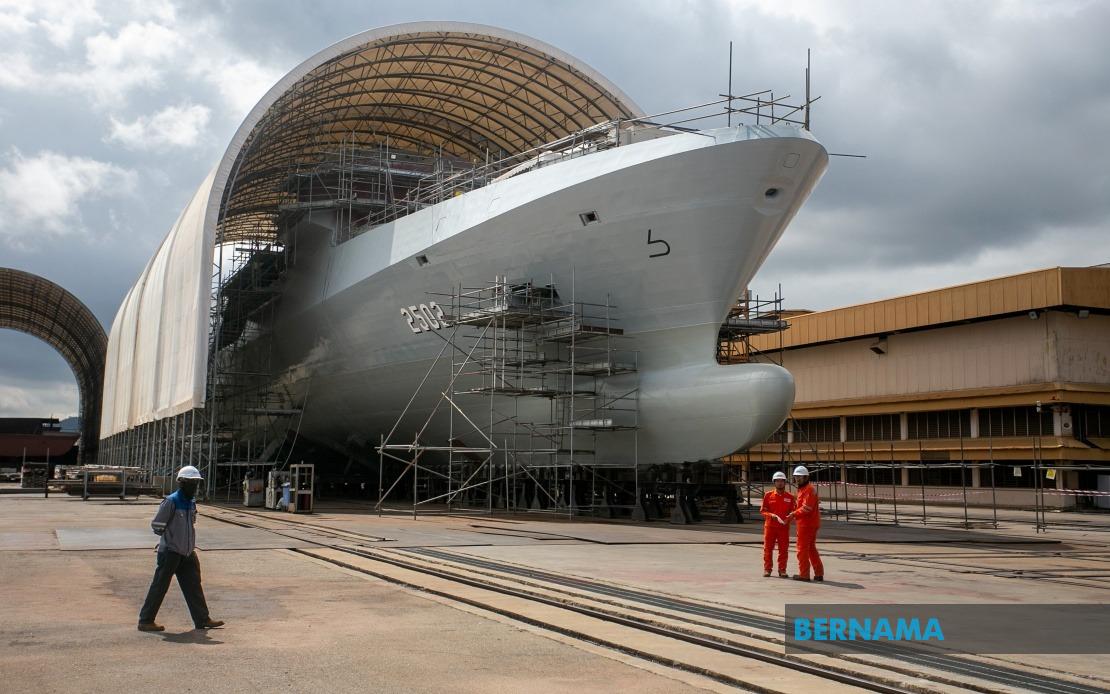
The Malaysian Defence Ministry has pushed back against parliamentary criticism over the RM571.9 million payment made to a Norwegian defence contractor for anti-ship missile systems destined for the country's Littoral Combat Ships, insisting that the funds were disbursed strictly in line with contractual milestones rather than as an upfront advance. The ministry's clarification came in response to concerns raised in Parliament about whether the government had released full payment prematurely and whether the procurement agreement adequately protected Malaysian interests.
According to MINDEF's written parliamentary response, the payment was only authorised after the Norwegian supplier had completed manufacturing all Naval Strike Missile systems and these had undergone rigorous testing protocols established by the Royal Malaysian Navy. The ministry emphasised that the missiles were fully operational and certified ready for shipment to Malaysia at the time payment was made, meaning the transaction represented compensation for completed work rather than a speculative advance. This distinction carries significant weight in procurement discussions, as advance payments without corresponding physical deliverables expose governments to substantial financial risk, particularly in defence acquisitions involving complex weapon systems.
The controversy surrounding the RM571.9 million transaction intensified after Norway's government unexpectedly revoked the export licence for the missile systems, a move that caught both Malaysian and the Norwegian supplier off guard. MINDEF characterised this revocation as an external development beyond the control of either Malaysia or the contractor, effectively shifting responsibility for the diplomatic and licensing breakdown away from the defence procurement process itself. The ministry's framing suggests that the payment had been appropriate at the time it was made, and that subsequent geopolitical or regulatory developments should not retroactively be interpreted as evidence of poor financial stewardship.
Parliamentary questions from Hassan Abdul Karim of Pasir Gudang had challenged whether the contract itself contained sufficient protective mechanisms for the Malaysian government, alleging that contractual safeguards were inadequate. MINDEF directly refuted this characterisation, asserting that the procurement agreement incorporated multiple provisions enabling the government to respond to supplier non-performance or contractual violations. The ministry indicated it was now invoking these protections, including pursuing recovery of the payment and seeking damages compensation. This defensive stance reflects the broader challenge facing Malaysia's defence procurement processes, where balancing timely weapons system acquisition against contractual risk management remains contentious.
The implications of the NSM export licence revocation extend beyond the immediate financial question. The Royal Malaysian Navy faces the prospect of receiving Littoral Combat Ships equipped without their intended primary anti-ship weapons system, creating an operational gap that demands urgent resolution. MINDEF stressed that this situation has not compromised the overall operational readiness of Malaysia's Armed Forces, noting that the Royal Malaysian Navy retains existing maritime defence assets capable of performing territorial protection responsibilities. However, this reassurance masks a more complex reality: the LCS vessels, when delivered, would represent significant capital investments in naval capability, and their deployment without modern anti-ship missiles substantially diminishes their strategic value.
In response to separate parliamentary concerns about implications for naval readiness, MINDEF indicated that the missile system substitution would not affect the delivery schedule for the Littoral Combat Ships themselves. Simultaneously, the ministry announced that the Royal Malaysian Navy is actively evaluating and assessing alternative missile systems that could fulfil the anti-ship role originally designated for the Norwegian NSM platform. This evaluation process introduces additional uncertainty and timeline considerations, as testing and integrating a replacement system into vessels already under construction or nearing completion presents considerable technical and logistical challenges. The search for alternatives may also involve additional expenditures beyond the original RM571.9 million already committed.
The NSM procurement episode reflects broader challenges facing Southeast Asian nations in acquiring advanced defence technologies amid great-power geopolitical tensions. Norway's decision to revoke the export licence appears connected to international efforts to restrict advanced military capabilities from reaching certain regions or in response to specific strategic considerations. For Malaysia, a non-aligned nation with significant interests in maintaining freedom of navigation in the South China Sea, such external restrictions on weapons acquisition create vulnerabilities. The country's reliance on foreign suppliers for critical defence systems means procurement decisions remain vulnerable to external political and diplomatic pressures beyond Malaysia's control.
The defence ministry's insistence that contractual protections exist and that it is now pursuing recovery mechanisms provides some reassurance regarding financial accountability. However, questions remain about whether recovery efforts will prove successful given that the Norwegian government's export licence revocation stems from state-level decision-making rather than private contractor default. International law and contract provisions may offer limited recourse when sovereign governments implement restrictions on defence exports, particularly when framed as national security matters. Malaysia's position as the aggrieved party in this scenario is complicated by the fact that the supplier itself is presumably also unable to fulfil its obligations due to governmental restrictions.
For Malaysian defence planners, the NSM episode underscores the importance of contract design and supplier diversification in weapons procurement. Future defence acquisitions may need to incorporate more explicit force majeure provisions addressing governmental licence revocation, along with clearer pathways for substituting alternative systems without incurring additional costs or delays. The current situation, where Malaysia has paid for systems it may never receive and must now source replacements, represents a cautionary tale for other regional defence ministries evaluating complex military procurement arrangements.
The Royal Malaysian Navy's task of identifying suitable replacements for the NSM system carries strategic implications beyond the immediate procurement question. Anti-ship missiles represent critical components of any credible naval deterrent, particularly for a nation with extensive maritime interests and coastlines. The delay in equipping the Littoral Combat Ships with modern anti-ship capability extends the timeline during which Malaysia's naval modernisation remains incomplete. This extended vulnerability window must be managed carefully given the strategic complexities of the maritime region and the importance of maintaining credible naval capabilities for territorial defence.

