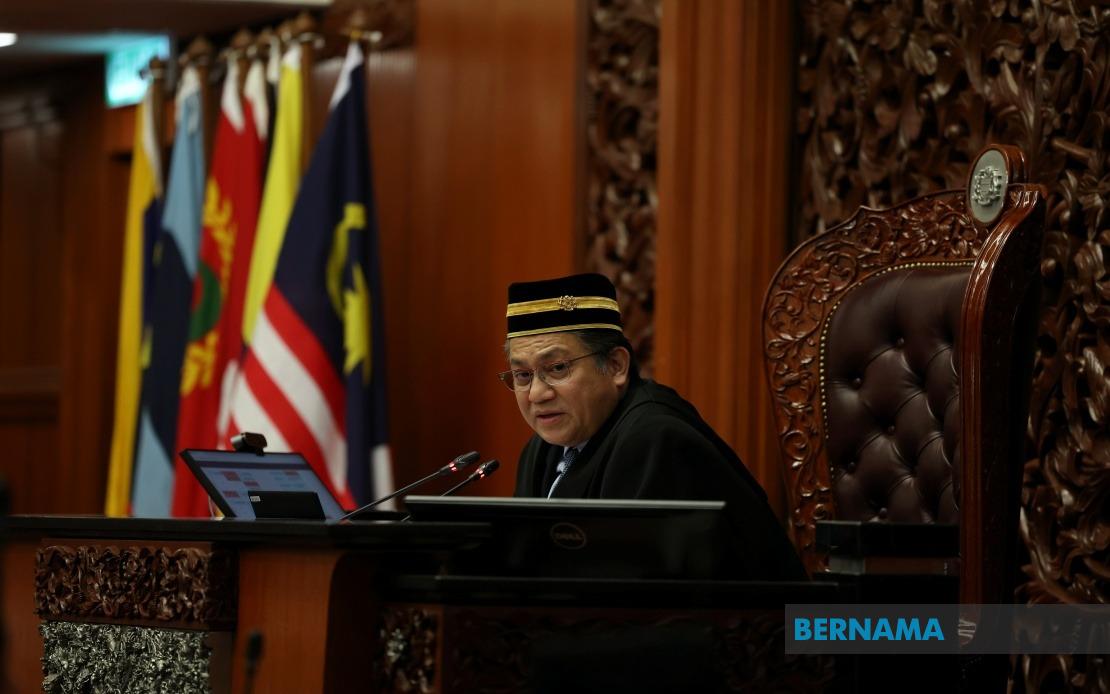
Senator Datuk Nur Jazlan Mohamed has secured reappointment as Deputy Speaker of the Dewan Negara, cementing his continued influence in Malaysia's parliamentary upper chamber. The nomination, formally submitted on behalf of Prime Minister Datuk Seri Anwar Ibrahim by Higher Education Minister Datuk Seri Zambry Abd Kadir, went unopposed at today's proceedings in the national Senate, reflecting the government's confidence in his continued stewardship of the chamber's operations.
The reappointment represents the culmination of a broader confirmation process that saw Nur Jazlan and fellow Senator Mussodak Ahmad formally sworn in before Dewan Negara Speaker Datuk Awang Bemee Awang Ali Basah. Both legislators returned to their respective chambers following reaffirmation of their positions within the institution, underscoring the Senate's commitment to maintaining institutional continuity during a period of broader legislative activity.
Nur Jazlan's fresh mandate extends across a three-year tenure commencing June 15, 2026, and concluding June 14, 2029, having been endorsed through royal appointment by His Majesty the Yang di-Pertuan Agong. This extended timeframe provides considerable scope for him to advance legislative priorities and institutional reforms during what represents a substantial portion of the current parliamentary cycle. His tenure follows seamlessly from his initial assumption of the Deputy Speaker role in June 2023, during which he has developed institutional expertise and parliamentary relationships.
The 60-year-old legislator brings considerable political pedigree to the role, serving simultaneously as a member of the UMNO Supreme Council and as Pulai Division chief within the party structure. His prior experience in high-level government administration includes a stint as Deputy Home Minister between 2015 and 2018, when he managed significant national security and internal affairs portfolios. His earlier service as Member of Parliament for Pulai from 2004 to 2018 demonstrates two decades of sustained electoral representation and grassroots political engagement before transitioning to the appointed chamber.
Meanwhile, Mussodak Ahmad's reconfirmation as Senator represents renewed recognition of his service representing Kedah interests within the upper house. Appointed originally in March 2023 as a representative of the Kedah State Legislative Assembly, his reappointment now extends through March 19, 2029, providing continuity for Kedah representation in federal legislative deliberations. As PAS secretary for Kedah, Mussodak brings coalition representation to the chamber, having previously contested state assembly contests for Bayu and Guar Chempedak constituencies.
The timing of these reappointments aligns with the opening of the Senate's Second Meeting under the Fifth Term of the 15th Parliament, which commenced on July 20 and will extend through August 4, representing a focused ten-day legislative calendar. This concentrated session will likely witness substantive debate on pending legislation and government policy initiatives, with the newly reaffirmed leadership providing parliamentary guidance during this intensive period.
For Malaysian political observers, Nur Jazlan's continued prominence within parliamentary leadership structures reflects the stability within the current government coalition. His retention in this influential position signals continuity in legislative agenda-setting and the processing of government business through the upper chamber, a body that, while constitutionally subordinate to the lower house, exercises meaningful oversight and scrutiny functions over executive decision-making.
The Senate itself occupies an increasingly significant position within Malaysia's legislative framework. Though possessing limited budgetary powers compared to the Dewan Rakyat, the upper chamber functions as an important deliberative forum for substantive policy analysis and provides representation for Malaysia's state governments through appointed representatives. Deputy Speaker roles carry particular weight in this context, as they effectively manage parliamentary procedures and facilitate communication between government and opposition elements.
For Kedah and Pulai constituencies specifically, the reappointments reinforce their political voice at the federal level. Nur Jazlan's sustained prominence within UMNO hierarchy, coupled with his parliamentary authority, positions Pulai within the inner circles of federal policymaking. Similarly, Mussodak's representation ensures that Kedah's interests receive articulation through PAS representation in upper house discussions, particularly regarding state-federal funding arrangements and policy coordination.
These appointments also reflect broader considerations surrounding institutional renewal within Malaysia's parliamentary system. The staggered appointment of senators and the provision for reappointment after fixed terms allows governing coalitions to sustain experienced legislative leadership while maintaining democratic accountability through periodic renewal processes. Nur Jazlan's trajectory from directly elected MP to appointed Senator and Deputy Speaker illustrates the career pathways available to experienced Malaysian legislators transitioning between different parliamentary forums.
Looking ahead, the reconfirmed leadership structure should facilitate smoother processing of government legislative initiatives through the Senate. With Nur Jazlan's institutional familiarity and established relationships across parliamentary factions, the chamber appears positioned to address pending policy matters systematically during the current parliamentary term, benefiting from continuity of parliamentary guidance and procedural expertise.

