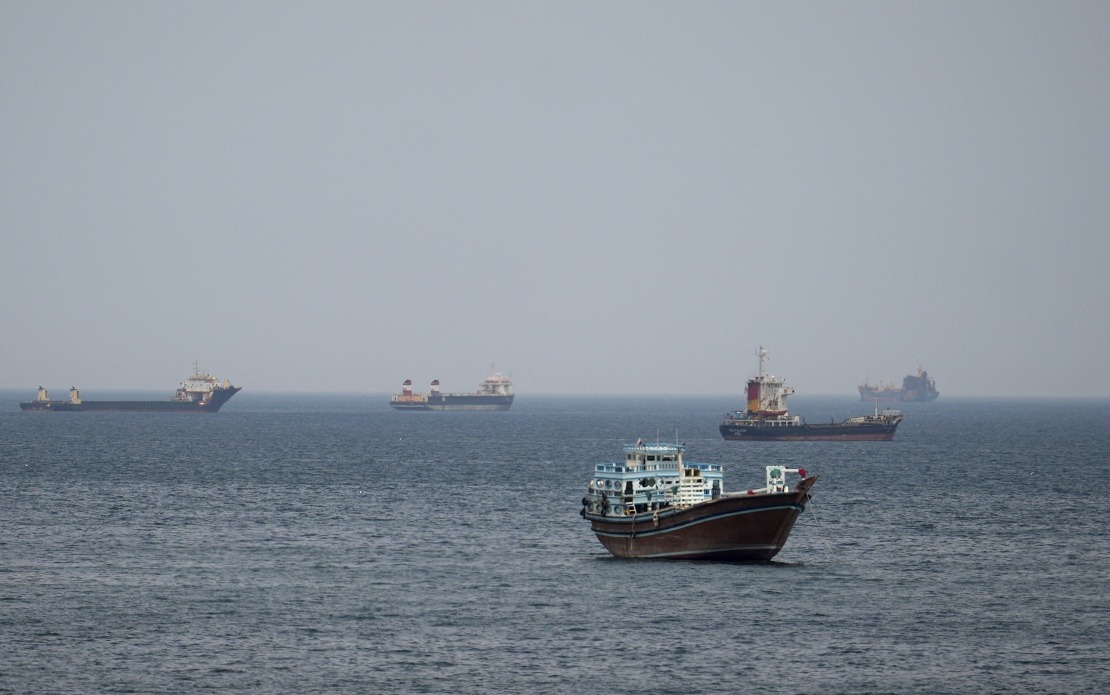
An interim agreement to halt hostilities between the United States and Iran took effect on Thursday, immediately opening the Strait of Hormuz to resumed commercial traffic after months of disruption. Oil tankers began flowing through the strategic waterway, which ordinarily facilitates roughly one-fifth of the world's petroleum supply, prompting crude prices to tumble to their lowest point since the conflict erupted on February 28. The agreement represents a dramatic reversal from the uncompromising stance President Donald Trump initially adopted when launching the military campaign, which he framed as necessary to eliminate Iran's purported nuclear weapons capability and curtail its regional influence.
The precipitous drop in oil valuations reflects market optimism that conventional shipping patterns through the Hormuz Strait could return to normal within the coming months, releasing enormous quantities of supply back into global markets. For Southeast Asian economies highly dependent on imported petroleum and refined products, including Malaysia, this development carries substantial implications for fuel costs, manufacturing competitiveness, and inflation pressures heading into the second half of the year. The resumption of energy flows through one of the world's most critical chokepoints removes a significant tail risk that had haunted markets since February, when tensions threatened to disrupt supplies entirely.
Yet the agreement remains fragile and incomplete, with fundamental disagreements persisting between Washington and Tehran on multiple fronts. Most critically, negotiators have only been granted 60 days to forge consensus on Iran's nuclear programme—ostensibly Trump's original rationale for initiating military operations. The accord simultaneously establishes a reconstruction fund worth US$300 billion for Iran and arranges supplementary financial concessions, sweeteners that analysts suggest Trump deployed to extract Iranian agreement despite achieving none of his initially stated objectives. The contrast between Trump's original demands for Iran's unconditional capitulation and the ultimate settlement—which by most accounts strengthens Tehran's negotiating position—has triggered considerable criticism from Republican allies in Congress who contend the president surrendered too much terrain.
Iran's Supreme Leader Ayatollah Moitaba Khamenei swiftly signalled that the nuclear negotiations will prove contentious, declaring through written communication that Trump had capitulated purely from desperation. Khamenei's statement that Washington will encounter resistance should it pursue excessively demanding terms suggests Tehran views itself as negotiating from a position of relative strength, having endured military assault from a superpower while maintaining control over the Hormuz Strait throughout the conflict. This psychological advantage, combined with Iran's ability to demonstrate resilience and regional influence, may prove consequential as the 60-day window unfolds. US Vice President JD Vance, who will direct the American negotiating team, has already signalled that Washington intends to pursue restrictions on Tehran's long-range missile capabilities alongside nuclear limitations.
A particularly troubling dimension of the ceasefire concerns its applicability beyond the Iran-US bilateral relationship. Despite Trump's public assertions that he secured comprehensive peace across the Middle East, fighting has escalated in Lebanon, where Israeli forces launched fresh airstrikes even as the agreement took formal effect. Over one million Lebanese civilians have been displaced by the offensive, generating a humanitarian catastrophe that sits uneasily with Trump's claim that he brokered permanent termination of the wider conflict. The accord explicitly mandates an end to operations in Lebanon and commits parties to respecting that nation's territorial integrity and sovereignty, yet Israel—which participated in neither the negotiations nor the agreement itself—has publicly repudiated any withdrawal intention and released maps depicting an expanded occupation footprint.
The divergence between Trump's diplomatic achievements and Israel's military posture has opened a rift between Washington and its Middle Eastern ally of several decades. Trump has become unusually candid in his criticism of Israeli operations in Lebanon, at one point suggesting during a White House appearance that Israel was jeopardising its most important international partnership through actions that contradict American strategic interests. His observation that attacking one's principal global ally represents questionable statecraft reflects genuine frustration that the ceasefire agreement he orchestrated faces undermining by an ostensible partner. This tension complicates the next phase of negotiations and raises serious questions about whether Trump possesses sufficient leverage or willingness to enforce compliance among regional parties to whom the pact nominally applies.
Meanwhile, Iran has already moved to signal that it intends maintaining some measure of supervisory authority over the Strait of Hormuz during the 60-day interim period. Iranian officials have announced they will issue permits and direct maritime traffic through the waterway, though they committed to waiving tolls during the current window. This arrangement reflects Iran's calculation that preserving some administrative control over Hormuz bolsters its negotiating position ahead of the nuclear discussions and demonstrates to domestic audiences that the country extracted meaningful concessions. For Malaysia and other Southeast Asian nations whose shipping and energy security depend upon unimpeded passage through the strait, the potential for Iranian obstruction—however nominal during the current phase—introduces residual uncertainty regarding the permanence and stability of the arrangement.
The broader regional context complicates the durability of this ceasefire substantially. Trump's initial rationale for the war—destroying Iran's nuclear weapons capability, eliminating its strike capacity against neighbours, severing support networks for regional militant groups, and enabling Iranians to overthrow their government—remains completely unaddressed by the interim agreement. Critics contend that Tehran has emerged from the conflict demonstrably stronger, having weathered American military pressure, maintained effective control over critical maritime corridors, and secured financial concessions totalling hundreds of billions of dollars. From this vantage point, Iran has little incentive to capitulate during the ensuing nuclear negotiations, particularly if it perceives American resolve wavering or international coalition support fragmenting.
For Malaysia and the broader Southeast Asian region, the ceasefire's implications extend beyond immediate energy market dynamics. Prolonged stability in the Middle East reduces risks of further supply disruptions that could derail regional economic growth already challenged by trade tensions and currency volatility. Malaysian shipping companies, refineries, and petrochemical manufacturers have all benefited from the resumption of normal Hormuz traffic. Concurrently, the agreement's fragility—evidenced by ongoing Israeli operations in Lebanon and growing daylight between Washington and Jerusalem—suggests that complacency would be misplaced. Should the 60-day negotiating window collapse without a comprehensive nuclear accord, the region faces the prospect of renewed hostilities, potentially with greater destructive capacity and less predictable outcomes than the initial conflict.
The fundamental uncertainty surrounding implementation and enforcement represents the accord's greatest weakness. Trump has staked considerable political capital on securing this agreement, particularly given domestic pressure to wind down costly military commitments abroad. Yet his apparent loss of influence over Israel's Lebanon operations—a theatre nominally covered by the ceasefire's terms—suggests that America's ability to impose compliance on regional actors has diminished. The coming weeks will prove essential in determining whether the interim agreement evolves into a durable settlement or merely provides a tactical pause before resumption of broader conflict. Southeast Asian governments, businesses and observers should monitor the progress of nuclear negotiations closely, recognising that the stability of critical shipping routes and global energy markets ultimately depends upon the agreement's capacity to address underlying strategic grievances rather than merely imposing temporary restrictions on military operations.

