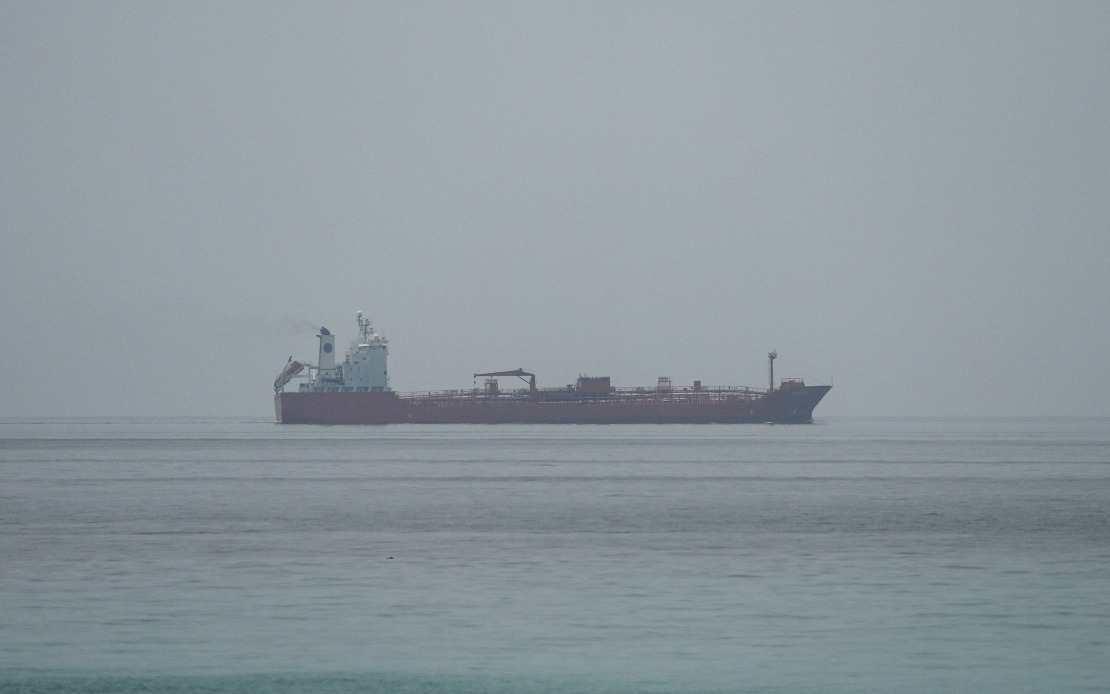
Oman has thrown its diplomatic weight behind the recently concluded memorandum of understanding between the United States and Iran, positioning itself as a critical mediator in regional stability efforts. Speaking at a joint ministerial gathering between the Gulf Cooperation Council and Washington held in Bahrain, Omani Foreign Minister Badr Albusaidi underscored his nation's backing for the agreement while reiterating a commitment that would resonate across global energy markets: transit through the Strait of Hormuz will remain entirely free of charge under any future arrangements.
The endorsement carries particular significance given Oman's geographical vantage point and its historical diplomatic independence within the Arabian Peninsula. As a coastal nation directly bordering the Strait of Hormuz, Muscat exercises outsized influence over one of the world's most economically critical waterways, through which approximately one-third of all seaborne traded oil passes annually. Albusaidi's statement at the ministerial meeting reflected Oman's understanding that its special responsibility as a littoral state requires active participation in maintaining the security and accessibility of this vital artery of global commerce.
The foreign minister grounded Oman's position firmly in international law, citing both the UN Convention on the Law of the Sea and established protocols for maritime navigation. This legalistic framing reinforces Muscat's traditional approach to regional conflicts—seeking solutions that respect established international frameworks rather than unilateral assertiveness. By explicitly referencing these conventions, Albusaidi signalled that Oman's commitment to free passage stems not from temporary political expediency but from enduring principles of international maritime governance.
The timing of Oman's declaration arrives amid a period of considerable volatility in West Asian geopolitics. The region has experienced significant military escalation in recent months, with coordinated strikes by the United States and Israel targeting Iranian positions in late February triggering direct retaliatory Iranian attacks on Israel and US military installations across the region. These exchanges created genuine anxiety about the potential for further escalation and, more immediately, about the security of maritime commerce passing through strategically sensitive chokepoints like the Strait of Hormuz.
The Iran-US understanding that Oman now endorses represents a 14-point framework that was electronically signed by Iranian President Masoud Pezeshkian and US President Donald Trump after mediation by Pakistan. The agreement formally entered into force on June 18 and addresses multiple dimensions of the regional conflict. Beyond the critical reopening of the Strait of Hormuz, the memorandum encompasses provisions for ending hostilities across Lebanon and other theatres, while also entailing the lifting of the US naval blockade that had constrained Iranian maritime commerce and contributed to regional tensions.
For Malaysian stakeholders and other Southeast Asian observers, Oman's reassurance about fee-free Hormuz transit carries direct economic implications. Malaysia, as a trading nation heavily dependent on stable energy supplies and secure maritime routes, has a vested interest in the Strait of Hormuz remaining open and accessible. Any arrangement imposing transit levies would effectively function as a tax on regional economies that rely on Middle Eastern hydrocarbons, making Oman's explicit rejection of such fees a matter of material consequence far beyond the Persian Gulf region.
The GCC-US ministerial consultations in which Albusaidi delivered his remarks represent an established mechanism for coordinating on regional security, political developments, and economic cooperation. These regular discussions have become increasingly important as the United States recalibrates its Middle Eastern strategy in response to shifting geopolitical circumstances. Washington's continued engagement with the Gulf Cooperation Council demonstrates its determination to maintain influence over regional outcomes while supporting agreements that reduce immediate conflict risks.
Oman's diplomatic posture throughout the recent tensions and subsequent negotiations has distinguished it from some GCC peers. While maintaining formal membership in the Gulf Cooperation Council, Muscat has cultivated a reputation for independent foreign policy judgment and pragmatic engagement with Iran despite their bilateral differences. This distinctive position has enabled Oman to serve as a quiet conduit for diplomatic communications and as a voice advocating for de-escalation when others adopted more adversarial stances.
The memorandum's provisions addressing the reopening of the Strait of Hormuz directly respond to disruption risks that emerged during the recent escalation cycle. The security environment surrounding this waterway had become increasingly precarious, raising genuine concerns about potential attacks on shipping or blockade attempts. By formalising arrangements for open passage and securing Oman's explicit commitment to maintaining this access without fees, the agreement provides reassurance to global energy markets and international traders dependent on unobstructed flow through this geography.
The inclusion of Pakistan as the mediating state in these negotiations reflects evolving diplomatic patterns in South and West Asian relations. Islamabad's willingness to facilitate dialogue between the US and Iran, despite historical tensions between Pakistan and Iran in some domains, demonstrates how regional powers can leverage neutral positioning to advance shared interests in stability and commerce. This mediation effort also signals Pakistan's investment in preventing escalation in nearby theatres that could have spillover consequences for South Asian security and economy.
Moving forward, Oman's guarantee of fee-free transit establishes a diplomatic baseline that will likely constrain future unilateral actions by any party seeking to monetise Hormuz passage. By anchoring this commitment in the context of a major international agreement and backed by explicit ministerial statements, Albusaidi has created diplomatic costs for any departure from open access principles. This approach aligns with Oman's historical strategy of creating positive incentive structures for regional cooperation rather than relying on coercive enforcement mechanisms.
For Southeast Asian nations monitoring developments in West Asia, Oman's endorsement of the Iran-US memorandum and its assurances regarding Hormuz transit represent encouraging signals that major disruption to global energy supplies and maritime commerce can be avoided. The agreement's success in reducing immediate military tensions and establishing frameworks for ongoing communication between previously adversarial parties creates space for the kind of stable regional environment upon which global economic activity depends. Malaysian policymakers and business leaders can take some reassurance that diplomatic mechanisms are functioning to manage risks that could otherwise cascade through interconnected global supply chains.

