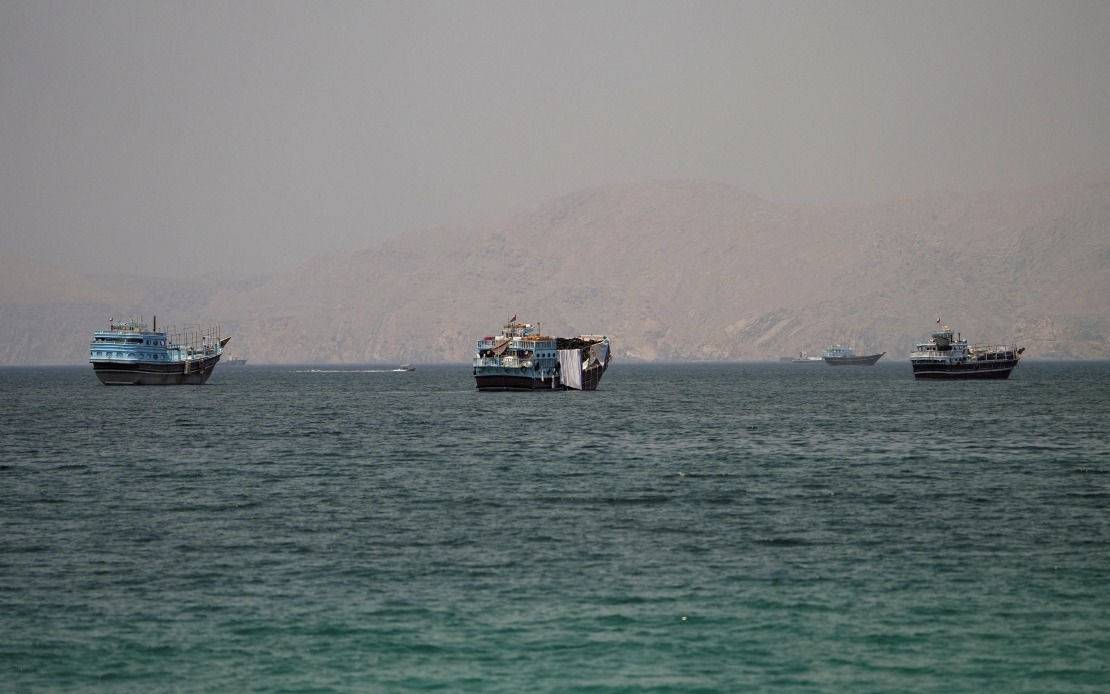
Oman has moved to reinforce its position as a neutral broker in regional maritime security after hosting talks between its leadership and senior Iranian delegations. Foreign Minister Badr Albusaidi issued a statement late Monday emphasizing Oman's unwavering stance on preserving free passage for commercial vessels transiting one of the world's most strategically vital waterways. The declaration came after conversations with Iranian Parliament Speaker Mohammad Bagher Qalibaf and Foreign Minister Abbas Araghchi, who traveled to Muscat to discuss the management and protection of the Strait of Hormuz.
At the heart of these discussions was the recently concluded memorandum of understanding between the United States and Iran, which Albusaidi specifically highlighted as a focal point for negotiations. The Iranian officials and their Omani counterparts concentrated their attention on how the agreement's provisions pertaining to the Strait of Hormuz would be implemented and enforced. Oman's emphasis on "toll-free safe passage" underscores regional concerns that any attempt to restrict or monetize shipping through this critical chokepoint—through which roughly one-third of global seaborne traded oil passes daily—would destabilize energy markets and breach international maritime conventions.
The timing of these discussions reflects broader diplomatic momentum following the US-Iran accord signed remotely last week. That agreement established a 60-day negotiating period designed to address longstanding tensions between Washington and Tehran across multiple domains, from nuclear programme restrictions to broader regional security concerns. The 14-point memorandum explicitly calls for an immediate and permanent cessation of military operations across all conflict zones, including Lebanon, where Hezbollah activities have raised security concerns among Gulf states and maritime stakeholders.
Crucially, the accord mandates the removal of the American naval blockade imposed on Iran, a longstanding source of friction that has complicated international commerce and heightened geopolitical tensions. The provisions on Strait of Hormuz shipping represent a potential breakthrough for nations dependent on reliable energy supplies, particularly in Asia where Malaysia and other regional economies are vulnerable to supply disruptions. Oman's diplomatic intervention, mirrored by Qatar and Pakistan's roles as mediators, reflects Southeast Asia's indirect but significant stake in preserving stability in this critical shipping lane.
The establishment of what mediators Qatar and Pakistan describe as a "de-confliction cell" involving the United States, Iran, and Lebanon adds institutional machinery to monitor compliance with the cessation of hostilities. This mechanism, which both Qatar and Pakistan will facilitate, represents an attempt to prevent the kind of miscalculation or unauthorized military actions that have previously derailed fragile agreements. For maritime commerce and regional stability, such verification mechanisms carry substantial weight, as they reduce the likelihood of incidents that could trigger escalatory cycles.
Oman's consistent emphasis on international law, reiterated by Albusaidi during the recent talks, signals that the sultanate intends to hold all parties accountable to established maritime conventions. The principle of free passage through international straits, codified in the United Nations Convention on the Law of the Sea, remains foundational to global trade architecture. Oman's positioning as a guarantor of this principle aligns with its historical role as a non-aligned actor capable of engaging all regional players, from Iran to the Gulf Cooperation Council states and Western powers.
The removal of restrictions on Iranian shipping and the normalization of commercial traffic through the Strait of Hormuz could yield immediate economic benefits across the region and globally. Energy markets, which have priced in geopolitical risk premiums due to uncertainty over the waterway's accessibility, may stabilize if sustained progress materializes. For Malaysian energy importers and manufacturers dependent on reliable oil and gas supplies, such stabilization would translate into lower input costs and improved operational predictability.
However, the success of these arrangements hinges on sustained Iranian compliance with the memorandum's provisions and American commitment to removing its naval blockade. Historical precedent suggests that implementation challenges often emerge during the execution phase, particularly when verifying military pullbacks or confirming the absence of covert activities. The de-confliction cell's effectiveness will depend on its transparency, rapid response capabilities, and the willingness of all parties to prioritize maritime stability over tactical advantages.
Oman's diplomatic engagement also underscores the sultanate's broader regional strategy of maintaining channels of communication with all actors, a posture that has served it well in previous regional crises. By publicly reaffirming its commitment to open shipping and international law, Oman positions itself as an indispensable partner in any future agreement-monitoring or dispute-resolution mechanisms. This soft power approach has allowed Oman to punch above its weight diplomatically while remaining aligned with international legal frameworks that benefit smaller trading nations reliant on freedom of navigation.
For Southeast Asian economies, Oman's stance carries indirect but meaningful implications. Any sustained breakdown in US-Iran relations could trigger renewed disruptions to Hormuz shipping, potentially forcing vessels to take longer, costlier routes or face insurance premiums that offset savings from shorter transits. Malaysia's role as a transshipment hub and major trader makes it particularly exposed to shocks in Persian Gulf energy supplies and regional instability. Conversely, if the memorandum framework holds, regional shipping costs could decline and supply chains lengthen more predictably.
The emphasis on a "60-day negotiating window" suggests that both Washington and Tehran recognize the urgency of reaching more comprehensive arrangements. During this critical period, Oman and other mediators will likely intensify diplomatic efforts to broker clarity on outstanding issues, from Iran's enriched uranium stockpile management to verifiable reductions in regional military posturing. The Strait of Hormuz dimension, emphasized repeatedly by Albusaidi, may serve as a confidence-building precursor to progress on more contentious nuclear and sanctions-related matters.
Looking forward, Oman's public reaffirmation of free passage principles may serve to reassure maritime insurers, shipping companies, and energy traders that regional actors recognize the counterproductivity of restricting commerce through this vital waterway. If consistent enforcement of these principles emerges from the 60-day negotiating period, it could establish a durable foundation for stability in one of the world's most consequential maritime corridors.

