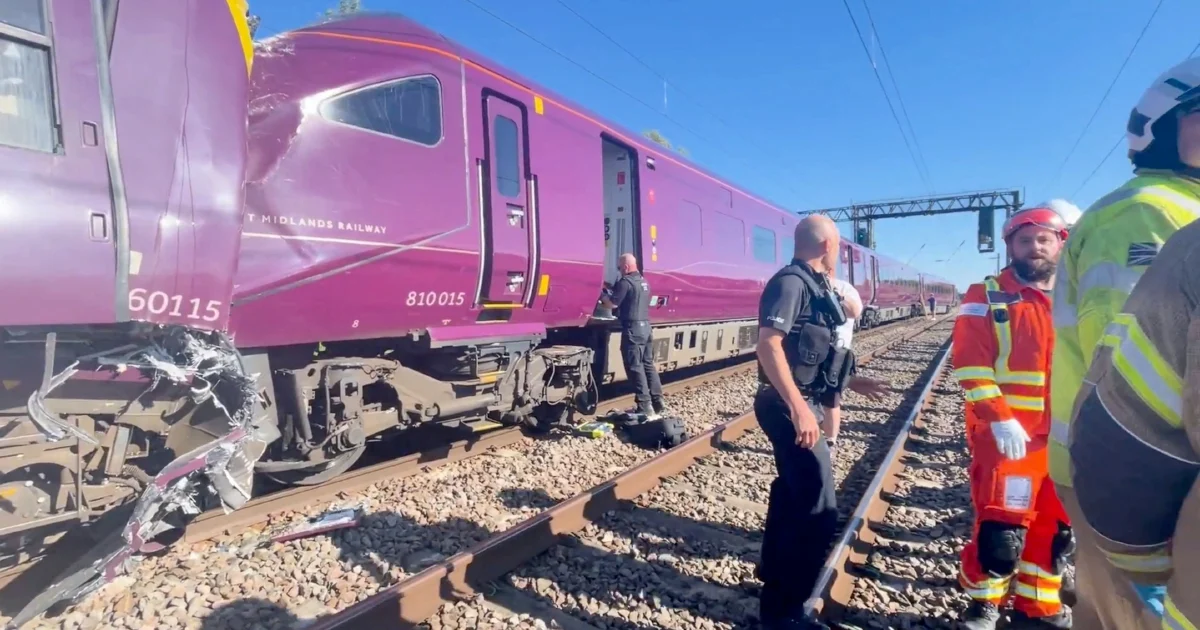
A collision between two passenger trains in the area north of London has resulted in one fatality and multiple injuries on Friday, according to statements from UK emergency response authorities. The incident, which unfolded during regular passenger operations, immediately triggered a large-scale emergency response involving ambulance services, fire and rescue teams, and police units coordinating across the affected region.
The scale of casualties reflects the severity of the impact between the two trains. Beyond the single confirmed death, emergency services reported that dozens of passengers and staff members sustained injuries in the collision. Among those injured, 11 individuals presented with injuries classified as "very serious," suggesting potential long-term medical complications or life-threatening conditions requiring intensive hospital care and specialist treatment.
The location of the incident—north of London—places it within the densely populated commuter corridor that services the capital and surrounding areas. This geography carries particular significance for regional transport networks, as this region experiences consistently high passenger volumes throughout the day. Weekend and weekday commuter patterns in this zone typically involve substantial numbers of travellers, though the Friday timing of the incident means it occurred during a working day when usage patterns differ from weekend service patterns.
UK rail incidents of this magnitude typically prompt immediate mobilization of multiple emergency service branches. Fire and rescue services focus on extracting trapped passengers and controlling hazards such as electrical systems or fuel risks. Ambulance crews establish triage areas and coordinate the transport of injured individuals to nearby hospitals with trauma capabilities. Police units manage scene security, coordinate between services, and begin preliminary investigations into causation factors.
The collision raises broader questions about rail safety systems designed to prevent such incidents. Modern passenger train networks rely on multiple layers of protection including signalling systems, driver training protocols, speed restrictions in certain areas, and automatic train protection systems intended to override human error. The circumstances leading to a collision despite these safeguards will form a critical component of any investigation into the incident's root causes.
For Malaysian readers familiar with Southeast Asian transport infrastructure, such incidents underscore the importance of robust safety frameworks in high-density rail environments. Malaysia's own rail network, including the KL Monorail, Light Rail Transit, and intercity services, operates under comparable safety imperatives, particularly given the large passenger volumes through the Klang Valley and other metropolitan corridors. The incident serves as a reminder of the continuous investment and vigilance required to maintain safety standards in busy transport systems.
The immediate aftermath of such collisions typically involves significant disruption to regional rail services. Lines serving the area north of London would likely face closures or substantial delays as investigators examine the collision site and emergency services complete their response operations. Such disruptions affect thousands of commuters relying on rail services for daily travel, creating cascading impacts on work schedules, connections, and broader economic activity in affected regions.
Hospitals across the region would activate major incident protocols to accommodate the injured passengers arriving from the collision site. Trauma centres with appropriate specialist facilities—including orthopedic, neurosurgical, and intensive care capabilities—typically receive the most seriously injured patients. The 11 individuals with serious injuries would likely be distributed across multiple facilities to optimize treatment capacity and specialist expertise available.
The investigation phase following such incidents extends well beyond immediate emergency response. The UK's Rail Accident Investigation Branch, responsible for analyzing significant rail incidents, would conduct a comprehensive examination of factors including weather conditions, track conditions, signal operations, locomotive and carriage mechanical status, driver communication, and adherence to operational procedures. Such investigations typically require weeks or months of detailed work, involving examination of physical evidence, electronic data from train systems, and witness testimony.
International rail safety perspectives suggest that incidents involving multiple fatalities or significant injuries, while statistically rare given billions of passenger journeys annually, retain profound importance for continuous system improvement. Each such event prompts review of existing safety measures and exploration of enhanced protective systems, contributing to the gradual evolution toward ever-safer rail networks.
The emotional and practical toll on survivors extends beyond immediate medical treatment. Passengers who experience traumatic incidents often require psychological support, and the rail operator typically provides assistance including counselling services, compensation processes, and victim support mechanisms. This holistic approach to post-incident care reflects modern understanding of trauma's broader impacts on affected individuals and communities.
As investigations unfold, details regarding the collision's specific causes—whether involving signal failure, driver error, track obstruction, or mechanical failure—will gradually emerge. These findings will inform any operational changes or infrastructure modifications deemed necessary to prevent similar incidents. The incident underscores that regardless of technological sophistication, maintaining vigilance and continuous safety enhancement remain essential responsibilities for rail operators across global networks.

