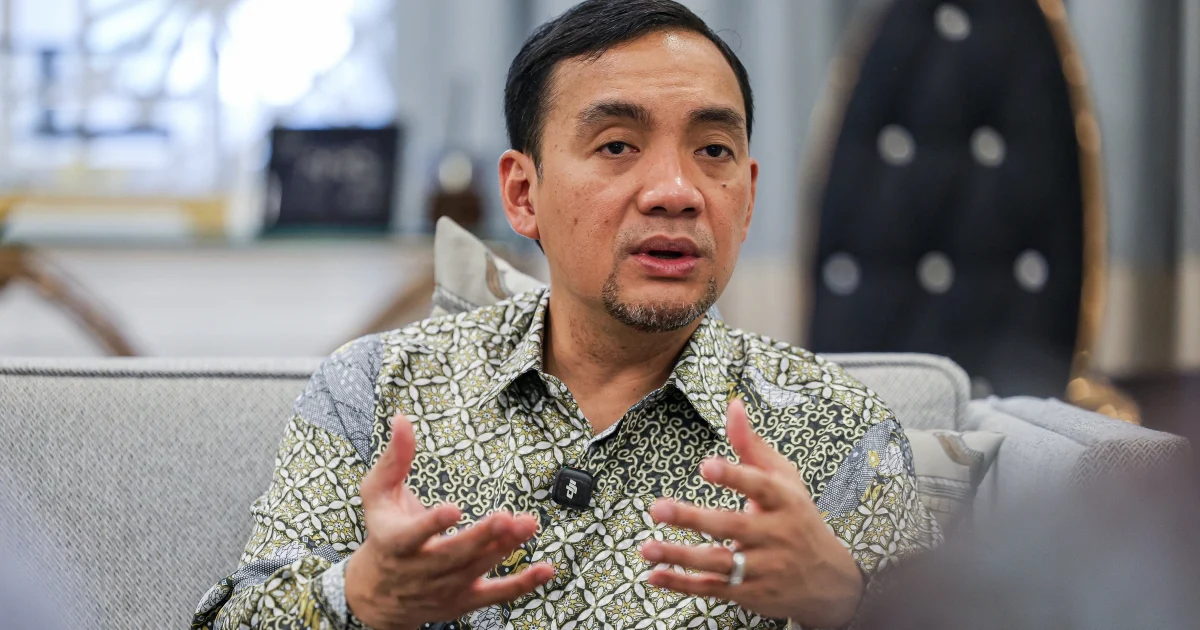
Johor's caretaker Menteri Besar Datuk Onn Hafiz Ghazi has categorically rejected suggestions that he claimed the state palace had ordered the dissolution of the Johor assembly, moving to clarify his position following allegations by Datuk Dr Mohd Puad Zarkashi. The denial underscores the delicate political dynamics surrounding the recent constitutional developments in Johor, where the relationship between the executive government and the constitutional monarchy remains a subject of careful interpretation and public discourse.
The controversy centres on what Onn Hafiz purportedly said regarding the involvement of the Johor palace in the assembly dissolution process. Mohd Puad Zarkashi's claims suggested that the caretaker Menteri Besar had attributed the assembly's dissolution to a directive from the palace, a characterization that Onn Hafiz now disputes. Such interpretations carry significant weight in Malaysia's constitutional system, where the separation of powers and the sovereign's role in governmental affairs are matters of considerable political sensitivity.
Onn Hafiz's denial addresses not merely the factual accuracy of what was said but also touches on the broader question of constitutional propriety. In Malaysia's Westminster-influenced system, the Yang di-Pertuan Agong and state rulers occupy ceremonial positions as constitutional heads of state, yet their consent and formal approval remain essential for major governmental acts. The distinction between the palace exercising discretionary authority and the government making decisions that subsequently require royal approval forms the crux of this dispute.
The timing of this clarification is significant given that Johor is currently operating under caretaker administration. During such transitional periods, when a state government lacks a majority in the assembly or awaits fresh elections, the conduct of officials becomes subject to heightened scrutiny. Statements made by caretaker office-holders can carry particular weight in shaping public perception of how constitutional processes have unfolded, making precision in language crucial for maintaining institutional credibility.
Mohd Puad Zarkashi's background as a prominent political and constitutional commentator lends weight to his observations, even as Onn Hafiz disputes their accuracy. The disagreement reflects a broader pattern in Malaysian politics where different political actors interpret and describe constitutional events in ways that align with their respective political interests and narratives. Such competing accounts can create confusion among the public about the actual sequence and nature of governmental decision-making.
For Johor specifically, the assembly dissolution and the subsequent caretaker period represent a critical juncture in the state's political trajectory. The state has experienced considerable political turbulence in recent years, with multiple shifts in government composition and leadership. How officials characterize the constitutional mechanics of such transitions shapes the public's understanding of governmental legitimacy and the proper functioning of checks and balances within the state political system.
The denial also carries implications for how other state leaders and officials might describe their relationships with their respective palaces. If caretaker officials face criticism for characterizing palace actions in particular ways, it may influence how future communications between government and constitutional authorities are conducted and reported. This could affect transparency around the decision-making processes that shape governmental actions, particularly during periods of political transition.
Onn Hafiz's clarification attempts to establish that the assembly dissolution resulted from decisions made through proper constitutional channels rather than from direct palace directive. This distinction matters because it speaks to the autonomy of the executive government to make key political decisions and the broader principle that elected representatives, however temporarily empowered, retain agency in governing. Understanding how such authority is distributed and exercised contributes to the health of democratic governance.
The exchange between Onn Hafiz and Mohd Puad Zarkashi also illuminates how quickly political narratives can diverge in Malaysian discourse. What one party characterizes as a straightforward factual description, another party challenges as misrepresenting the true nature of events. These disagreements often reflect different constitutional philosophies and political perspectives that extend beyond the immediate facts of any single case.
As Johor moves forward with its electoral cycle and the formation of the next government, clarity on how major constitutional decisions were made and justified will likely remain a subject of political discussion. The distinction between palace direction and government initiative, while perhaps arcane to some observers, carries real implications for how power is understood to flow within the state's governmental structure. Onn Hafiz's denial, therefore, represents more than a simple factual correction; it reflects an effort to establish a particular constitutional narrative about how Johor's governance has functioned during this period of transition.
The incident also highlights the importance of careful communication by public officials, particularly those serving in caretaker capacities. Words used to describe constitutional processes can take on lives of their own once entered into public discourse, shaping perceptions of legitimacy and propriety long after initial utterance. In this context, Onn Hafiz's effort to correct the record serves both immediate political purposes and the broader goal of maintaining public confidence in how governmental institutions interact with constitutional authorities.

