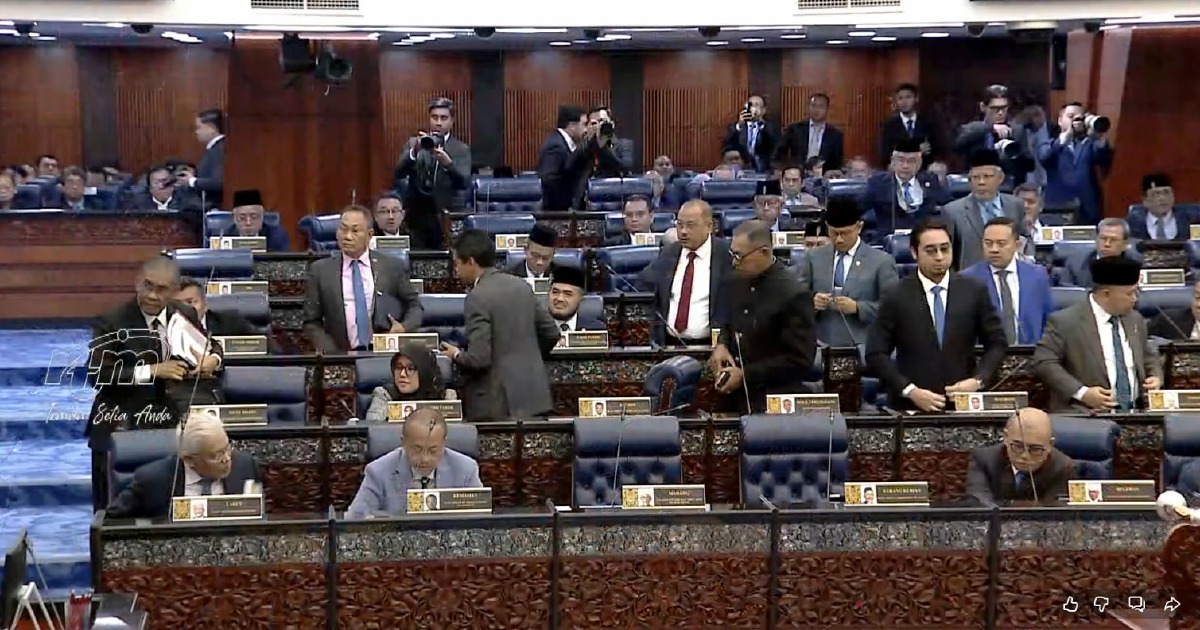
Opposition members of Parliament staged a coordinated walkout from the Dewan Rakyat today in protest against the Speaker's decision to proceed with debate on the Royal Commission of Inquiry report concerning Tabung Haji. The move came after the opposition formally requested that the special sitting be postponed until Prime Minister Datuk Seri Anwar Ibrahim returns to the parliamentary chamber, a request that the Speaker ultimately declined.
The incident reflects mounting tension within Malaysia's legislative chamber over the handling of matters concerning Tabung Haji, the state-owned pilgrimage fund that has faced substantial scrutiny in recent years. The opposition's insistence on waiting for the Prime Minister's attendance suggests concerns about the legitimacy or importance of conducting such discussions in his absence, particularly given the sensitive nature of the inquiry's findings.
Tabung Haji has been at the centre of significant public controversy, with questions raised about governance, financial management, and accountability within the institution that manages savings for Malaysian Muslims intending to perform the hajj pilgrimage. The Royal Commission of Inquiry was established to examine these concerns comprehensively, and its report represents a crucial document for Parliament to deliberate upon.
The opposition's tactical decision to walk out represents a calculated political maneuver to signal their dissatisfaction with parliamentary procedures. By vacating the chamber, opposition lawmakers aimed to highlight what they perceive as procedural irregularities and to draw public and media attention to their position on how significant government inquiries should be debated.
The Speaker's authority to manage parliamentary proceedings means the ruling on whether to postpone was ultimately discretionary. The decision to proceed with the sitting despite the opposition's objections underscores the challenge of balancing procedural flexibility with the need to maintain parliamentary business momentum. Both perspectives carry merit: postponement could ensure fuller attendance and engagement, while proceeding demonstrates commitment to parliamentary efficiency and public accountability.
For Malaysian voters and observers, such parliamentary disputes carry implications beyond the immediate legislative moment. They signal how different political actors prioritize transparency, process, and the urgency of addressing public concerns about government institutions. The walkout protests against both the substantive decision and the procedural question of who holds authority over parliamentary scheduling.
The timing of this incident, with the Prime Minister absent from the chamber, also raises questions about how Parliament operates during periods when the head of government is temporarily unavailable. Malaysia's parliamentary system requires consideration of whether matters of significant public importance should proceed without the Prime Minister's participation, or whether such debates function adequately through other government representatives.
Tabung Haji's role in Malaysian society makes parliamentary scrutiny particularly important. The fund manages billions of ringgit entrusted by working Muslims and their families, making governance and financial stewardship matters of direct concern to a substantial portion of the Malaysian population. The RCI report's findings could inform future policy decisions and regulatory frameworks.
Opposition walkouts, while dramatic and attention-grabbing, carry political costs and benefits. They allow minority voices to register formal protest, but they also remove opposition figures from the chamber where they might otherwise engage in debate, cross-examination, and the detailed scrutiny of government actions. The strategic calculation involved in staging such walkouts depends on whether the opposition believes its presence in the chamber serves their political interests better than their absence.
The incident illustrates broader tensions within Malaysia's Parliament regarding opposition participation and government accountability. Opposition parties maintain that their role includes not merely attending parliamentary sessions but ensuring procedural propriety and meaningful engagement with matters of public importance. Government benches, meanwhile, must balance opposition concerns with the pragmatic need to conduct parliamentary business efficiently.
For Malaysia's political observers, this clash reveals continuing disagreements about parliamentary convention and practice. No explicit legislative rule dictated whether the Speaker should have acceded to the postponement request, meaning the decision rested on interpretations of parliamentary tradition and the Speaker's discretionary judgment. Such ambiguities occasionally produce these confrontational moments.
Looking forward, the incident may prompt discussion among parliamentary observers and constitutional experts about clarifying procedures for handling major inquiries and ensuring both efficiency and inclusive deliberation. The walkout serves as a reminder that Malaysia's Parliament remains a space of genuine political contestation where different actors actively contest procedures and priorities.

