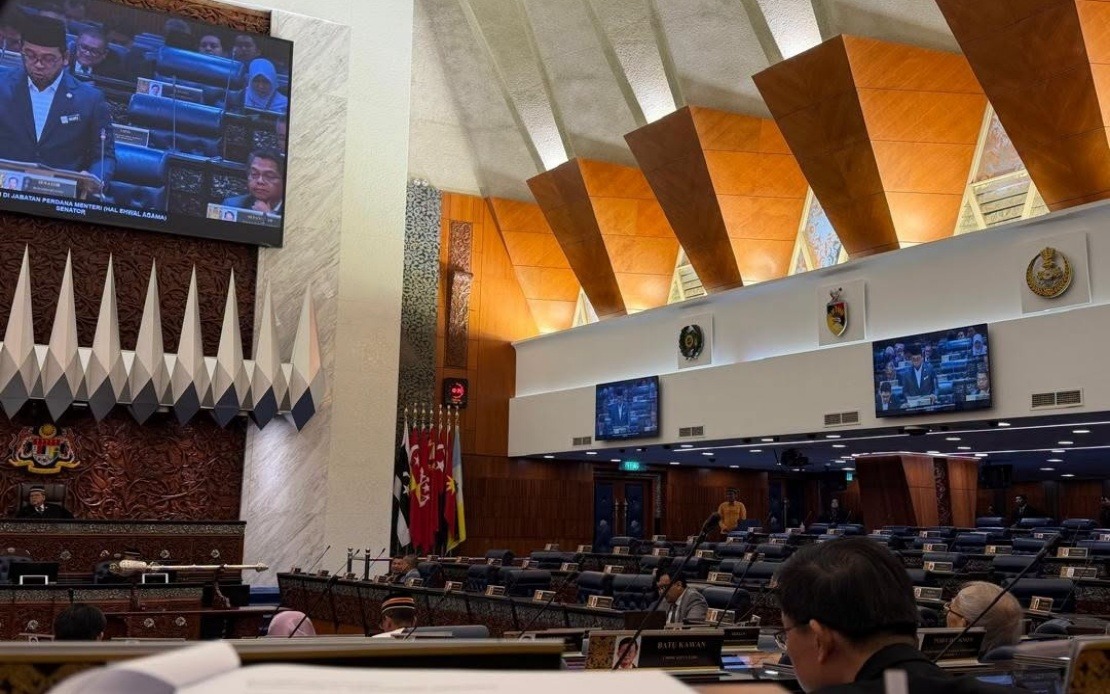
Parliamentary tensions escalated when opposition MPs staged a coordinated walkout from a special Dewan Rakyat session devoted to debating the Royal Commission of Inquiry findings on Lembaga Tabung Haji, prompting government allies to question the opposition's genuine commitment to financial accountability and Muslim interests. The boycott occurred before Minister in the Prime Minister's Department for Religious Affairs Dr Zulkifli Hasan could deliver his ministerial briefing on the comprehensive report, leaving the chamber notably depleted during a debate on one of Malaysia's most significant Islamic financial institutions.
Datuk Seri Dr Zaliha Mustafa, chairman of the MADANI Government Backbenchers Club and member for Sekijang, articulated sharp criticism of the opposition's conduct, characterising their departure as evidence of inconsistency between their public posturing and parliamentary behaviour. She noted the apparent contradiction between opposition claims of championing Islamic values and Muslim welfare whilst simultaneously declining to engage substantively with detailed government findings on an institution entrusted with depositor funds belonging predominantly to the Muslim community. This contradiction, she suggested, undermined the credibility of opposition arguments made outside Parliament regarding transparency and institutional governance.
The walkout stemmed from opposition objections to Speaker Tan Sri Johari Abdul's decision to proceed without Prime Minister Datuk Seri Anwar Ibrahim and Deputy Prime Minister Datuk Seri Fadillah Yusof, both temporarily absent due to ongoing medical treatment. Perikatan Nasional chief whip Datuk Seri Takiyuddin Hassan had formally proposed postponement of the special sitting, arguing that the absence of these senior figures diminished the authority and legitimacy of parliamentary proceedings on such a consequential matter affecting millions of ordinary depositors.
For Malaysian readers, the Tabung Haji issue carries profound significance beyond conventional political theatre. Lembaga Tabung Haji serves as a dedicated savings and investment institution designed to enable Muslim Malaysians to accumulate funds for pilgrimage to Mecca whilst building retirement security. The institution manages assets representing the accumulated savings and aspirations of approximately three million account holders, with particular importance to lower and middle-income Muslim Malaysians who view the scheme as integral to both religious observance and financial planning. Any inquiry into management failures thus touches deeply personal financial interests alongside broader questions of institutional integrity and Islamic governance.
Dr Zaliha's commentary suggests that parliamentary opposition to the government's handling of the Tabung Haji matter may reflect tactical positioning rather than principled concern for depositor protection. She specifically challenged opposition MPs to demonstrate their commitment by remaining in the chamber to scrutinise the RCI findings, present alternative interpretations supported by evidence, and mount detailed rebuttals to any government positions they disputed. The implicit argument holds that substantive parliamentary debate—where claims can be tested against documentation and expert analysis—provides a far more meaningful platform for protecting public interests than orchestrated walkouts that prevent detailed engagement.
The government's framing of the opposition's absence as a strategic retreat rather than a principled stand carries political weight precisely because the Tabung Haji issue transcends typical partisan divisions. Unlike debates on taxation, economic policy, or infrastructure priorities, the fund management question directly affects depositor security and institutional credibility. Opposition MPs who walked out have therefore exposed themselves to the counter-argument that their absence suggests either lack of preparedness to debate substantively, absence of concrete alternative proposals, or prioritisation of political messaging over genuine depositor advocacy.
Regionally, Malaysia's experience with the Tabung Haji controversy illuminates broader Southeast Asian challenges regarding the governance of Islamic financial institutions and public sector accountability. As Muslim-majority nations throughout the region develop comparable schemes and institutions, the parliamentary scrutiny and transparency standards applied to such bodies serve as potential models—or cautionary tales. The opposition's walkout thus sends signals extending beyond domestic Malaysian politics to influence perceptions of how regional democracies handle institutional accountability when religious considerations intersect with financial management.
The MADANI Backbenchers Club chairman's challenge to the opposition also highlights a broader parliamentary dynamic: the necessity of engaging substantively with government positions even when opposing them. She invited opposition members to deploy parliamentary mechanisms—detailed questioning, evidence-based rebuttal, amendment proposals—to contest RCI findings they considered inaccurate or unjust. This invocation of parliamentary process suggests confidence in the government's position and willingness to defend it under scrutiny, whilst simultaneously emphasising that walkouts constitute abdication of opposition responsibility to hold government accountable through rigorous debate.
Looking forward, the Tabung Haji RCI findings and their parliamentary reception will likely influence how future Malaysian governments approach accountability for major public institutions, particularly those with significant religious or cultural resonance. If opposition parties indeed possessed substantial evidence contradicting the RCI conclusions or alternative remedies for identified management failures, parliamentary debate would have provided the appropriate venue to present such evidence comprehensively. The choice to exit rather than engage invites public interpretation as tactical retreat, whether or not substantive objections existed.
The broader implication of this episode extends to questions about parliamentary effectiveness and democratic deliberation in Malaysia. When major institutional inquiries conclude and parliament assembles to debate findings affecting millions of citizens' financial security, the quality of that debate determines whether parliament functions as a genuine accountability mechanism or merely a ceremonial venue. Opposition walkouts, regardless of their stated justifications, inherently diminish parliamentary scrutiny and potentially reduce public confidence in the institution's capacity to handle serious governance matters. The government's willingness to host detailed debate stands in stark contrast, positioning the executive as confident in its position and committed to transparent explanation of its handling of the Tabung Haji matter.

