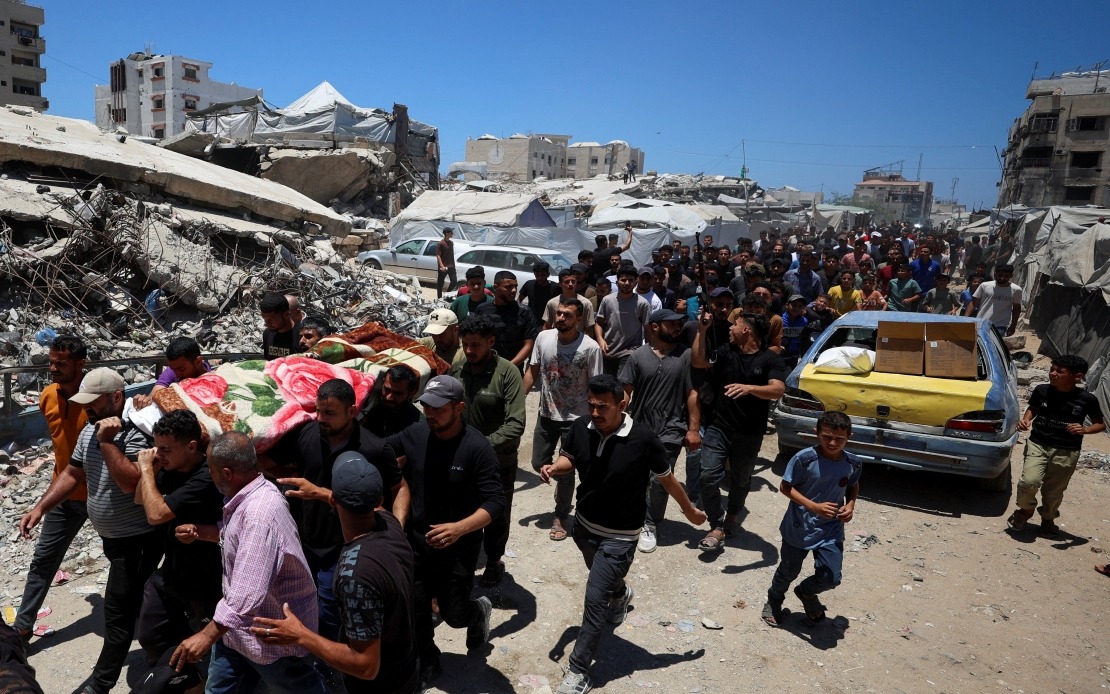
The humanitarian catastrophe unfolding in Gaza has reached a critical juncture, with new figures revealing that over 1,000 Palestinians have been killed even after a ceasefire was supposed to bring relief to the devastated enclave. According to a situation report from the Palestinian Prime Minister's Office released on Tuesday, the cumulative death toll since the conflict erupted in October 2023 now stands at 73,032. For Malaysian observers accustomed to relative stability, these numbers underscore the profound scale of suffering affecting the region, with implications that extend far beyond Palestine itself, affecting regional dynamics and the international humanitarian system that Malaysian aid organisations depend upon.
The persistence of military operations despite ceasefire arrangements has become a defining feature of the current phase of conflict. The Government Communication Centre documented continued Israeli bombardments across multiple Gaza locations, including strikes in Nuseirat, Al-Mawasi, Khan Younis and Gaza City over just the past seven days. These attacks have compounded an already dire situation where basic infrastructure has been systematically destroyed, leaving civilians trapped in a landscape of rubble and deprivation. The targeting of civilian areas rather than military installations raises serious questions about compliance with international humanitarian law, matters that concerned Malaysian policymakers have repeatedly raised in regional forums.
The destruction of residential housing has reached catastrophic proportions, with Israeli military operations destroying or severely damaging 76.6 per cent of Gaza's total housing stock. This figure transforms abstract concepts of devastation into lived reality: nearly one million Palestinians are now sheltering in temporary tents rather than homes, facing exposure to the elements and disease. For context, this displaced population exceeds the entire population of Penang, Malaysia's second-largest state. The absence of permanent shelter creates cascading humanitarian emergencies, from inadequate sanitation to the spread of infectious disease—challenges that Malaysian medical and development organisations understand intimately from their own humanitarian work across Asia.
Water scarcity represents perhaps the most immediate threat to survival in Gaza. The report highlights that severe shortages of clean drinking water have forced the majority of residents to depend entirely on whatever humanitarian supplies can be delivered. This situation breeds not only disease but also desperation, as families struggle to maintain basic hygiene without access to sanitation facilities. The collapse of Gaza's water infrastructure—a combination of destruction and deliberate restrictions—stands in stark contrast to the taken-for-granted water security that Malaysian citizens enjoy, and illustrates how conflict erases the basic services that define modern life.
The situation for children represents a particularly tragic dimension of the ongoing crisis. United Nations Children's Fund data indicates that 265 Palestinian children have been killed since the ceasefire announcement, with a further 400 children sustaining injuries. These young victims represent not only immediate human losses but also the erosion of an entire generation's future potential, affecting the long-term demographic and economic recovery prospects of Palestinian territories. International organisations working with vulnerable children, including Malaysian-based agencies, recognise that childhood trauma and bereavement on this scale can perpetuate cycles of conflict and instability for decades.
Humanitarian aid deliveries, which should provide lifelines to the surviving population, remain severely constrained by Israeli restrictions on movement and supply. Oxfam International presented testimony to the United Nations Security Council documenting how Israeli-imposed controls continue to obstruct the delivery of life-saving assistance across Gaza. This obstruction of humanitarian access violates international conventions that Malaysia has signed and supported, creating diplomatic tensions that affect broader regional relationships. For Malaysia, which has historically positioned itself as an advocate for humanitarian principles and developing nations' rights, the systematic restriction of aid delivery contradicts fundamental tenets of international law that Malaysian diplomats champion.
Displacement has expanded beyond Gaza into the occupied West Bank, where the Office of the United Nations High Commissioner for Human Rights reports a significant acceleration in forced removals of Palestinians. This displacement results from a combination of settler violence, home demolitions ordered by Israeli authorities, movement restrictions that separate families from livelihoods, and formal eviction proceedings. The West Bank situation reveals that suffering extends across Palestinian territories, not merely confined to Gaza, suggesting a broader pattern of territorial contraction affecting Palestinian population centres. Malaysian civil society organisations working on indigenous rights and land justice recognise parallels in these displacement mechanisms with other conflicts affecting vulnerable populations globally.
Agricultural destruction has compounded economic devastation alongside the humanitarian crisis. The Palestinian Ministry of Agriculture documented the destruction of 7,258 trees, including 1,270 olive trees, by Israeli settlers and occupation forces, translating into estimated losses exceeding US$5.17 million. Olive cultivation represents not merely an economic activity but a cultural and historical continuity for Palestinian communities, with some trees spanning generations. Deliberate targeting of agricultural resources reflects a pattern of erasure extending beyond immediate military objectives. Malaysia, as an agricultural nation with deep appreciation for land stewardship, recognises how such destruction severs communities from both economic viability and cultural identity.
Beyond physical destruction, the conflict continues reshaping Palestinian society through mass displacement and detention. Military operations in refugee camps at Jenin, Tulkarem and Nour Shams have displaced more than 33,000 Palestinians since January 2025 alone. Simultaneously, concerns over conditions in Israeli detention facilities have escalated, with reports highlighting severe overcrowding, inadequate sanitation, and disease transmission—conditions that violate international detention standards. Malaysia's long advocacy for prisoners' rights and opposition to arbitrary detention renders these developments particularly significant for Malaysian policymakers and civil society.
Mosques have emerged as targets in the broader pattern of religious site desecration. Arson attacks struck two mosques in the villages of Jiljilya and Mazra' al-Nubani, adding religious dimension to the conflict's humanitarian dimensions. For Muslim-majority Malaysia, such attacks carry particular significance, mobilising religious sentiment alongside humanitarian concern. These incidents have reinforced Malaysian civil society's commitment to interfaith dialogue and protection of religious minorities, principles now tested by direct observation of such targeting.
Israeli control over Palestinian holy sites has extended to the Ibrahimi Mosque in Hebron, where the Palestinian government asserts that Israeli authorities have arrogated planning and construction powers, undermining arrangements established under the 1997 Hebron Agreement. This assertion of control violates international law commitments, according to Palestinian authorities, and represents a broader pattern of Israeli consolidation of territorial and administrative authority over Palestinian spaces. Such actions affect the legal and institutional frameworks that Malaysian diplomats argue should protect minority communities and religious sites under occupation.
Despite the overwhelming devastation surrounding them, Palestinian educational institutions have mobilised to maintain continuity. The Palestinian government announced successful completion of preparations for the General Secondary Education Examination, involving approximately 91,000 students, including around 37,000 in Gaza. For the third consecutive year, Gazan students will sit examinations electronically, a testament to educational resilience amid crisis. This commitment to education, even amid destruction, reflects Palestinian determination to preserve social institutions and future opportunities—a dimension often overshadowed by headlines focused solely on destruction and death tolls.
The trajectory evident from these reports suggests that ceasefire agreements, at least in their current formulation, have failed to halt the underlying patterns of military operation, displacement and humanitarian deterioration. For Malaysia and other nations committed to international law and humanitarian principles, the situation demands renewed diplomatic engagement and pressure for genuine cessation of hostilities rather than merely reduced-scale operations. The scale of destruction documented across Gaza and the West Bank requires sustained international attention and resources, particularly from Muslim-majority nations like Malaysia positioned to contribute meaningfully to humanitarian recovery and long-term conflict resolution efforts.

