Over 22,000 members of the security forces and their spouses in Negeri Sembilan will participate in early voting tomorrow, as the Election Commission facilitates ballot casting for military and police personnel ahead of the state assembly election scheduled for August 1. The contingent comprises 16,884 military personnel alongside their families and 5,455 police officers with spouses, reflecting standard electoral procedures that allow security personnel to vote before the general polling date.
The Commission has established a comprehensive voting infrastructure spanning 38 early polling centres distributed throughout Negeri Sembilan, with all facilities commencing operations simultaneously at 8 am. Closing times will vary depending on individual centre schedules and local operational requirements. Among the designated venues are strategically located facilities including the Army Basic Training Centre at Port Dickson, the state police headquarters in Sendayan, the Sendayan Air Base also in Seremban, and the Nilai District Police Headquarters, ensuring accessibility across different regional garrisons and stations.
Weather conditions may influence turnout in certain areas, with meteorological forecasts indicating clear skies across most of the state during morning hours. However, Port Dickson residents face predictions of heavy rainfall accompanied by thunderstorms, potentially affecting voting logistics at the PUSASDA centre. The afternoon period is expected to bring substantial precipitation across virtually the entire state, presenting challenges for both voters and election officials managing the voting process throughout the day.
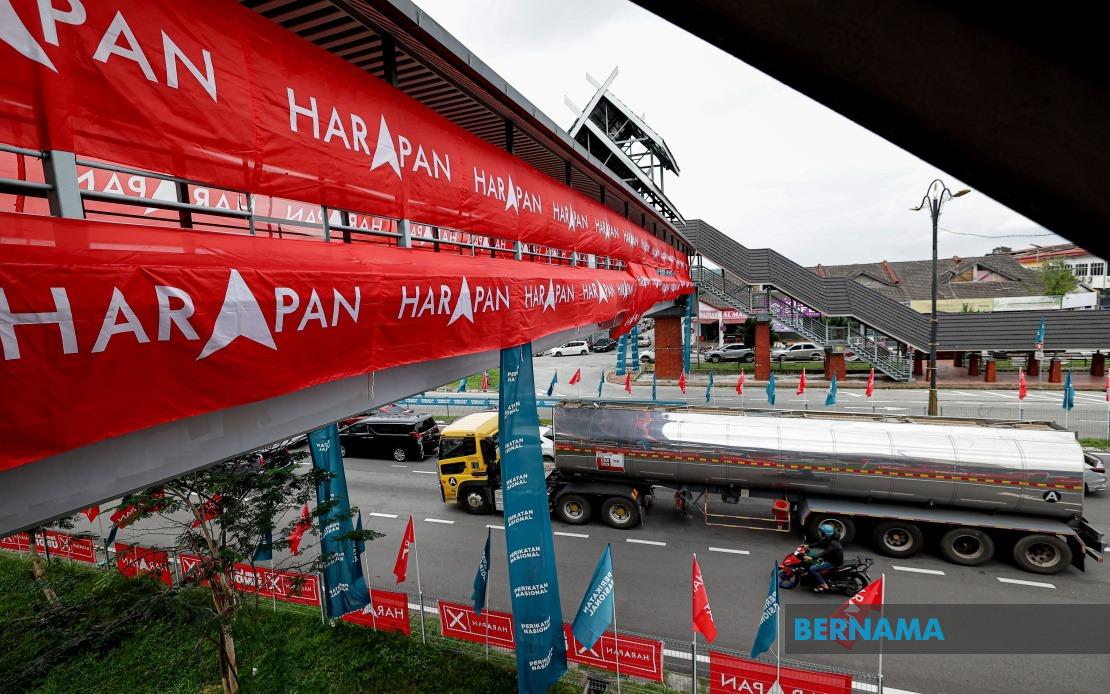
The 16th Negeri Sembilan state election represents a competitive contest featuring 103 candidates vying for representation across all 36 state assembly seats. Pakatan Harapan maintains the most extensive candidacy slate with representation in every constituency, distributing 16 candidates through PKR, 11 through DAP, and nine through Amanah. This comprehensive coverage demonstrates the coalition's commitment to contesting all available positions in what remains a significant regional electoral contest in Malaysia's political calendar.
Barisan Nasional is adopting a more selective strategy, concentrating resources on 25 of the 36 seats through a coalition of UMNO providing 16 candidates, MCA contributing seven, and MIC fielding two representatives. This approach reflects calculations regarding competitive viability in different constituencies and resource allocation within the traditional ruling coalition framework. The decision to contest approximately 69 percent of available seats indicates confidence in specific areas while acknowledging competitive challenges in others.
Perikatan Nasional has fielded 11 candidates organized across multiple component parties, with PAS providing five candidates, the newer Parti Wawasan Negara contributing four, while Gerakan and the Malaysian Indian People Party each supply single representatives. This configuration demonstrates the coalition's structure and internal dynamics, with PAS maintaining primary responsibility for candidate deployment while attempting to build broader appeal through additional party participation and diverse communal representation.
Beyond the major coalitions, several parties are pursuing independent or smaller-scale electoral strategies. Bersatu, contesting independently rather than through established coalitions, has fielded 24 candidates representing a significant independent presence in the election. Smaller entities including Parti Orang Asli Malaysia and Parti Sosialis Malaysia are each contesting one seat, while Parti Barisan Jemaah Islamiah Se-Malaysia has deployed seven candidates, reflecting the diverse political landscape across Negeri Sembilan constituencies.
The electoral contest was triggered by the dissolution of the Negeri Sembilan State Legislative Assembly on June 5, initiating the formal process leading toward August 1 polling. This timeline provides candidates and parties approximately two months for campaign activities, voter engagement, and organizational preparations ahead of the general ballot. The dissolution represents standard constitutional procedures in Malaysia's state-level democracies, where assembly dismissal and subsequent elections occur periodically as part of regular electoral cycles or in response to specific political developments.
For Malaysian voters and political observers, the Negeri Sembilan election carries significance beyond the state itself, potentially serving as an indicator of broader electoral trends affecting national politics. As one of Malaysia's smaller states by population and electoral magnitude, it offers a manageable case study for analyzing voter preferences, coalition strategies, and emerging political realignments. The contest will demonstrate whether established coalitions maintain their traditional strongholds or whether emerging parties and independent candidates successfully penetrate established political structures, providing insights into the evolving Malaysian political landscape heading toward potential future national contests.

