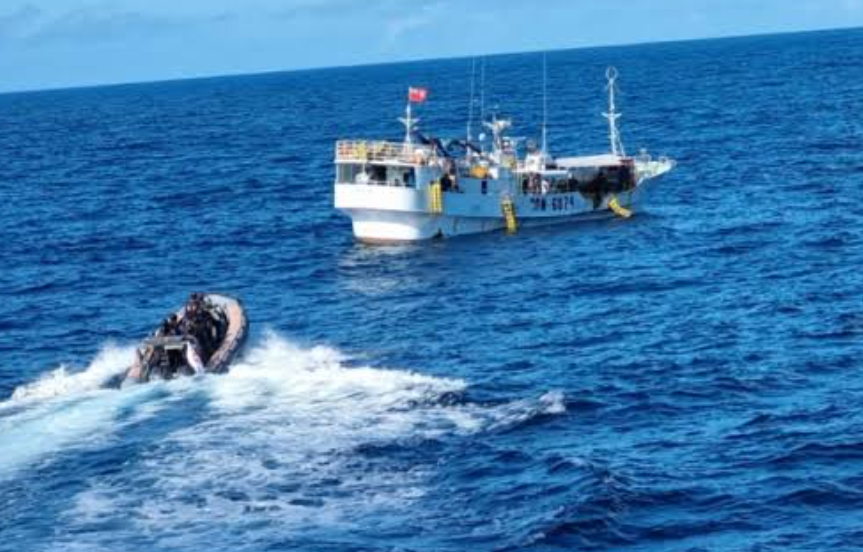
Pacific island authorities have intensified enforcement against illegal fishing, with officials confirming the detention of multiple Chinese and Indonesian vessels during a major regional operation conducted earlier this month. The Pacific Islands Forum Fisheries Agency reported that four boats were seized or brought to port by maritime authorities in Kiribati, Palau, and Papua New Guinea for either engaging in illegal fishing practices or violating the terms of their fishing licences. The crackdown underscores growing concerns among island nations about protecting their marine resources and ensuring compliance with strict fishing regulations across their territorial waters.
The enforcement operation, known as Operation Island Chief, represents one of the largest coordinated surveillance initiatives undertaken by Pacific nations in recent years. Running from August 3 to 14, the two-week campaign involved 11 island nations working together to monitor vast stretches of ocean. Across approximately 28 million square kilometres of water, maritime authorities boarded and inspected more than 100 vessels during this period, demonstrating the scale of fishing activity in the region. The operation also identified 16 additional vessels classified as "of interest" for further investigation, though specific details about these cases remain undisclosed by the FFA.
The surveillance effort benefited from significant international support, including aerial reconnaissance provided by an Australian military aircraft and patrols conducted by a United States Coast Guard vessel. This multinational approach reflects the shared commitment among Pacific nations and their partners to combat illegal, unreported, and unregulated fishing. The presence of foreign military assets underscores both the geographic challenges of monitoring such expansive ocean territories and the importance Pacific nations place on securing their fisheries.
The tuna-rich waters of the Pacific represent an extraordinarily valuable resource for the island nations that call the region home. Approximately half of the world's global tuna catch originates from Pacific waters, making the region the epicentre of international tuna fishing. However, Pacific island nations capture and process only 15 per cent of this catch within their own territories. The remaining 85 per cent is harvested by long-distance fishing fleets operated primarily by foreign companies, which pay access fees to island governments in exchange for rights to fish within their exclusive economic zones. This arrangement generates substantial revenue streams for these small and often economically vulnerable nations.
Financially, the fishing industry represents a critical economic pillar for Pacific island economies. Annual access fees from foreign fishing operators contribute US$500 million to island treasuries, while export earnings from fish products generate an additional US$1.2 billion. Beyond the macroeconomic figures, fishing supports the livelihoods of approximately one-third of households across the Pacific island nations. For communities heavily dependent on marine resources, any disruption to fish stocks or loss of licensing revenue threatens both food security and economic stability. The financial stakes involved explain why Pacific nations have become increasingly vigilant about enforcing their fishing regulations and preventing poaching within their waters.
The detention of illegal fishing vessels remains a diplomatically sensitive matter within the Pacific region, particularly when those vessels operate under foreign flags. Chinese fishing companies maintain a substantial and expanding presence throughout Pacific waters, operating some of the largest long-distance fishing fleets and holding joint venture partnerships with several island governments. The reluctance of some authorities to publicly identify detained Chinese vessels reflects this delicate geopolitical reality. Naming specific operators risks straining relationships with Beijing, which has invested significantly in Pacific infrastructure and maintains strategic interests in the region. This diplomatic complexity creates tension between the desire for transparent enforcement and the need to preserve bilateral relationships.
A recent incident in Tuvalu illustrates both the enforcement challenges and the diplomatic sensitivities involved. Last month, authorities in Tuvalu apprehended a Chinese fishing vessel that was operating illegally within the nation's waters while simultaneously transmitting false location data to conceal its position. After spending 24 days in detention, the vessel was fined and released, according to Peter Hammarstedt, captain of the conservation organisation Sea Shepherd, which assisted Tuvalu maritime police during patrols. Notably, Tuvalu maintains diplomatic recognition of Taiwan rather than mainland China, which may have influenced the willingness to take enforcement action in this particular case. The incident demonstrates that enforcement does occur but often involves negotiated settlements rather than severe penalties.
Historical data reveals a consistent pattern of violations by Chinese fishing operators in Pacific waters. Between 2008 and 2026, inspectors working for the Western and Central Pacific Fisheries Commission issued 278 penalty notices to Chinese fishing boats for infractions. This figure ranks second globally, surpassed only by Taiwan with 319 documented violations during the same period. The substantial number of penalties indicates that while enforcement mechanisms exist, violations remain frequent enough to require ongoing attention. The pattern suggests that some operators view fines and occasional detention as manageable costs of doing business rather than genuine deterrents.
Upcoming regional discussions are expected to address the mounting concerns over illegal fishing and inadequate revenue capture from marine resources. An annual meeting of 18 Pacific Island leaders scheduled to begin August 30 in Palau will focus on developing a new comprehensive strategy aimed at strengthening protection of fishing rights and increasing the financial returns island nations receive from their marine resources. Climate change adds urgency to these discussions, as changing ocean temperatures and currents are already affecting fish stock distributions and abundance. Island leaders recognise that without stronger measures to combat illegal fishing and maximise legitimate revenue from their fisheries, their nations face a precarious economic future as environmental pressures intensify.
The broader implications of these enforcement operations extend beyond immediate concerns about individual vessels or specific incidents. The crackdown reflects Pacific island nations' determination to assert sovereignty over their exclusive economic zones and establish themselves as active managers of their own marine resources rather than passive recipients of foreign access arrangements. By demonstrating the capacity and willingness to conduct large-scale surveillance operations and detain violators, island authorities send a clear message that they take their fishing regulations seriously. However, the challenges remain substantial given the vast ocean areas requiring monitoring, the sophisticated fishing technology deployed by industrial operators, and the competing economic and diplomatic pressures that island governments face in balancing revenue needs with regulatory enforcement.

