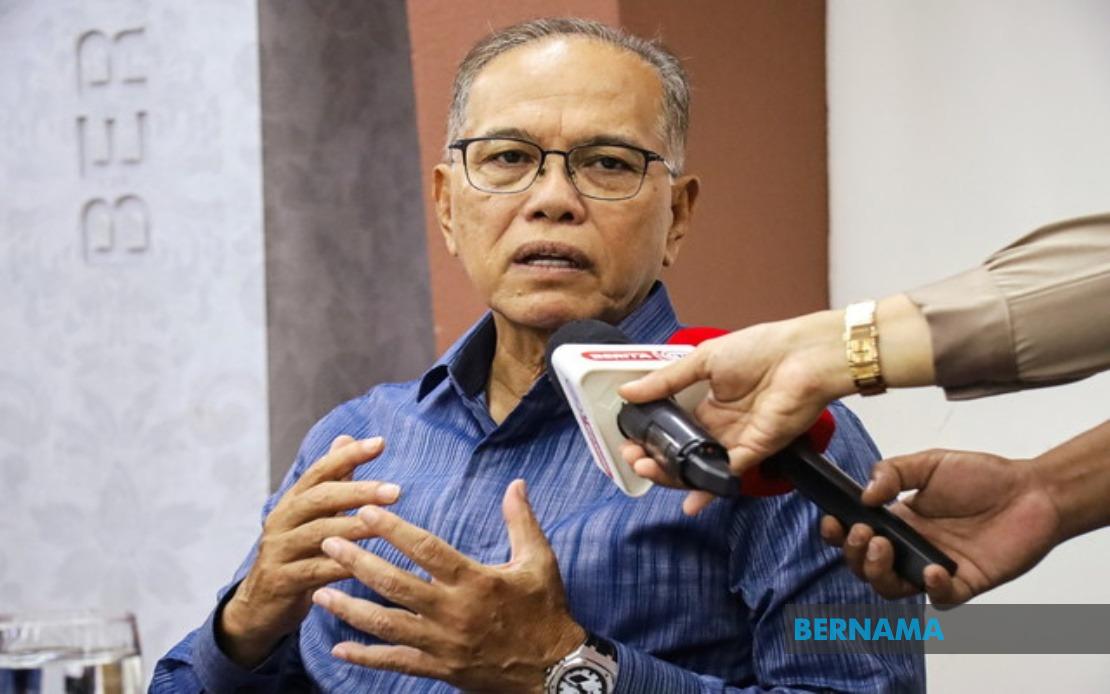
Datuk Seri Wan Rosdy Wan Ismail, the Menteri Besar of Pahang and chairman of the state's Barisan Nasional division, has declared that the political coalition between BN and Pakatan Harapan will remain intact until the 16th General Election, reinforcing a partnership that has defined Pahang's governance for nearly two years. Speaking in Kuantan following his officiating of a scholarship initiative, Wan Rosdy expressed confidence that the unity arrangement, which has provided relative political stability in the eastern state, would endure through what is expected to be a national election cycle several years away.
The current political configuration in Pahang reflects the broader national unity government established following the 15th General Election in November 2022. In that contest, BN and Perikatan Nasional each secured 17 seats in the 42-member Pahang state assembly, while PH obtained eight seats. This near-tie necessitated a coalition arrangement, and following the consent of Pahang Regent Tengku Hassanal Ibrahim Alam Shah Al-Sultan Abdullah Ri'ayatuddin Al-Mustafa Billah Shah, Wan Rosdy was appointed to lead a state government comprising representatives from both BN and PH. The arrangement has proven durable despite the inherent tensions that often characterise multi-party coalitions in Malaysian politics.
Wan Rosdy's reaffirmation of commitment to the unity government carries significance beyond Pahang's borders. The state's political stability influences broader national dynamics, particularly given the ongoing negotiations between the federal government coalition and various political players. By publicly stating his intention to maintain the BN-PH partnership through GE16, the Menteri Besar is essentially signalling that Pahang will not become a flashpoint for coalition instability in the period leading up to the next general election. This consistency proves valuable to federal coalition partners seeking to project an image of unity and stable governance to voters.
However, Wan Rosdy's statement also included a notable qualification. He indicated that Pahang BN remains open to forming cooperation with any party in preparation for GE16, suggesting that while the current partnership with PH is intended to persist, the state leadership is keeping its options open. This measured approach reflects the pragmatic nature of Malaysian politics, where flexibility and strategic repositioning remain perpetual considerations. The statement effectively balances loyalty to the current arrangement with acknowledgement of the fluid political landscape that has characterised the post-15th election period.
The stability afforded by the unity government has allowed Pahang's administration to focus on substantive policy initiatives rather than being consumed by constant political manoeuvring. This was evident in Wan Rosdy's unveiling of the Makmur Pahang Initiative's scholarship programme, which allocated RM118,000 to 118 students from higher education institutions pursuing further studies in Egypt and New Zealand during the current academic year. The scheme exemplifies how a secure political environment enables state governments to pursue long-term human capital development strategies that might otherwise be sidelined by electoral pressures or coalition management crises.
The Pahang administration's commitment to education scholarships demonstrates a strategic approach to talent development that prioritises both Islamic values and market-relevant fields of study. By directing students toward countries like Egypt and Morocco, the state government signals an emphasis on maintaining cultural and religious connections while pursuing academic excellence. Simultaneously, the careful selection of courses and institutions reflects an understanding that contemporary challenges require graduates equipped with both traditional values and contemporary skills. This nuanced approach to scholarship allocation indicates sophisticated thinking about Pahang's long-term development trajectory.
Beyond the RM118,000 domestic allocation, the state government channelled USD1,000 through Yayasan Pahang to support students pursuing higher education in Jordan and Morocco, broadening the geographical and developmental scope of its scholarship initiative. This multi-country approach suggests recognition that human capital development in an increasingly interconnected region requires exposure to diverse academic and cultural environments. The allocation to students in Islamic-majority nations also reinforces the state's commitment to education pathways that align with the cultural and religious aspirations of Pahang's predominantly Muslim population.
Wan Rosdy's emphasis on the challenges faced by overseas students reflects acknowledgement that scholarship programmes entail responsibilities beyond financial provision. His exhortation for students to maintain discipline, uphold Pahang's reputation, and strengthen themselves mentally and physically recognises that educational success abroad depends on holistic personal development. This pastoral approach to scholarship management, combined with strategic curriculum selection, positions the Makmur Pahang Initiative as a comprehensive human development programme rather than merely a financial assistance scheme.
The Menteri Besar's commitment to expanding and enhancing the scholarship initiative reflects confidence in the state's fiscal position and political durability. Programmes requiring ongoing funding commitments typically receive sustained investment only when governments believe they will remain in office long enough to see them through to completion. By publicly pledging expansion of the Makmur Pahang Initiative, Wan Rosdy is implicitly expressing confidence that the BN-PH coalition will provide the stable governance environment necessary to develop these initiatives over multiple years.
For Malaysian and Southeast Asian observers, the Pahang situation exemplifies the broader regional trend toward coalition governments and power-sharing arrangements. Rather than clear electoral mandates producing single-party dominance, contemporary Malaysian politics increasingly features multi-party coalitions requiring ongoing negotiation and mutual accommodation. Pahang's experience with the BN-PH unity government provides instructive lessons in how coalitions can function effectively, particularly when component parties demonstrate commitment to shared governance objectives rather than pursuing opportunistic political advantage.
The unity government arrangement in Pahang also reflects regional patterns seen across Southeast Asia, where coalition building has become more sophisticated and institutionalised. Countries throughout the region have witnessed similar political configurations where diverse parties form governing coalitions to deliver public services and pursue shared policy objectives. Pahang's two-year track record of coalitional stability, underpinned by clear policy focus on initiatives like the scholarship programme, offers a model that regional observers assess for relevance to their own political contexts.
Looking toward GE16, the durability of Pahang's unity government will likely influence perceptions of coalitional viability at the federal level. If the state partnership continues functioning effectively, delivering measurable public goods like expanded educational opportunities, it provides evidence that cross-coalition cooperation can deliver governance benefits. Conversely, if tensions emerge or the arrangement deteriorates, it would reinforce scepticism about multi-party governance models. The political stakes of maintaining Pahang's coalitional partnership therefore extend well beyond state boundaries, encompassing broader questions about the future direction of Malaysian democracy.

