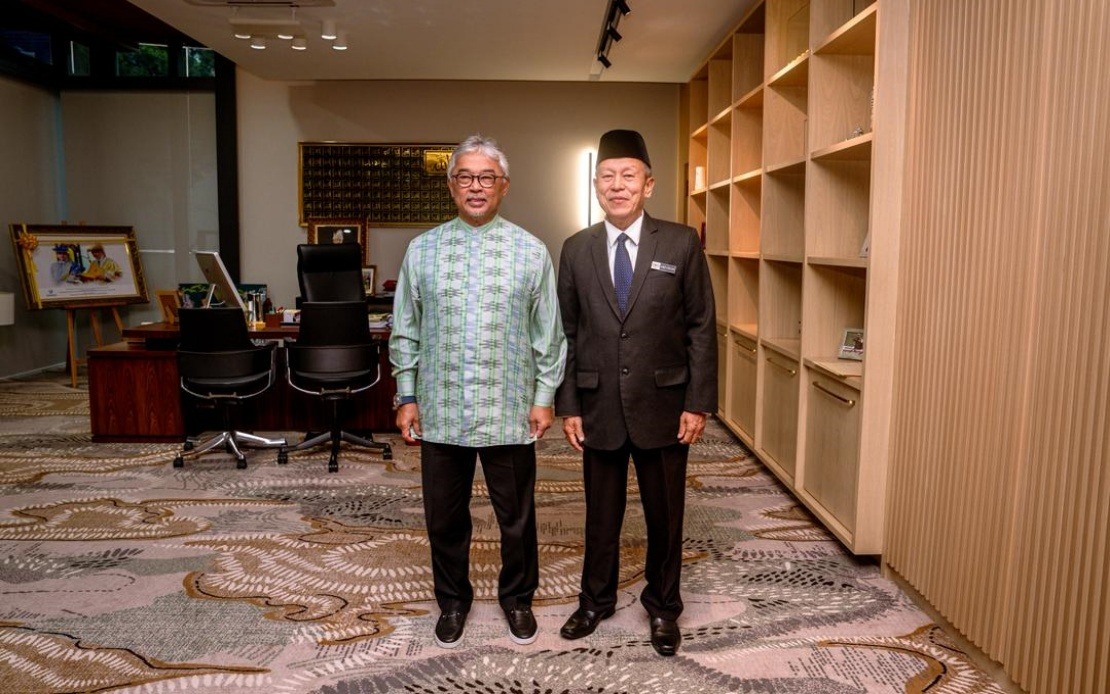
The Sultan of Pahang, Al-Sultan Abdullah Ri'ayatuddin Al-Mustafa Billah Shah, recently hosted the head of Malaysia's anti-corruption watchdog at his residence in Ampang, marking a significant engagement between the royal household and the Malaysian Anti-Corruption Commission (MACC). The one-hour audience with MACC chief commissioner Datuk Seri Abd Halim Aman at Shahzan House underscored the palace's continued interest in the nation's integrity and governance standards.
During the meeting, the MACC leadership provided the Sultan with an extensive overview of the commission's current operational developments and strategic direction. The briefing encompassed the agency's recent achievements and ongoing programmes designed to strengthen the institutional capacity for fighting corruption across Malaysia's public and private sectors. This type of direct engagement between the palace and enforcement agencies reflects the traditional role of the sultanate in monitoring the kingdom's governance health.
The discussions extended beyond operational updates to encompass broader systemic challenges. Both parties explored matters pertaining to governance frameworks, preventive mechanisms against corruption, and the multifaceted initiatives the MACC has initiated to restore public trust in its enforcement mandate. These conversations are particularly timely given growing public scrutiny of institutional accountability and transparency across government agencies and state-linked enterprises.
Royal audiences of this nature carry symbolic weight in Malaysia's constitutional monarchy. The Sultan's willingness to dedicate time to detailed briefings from the MACC's leadership signals the palace's commitment to maintaining oversight of anti-corruption efforts and governance standards across the country. It also provides a platform for the commission to directly communicate its priorities and challenges to the highest levels of the sultanate, potentially facilitating support for its mandate.
For the MACC, such royal recognition serves multiple purposes within Malaysia's institutional ecosystem. It validates the commission's independence and role as a critical pillar of Malaysia's anti-corruption infrastructure, while also providing an opportunity to present its case directly to influential figures within the constitutional framework. The Sultan's engagement demonstrates that anti-corruption remains a priority concern within the palace, resonating with public expectations for robust governance.
Datuk Seri Abd Halim took the occasion to express formal appreciation for the Sultan's receptiveness and support for the MACC's continuing mission to combat corruption. He emphasised how crucial royal backing is for the commission's credibility and effectiveness, particularly when confronting entrenched interests or navigating sensitive investigations that cross traditional boundaries. This gratitude underscores a broader institutional recognition that the sultanate's moral authority enhances the MACC's standing.
The chief commissioner also highlighted the MACC's commitment to advancing transparent, accountable governance structures throughout Malaysia. This emphasis aligns with the Sultan's traditional custodial role over the kingdom's constitutional order and ethical standards. By linking the MACC's operational agenda to these foundational principles, the chief commissioner positioned anti-corruption work as integral to the nation's constitutional health rather than merely as law enforcement.
For Malaysian readers, particularly those concerned with governance quality and institutional integrity, such engagements offer reassurance that multiple institutions remain engaged with anti-corruption imperatives. The sultanate's demonstrated interest signals that accountability mechanisms are not operating in isolation but are integrated into broader systems of constitutional oversight and royal supervision. This is especially significant in a context where public confidence in institutions has faced periodic challenges.
The audience also reflects the MACC's strategic approach to institutional legitimacy. Rather than operating solely through enforcement actions, the commission actively maintains relationships with powerful stakeholders and constitutional entities that can amplify its message and support its independence. The Sultan's willingness to engage demonstrates receptiveness to this approach and suggests that anti-corruption efforts enjoy high-level institutional backing.
From a regional perspective, Malaysia's continued emphasis on institutional anti-corruption mechanisms distinguishes it within Southeast Asia. While some neighbouring countries struggle with politicized enforcement agencies, Malaysia's engagement with formal oversight structures and constitutional authorities provides a contrasting model of institutional resilience. The Sultan's involvement with the MACC reinforces this institutional pluralism.
Looking forward, such interactions between the palace and enforcement agencies are likely to continue shaping Malaysia's governance landscape. As corruption concerns persist across multiple sectors, and as the MACC navigates complex investigations, royal support and oversight provide crucial institutional ballast. The Pahang Sultan's audience thus represents not merely a courtesy visit but a substantive engagement with Malaysia's ongoing governance challenges and the institutional mechanisms designed to address them.
The meeting ultimately illustrates how Malaysia's anti-corruption efforts extend beyond the MACC's operational independence to encompass a broader constellation of institutions and actors committed to strengthening governance standards. The sultanate's involvement reflects the constitutionally embedded expectation that the royal household maintains vigilance over the nation's ethical and administrative foundations, a principle that continues to shape institutional relationships and public expectations across Malaysia.

