The Pakatan Harapan coalition is treading carefully through what could become a defining factor in the Johor state election: the behaviour of Perikatan Nasional voters in constituencies where their party has chosen not to stand. With polling day set for July 11, and early voting scheduled for July 7, coalition strategists are acutely aware that the political landscape has become far more fluid than in previous contests, and that voter movement patterns could determine which side controls the state assembly.
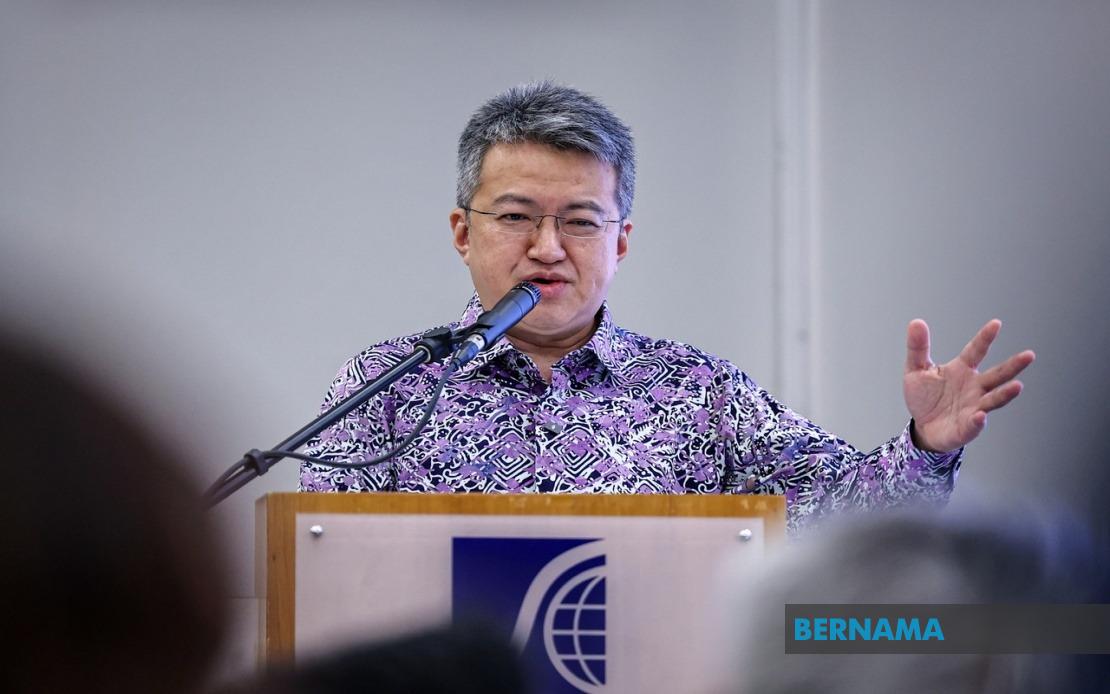
DAP Strategic Director and Deputy Finance Minister Liew Chin Tong laid bare the coalition's principal worry during a Bernama interview in Johor Bahru on June 29. The fundamental uncertainty facing PH candidates is straightforward yet consequential: will supporters of Perikatan Nasional, unable to vote for their preferred party in 23 seats where PN has deliberately abstained, migrate their ballots to rival coalitions, or will they shift toward government-aligned Barisan Nasional? In a state where constituencies have historically been decided by narrow margins, even modest vote transfers could reshape the outcome.
This concern cuts particularly deep for DAP representatives, who have traditionally relied on consolidated opposition support to overcome the machinery and resources advantage enjoyed by ruling-coalition parties. Liew acknowledged that the scenario presents tangible risks to DAP candidates seeking to retain or capture ground in these contested areas. The question of voter behaviour in such circumstances has no precedent to guide PH's strategists with certainty, which explains the coalition's openly cautious stance. Each election cycle produces surprises and contingencies that even seasoned analysts struggle to predict, Liew noted, emphasizing that the coalition recognizes the inherent unpredictability of such political transitions.
Yet PH's response to this uncertainty reflects confidence in its basic competitive machinery. The coalition has fielded what Liew characterized as a slate of young and credible candidates deliberately matched to their respective constituencies. The strategy suggests PH believes that ground-level organisation, policy platform appeal, and candidate quality can overcome the headwind created by vote fragmentation in Perikatan-vacated seats. The coalition's emphasis on vigilance, sustained campaigning, and the consistent articulation of fresh ideas represents an attempt to consolidate support among traditional opposition voters while potentially capturing swing voters disaffected with the status quo.
Liew's own electoral path demonstrates PH's broader recalibration ahead of this contest. The Deputy Finance Minister, who secured the Perling state seat during the 2022 Johor election, has opted not to defend that position—a decision that appears to reflect principle rather than electoral weakness. He attributed the move to DAP's internal philosophy of discouraging elected officials from simultaneously holding positions in both parliament and the state assembly. This principle, if consistently applied, suggests a party determined to prevent power concentration and provide advancement pathways for emerging talent, even if it means veteran politicians stepping aside.
Perling itself illustrates the competitive intensity facing PH in this election. The constituency contains 109,992 registered voters and will host a three-way contest between DAP's new standard-bearer Alan Tee Boon Tsong, a former assemblyman from Senai, against Barisan Nasional's P. Pannir Selvam and Boo Wei Han representing the newer Parti Bersama Malaysia. Tee's previous state-level experience gives him organisational advantage, yet his need to rebuild a personal voter base in Perling after leaving his previous seat introduces fresh uncertainty. The presence of a Bersama candidate introduces another unpredictable element, potentially fragmenting support across multiple directions and complicating traditional two-coalition arithmetic.
The decision to allow Tee to contest Perling also signals PH's commitment to succession planning and renewal. By rotating veteran politicians like Liew toward parliamentary or organisational roles while promoting mid-ranking figures like Tee into state seats, PH attempts to project dynamism and fresh governance while retaining institutional knowledge through senior members' guidance. Whether this generational transition translates into stronger electoral performance or creates vulnerabilities where new candidates lack established voter relationships remains a central question.
The broader context of Johor politics cannot be separated from the nation's shifting political balance. Johor has historically been a Barisan stronghold, yet PH has made substantial inroads in recent contests. Perikatan Nasional's decision to contest only a portion of Johor seats suggests either confidence that specific constituencies align with its Islamic and Malay-centric messaging or a strategic choice to avoid diluting its resources across the entire state. Either interpretation indicates that the electoral terrain has fragmented beyond the simple government-versus-opposition dichotomy that dominated Malaysian politics for decades.
For Malaysian voters and regional observers, the Johor election carries significance beyond state-level governance. The result will provide early indication of how electoral competition is restructuring following the emergence of Perikatan Nasional as a third major pole, no longer simply a component of broader coalitions. If vote transfers from Perikatan to rival parties occur substantially, it suggests voters view political affiliation as instrumental and transferable rather than fixed—a finding with implications across Southeast Asia's broader trend toward dealignment and unpredictable electoral behaviour.
Liew's candid acknowledgement of uncertainty and risk contrasts with the typical rhetoric of political confidence that precedes elections. This candour may itself carry electoral significance, as it positions PH as realistic about challenges while emphasizing commitment to earning voter trust through effort and policy substance rather than assuming support based on historical patterns. For Johor voters preparing to cast ballots in mid-July, the coalition's approach suggests they face a genuine competitive contest where outcomes depend on individual candidate quality, localised campaign intensity, and the still-unresolved question of how supporters of a competing coalition will ultimately vote.

