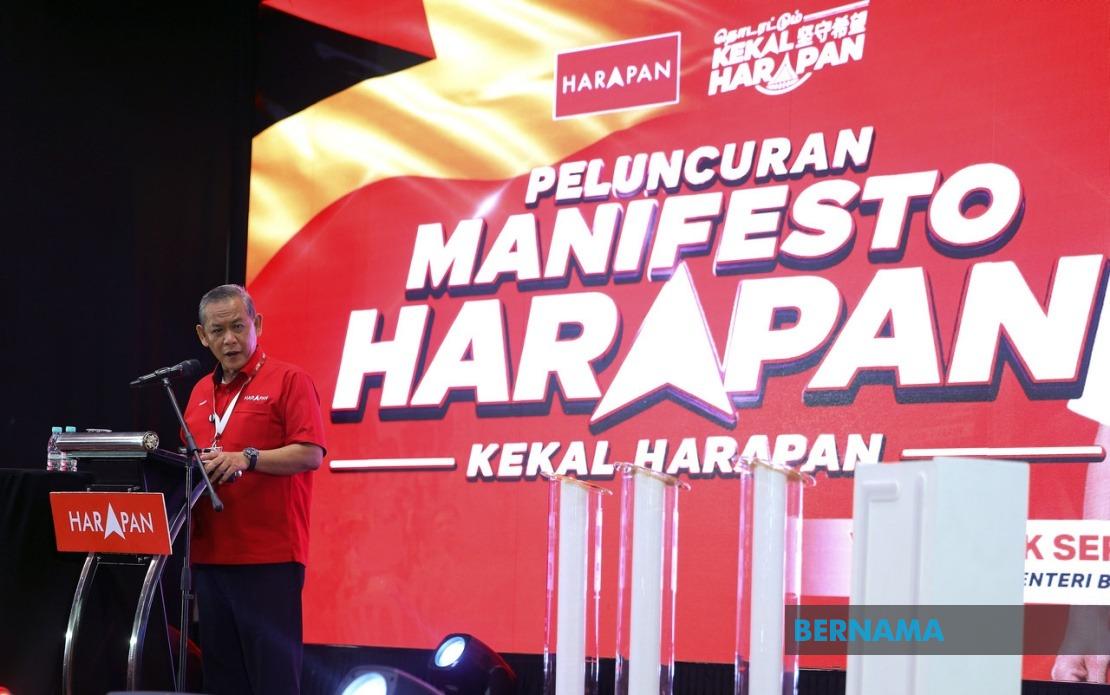
Pakatan Harapan has set out its electoral blueprint for the upcoming 16th Negeri Sembilan state election, unveiling a manifesto that emphasises continuity and reform across ten substantive policy areas. Launched in Seremban by Menteri Besar Datuk Seri Aminuddin Harun, who chairs the coalition at state level, the document carries the thematic banner 'Negeri Sembilan Kekal Harapan'—a framing that positions the coalition as the custodian of the state's progress and aspirations moving forward.
At its core, the manifesto signals PH's intent to prioritise stable, transparent governance alongside people-focused development. This emphasis on administrative rectitude and citizen-centricity reflects broader themes that have animated coalition messaging since 2018, yet the Negeri Sembilan iteration tailors these principles to local preoccupations and economic realities. The manifesto's opening commitment thereby establishes a foundational narrative: that PH offers both continuity in proven management and renewal through accountability.
Economic dynamism forms a central pillar of the coalition's pitch. The pledge to generate 30,000 high-income employment opportunities addresses a recurring concern across Malaysian states—the need to move beyond low-wage sectors and create pathways to prosperity for younger voters and families seeking advancement. This jobs target, paired with commitment to building a competitive economy, suggests PH's recognition that electoral fortunes increasingly turn on tangible economic prospects rather than abstract governance principles alone.
Social welfare expansion features prominently through reinforcement of the Skim Sejahtera Rakyat, the state-level wellbeing scheme that has become a political flashpoint across multiple electoral cycles in Malaysia. By foregrounding this commitment, PH signals both defence of an existing programme and intention to deepen its reach—a calculated move to consolidate support among lower-income constituencies whilst projecting ambition to extend benefits further.
Housing emerges as another substantive pledge, with the manifesto committing to 20,000 affordable residential units alongside parallel efforts to untangle the state's complex land tenure issues. This dual approach reflects accumulated lessons from previous election cycles: that property affordability generates visceral voter concern, while land disputes remain a persistent drag on both economic efficiency and public satisfaction. By addressing both dimensions simultaneously, PH positions itself as attuned to material grievances that often escape headline coverage.
Educational access and quality represent a further cornerstone, reflecting national demographic trends and parental anxieties about schooling standards and opportunity. This commitment gains particular salience in Negeri Sembilan, where interstate migration patterns mean families frequently weigh educational prospects when deciding whether to remain or relocate. PH's framing here implies that state-level initiatives can materially improve outcomes rather than merely deferring to federal policy.
The manifesto's infrastructure and healthcare planks address service delivery anxieties that chronically frustrate Malaysian voters across state lines. Strategic infrastructure development, undefined in precise terms, nonetheless signals PH's commitment to investment-led growth and improved connectivity—perennial concerns in states with dispersed settlement patterns. Healthcare promises resonate in an era of rising medical costs and pandemic-induced awareness of system vulnerabilities, making this commitment more than symbolic.
Tourism and cultural heritage development represents a more targeted economic strategy, acknowledging Negeri Sembilan's historical significance and emerging potential as a destination. This sectoral focus suggests PH's calculation that state branding and targeted investment can unlock employment and revenue streams currently underexploited. The emphasis on cultural heritage also carries softer political dividends, appealing to community pride and local identity.
Youth and women's empowerment, alongside family strengthening initiatives, address demographic segments whose political allegiance has proven volatile in recent cycles. By explicitly naming these constituencies, PH signals recognition that electoral coalitions require dedicated attention to specific groups beyond broad population-wide appeals. These commitments, whilst often vague in operational detail, function as anchoring signals of intent and priority.
The Felda Development Plan receives specific mention, reflecting the significant presence of Felda schemes within Negeri Sembilan and their importance to rural and semi-rural voter bases. Agricultural modernisation and food security pledges extend this rural focus whilst addressing post-pandemic supply chain anxieties that have heightened public consciousness of national food dependency. These commitments particularly resonate in a state where smallholder farming and estate agriculture remain economically significant.
Interfaith unity rounds out the ten pillars, positioning PH as committed to social cohesion in a state with meaningful religious and ethnic diversity. This pledge carries especial weight given polarisation dynamics that have intensified across Malaysian politics in recent years, signalling PH's intent to differentiate itself through inclusive framing.
For Malaysian observers, the manifesto's structure and content offer several insights. First, it demonstrates how state-level coalitions customise national political narratives to local economic and demographic realities. Second, it reveals persistent voter preoccupations—employment, housing, service quality—that transcend partisan divides. Third, the breadth of commitments suggests PH's calculation that electoral success now requires demonstrating competence across diverse policy domains rather than concentrating messaging narrowly. Whether Negeri Sembilan voters find these pledges sufficiently credible and ambitious to sustain coalition support remains the defining electoral question.

