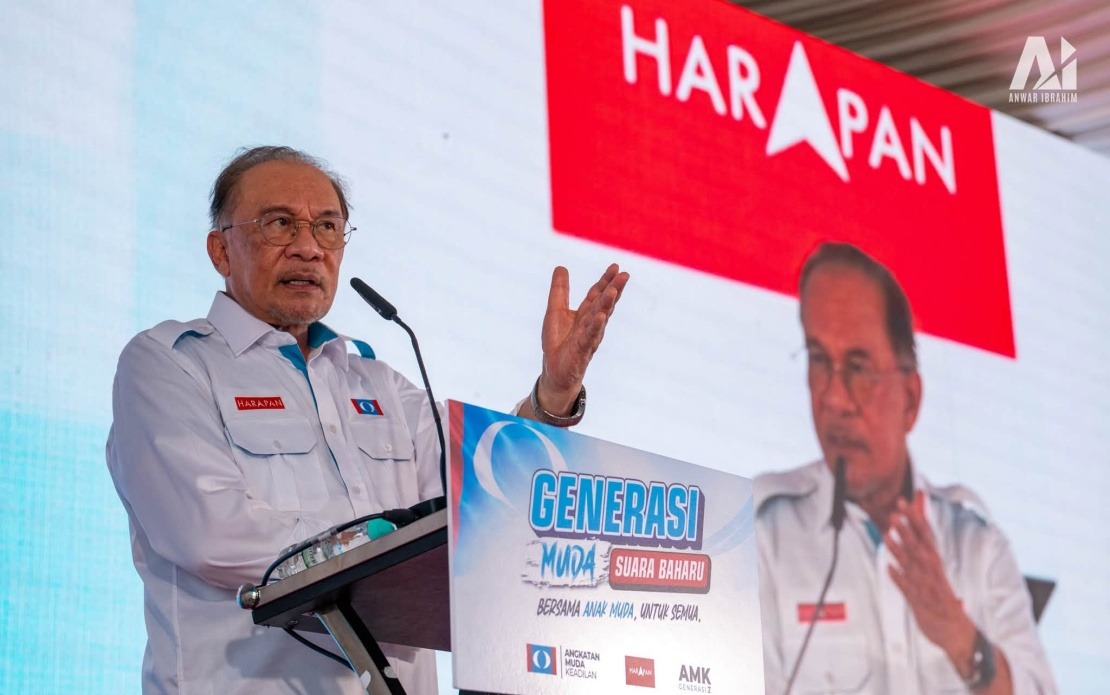
Pakatan Harapan has made a direct appeal to voters in Negeri Sembilan, committing itself to delivering an administration rooted in integrity, stability and transparency if granted the authority to lead the state following elections scheduled for August 1. The coalition's pledge comes as the election campaign enters its final phase, with early voting set to commence on July 28.
Prime Minister Datuk Seri Anwar Ibrahim, who serves as PH chairman, personally issued the appeal through social media, urging the people of Negeri Sembilan to place their confidence in the coalition by extending its mandate. The statement reflects PH's broader strategy of positioning itself as a reform-minded alliance committed to moving beyond the governance challenges that preceded its 2018 federal election victory.
The coalition's messaging strategy incorporates religious and moral framing, with Anwar's statement accompanying a Quranic verse from Surah Al-Ma'idah that emphasizes the importance of cooperation in righteous endeavours and the rejection of hostility. This approach seeks to resonate with Negeri Sembilan's diverse electorate by grounding PH's political platform in shared ethical values that transcend narrow partisan interests.
For the Negeri Sembilan contest, PH is mounting a comprehensive campaign across all 36 state assembly seats, reflecting its ambition to secure decisive control of the state government. The coalition has distributed candidacies among its three component parties according to an agreed formula: the People's Justice Party (PKR) is fielding 16 candidates, the Democratic Action Party (DAP) 11 candidates, and the National Mandate Party (Amanah) nine candidates. This allocation demonstrates the internal power-sharing arrangements within PH and suggests areas where each party holds particular organizational strength or electoral appeal.
The distribution of seats among coalition partners carries implications beyond simple seat counts. PKR's dominant share reflects its status as the largest and most electorally successful component of PH, leveraging Anwar's personal popularity and the party's established presence across Malaysian states. DAP's allocation reflects its traditional stronghold among urban and semi-urban Chinese voters, while Amanah's placement suggests targeted efforts to capture support among Malay-Muslim voters who may seek an Islamic-oriented alternative to UMNO or PAS.
Negeri Sembilan represents strategically significant territory for PH's broader political positioning. The state has historically been a competitive battleground between established parties, and control of its state government would strengthen PH's claim to represent an effective national alternative to the Barisan Nasional-led federal coalition. A strong performance would also provide momentum heading toward the next general election, which must be called by 2025.
The timing of the election places particular emphasis on early voting arrangements, with July 28 designated for advance polling. This scheduling allows professionals, public sector workers, security personnel and others unable to vote on election day to participate in the electoral process. The staggered voting system adds logistical complexity but reflects Malaysia's commitment to ensuring maximal participation across diverse workforce categories.
PH's emphasis on clean governance and integrity carries specific resonance given the corruption scandals that have dominated Malaysian politics since the 1MDB affair and subsequent prosecutions of high-ranking UMNO figures. The coalition's repeated invocation of anti-corruption commitments speaks to voter appetite for accountability and transparent administration, sentiments that have shifted public expectations around political conduct. This messaging strategy positions PH as the custodian of reform against forces representing continuity with allegedly discredited practices.
The Negeri Sembilan election occurs within a broader context of state-level contests that have become increasingly significant in Malaysian politics. Recent elections in Johor, Penang, Selangor and other states have demonstrated that state governments can function as independent political power bases, platforms for testing electoral strategies, and laboratories for policy innovation. Success in Negeri Sembilan would enhance PH's federal political standing and potentially create regional administrative capacity for advancing the coalition's governance agenda.
Voters in Negeri Sembilan will ultimately determine whether they find PH's governance record sufficiently compelling to extend its mandate. The coalition's ability to convert pledges of clean administration into tangible public service improvements, economic opportunity and responsive governance will shape both the outcome of this contest and the trajectory of Malaysian politics heading toward the next federal election.

