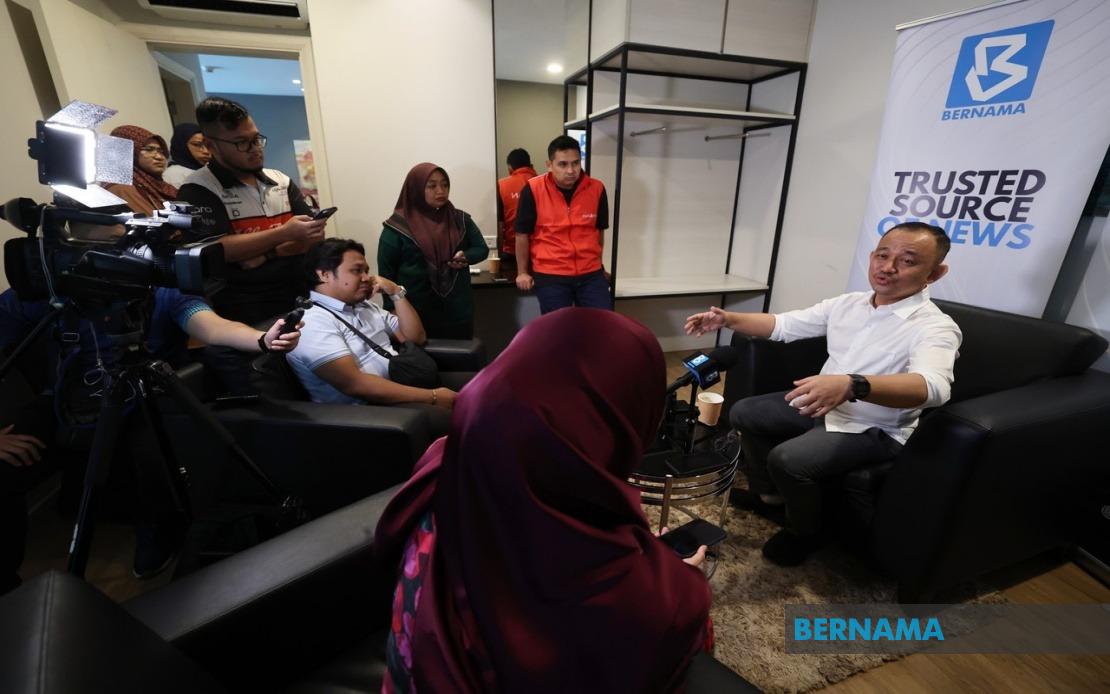
Pakatan Harapan has formally acknowledged that the Sultan of Johor holds the sole constitutional authority to appoint the state's next Menteri Besar, signalling the coalition's commitment to respecting royal prerogatives ahead of the 16th Johor state election scheduled for July 11. The statement, made by PH's Puteri Wangsa candidate Dr Maszlee Malik, represents a deliberate positioning by the opposition coalition to emphasise institutional respect and constitutional propriety during a critical electoral campaign.
Maszlee's comments were offered in response to widespread speculation on social media platforms that had begun circulating his name as a potential contender for the top state position. Rather than engage in the speculation or stake a claim to the role, he instead framed the coalition's approach around collective responsibility and deference to established constitutional frameworks. This calculated response underscores PH's awareness that any appearance of pre-determining leadership positions could undermine its claims to champion democratic governance and institutional respect.
The coalition has deliberately avoided internal discussions about the Menteri Besar post, according to Maszlee, prioritising instead the development of comprehensive policy platforms and service delivery frameworks that could benefit Johor's residents. This strategic silence on leadership succession reflects a broader campaign philosophy centred on demonstrating competence and unity rather than personalised political competition. By declining to engage in the succession question, PH appears intent on maintaining cohesion among its component parties and candidate slate.
Maszlee emphasised that PH's electoral strategy rests on presenting voters with a strong team of quality candidates fielded across all 56 contested seats, rather than relying on individual personalities or reputations. His invocation of the "Avengers" metaphor suggests a deliberately coordinated narrative about collective strength and complementary capabilities. This messaging strategy reflects lessons learned from previous electoral cycles where over-dependence on single leaders proved vulnerably susceptible to personal scandals or shifting voter sentiment.
The explicit recognition of the Sultan's constitutional prerogative carries particular significance within Malaysia's constitutional monarchy framework. Unlike Westminster systems where the leader of the majority party automatically assumes executive office, Malaysia's state constitutions grant rulers important discretionary powers in selecting chief ministers, particularly in circumstances involving coalition governments or closely divided parliaments. Maszlee's statement therefore signals PH's acceptance of this fundamental institutional reality.
This deference to royal authority also carries implications for inter-party dynamics within the coalition itself. By positioning the Sultan as the ultimate decision-maker, PH effectively removes what could otherwise become a contentious internal negotiation point between Pakatan's component parties—particularly DAP, PKR, and Amanah—each of which might harbour candidates or preferences for the position. The strategy allows the coalition to maintain unified messaging during the campaign whilst deferring potentially divisive deliberations to the post-election period.
For Johor's electorate, Maszlee's positioning suggests that PH intends to campaign primarily on policy substance and governance competence rather than leadership personalities. This approach differs markedly from personalised campaigns centred on specific candidates, instead asking voters to evaluate the coalition based on its proposed programmes, track record, and organisational capacity. Whether this strategy resonates with voters accustomed to more personality-driven political narratives remains to be seen.
The timing of these comments, made just two weeks before polling day and one week before early voting on July 7, indicates that PH recognises ongoing media and public interest in post-election government formation. By addressing the question proactively rather than remaining silent, the coalition attempts to control the narrative around its leadership intentions and constitutional respect. The statement also potentially forestalls future accusations that PH had harboured undisclosed power-sharing agreements or leadership arrangements.
This constitutional deference also carries broader significance for Malaysia's political system, particularly regarding the balance between democratic electoral mandates and monarchical prerogatives. As political scientists have noted, Malaysia's federal and state constitutions contain residual powers for rulers that distinguish the country's system from purely majoritarian democracies. Maszlee's comments reflect a pragmatic acceptance of this constitutional reality by a major political coalition.
Regionally, PH's approach contrasts with political systems in neighbouring countries where electoral outcomes more directly determine executive leadership. Singapore's parliamentary system, for instance, provides no discretionary role for the President in selecting the Prime Minister, whilst Thailand's multiple constitutions have variously enhanced or diminished the monarchy's formal political powers. Malaysia's continued reliance on this constitutional framework reflects both historical institutional development and ongoing political consensus about the monarchy's role.
The campaign dynamics in Johor will ultimately test whether voters prioritise collective team performance and policy commitments over questions of individual leadership selection. Early voting commences on July 7, with the full poll following four days later, providing a relatively compressed campaign period for PH to consolidate messaging around unity, competence, and respect for constitutional institutions. The coalition's careful handling of the Menteri Besar question suggests strategic maturity in navigating Malaysia's complex constitutional arrangements.

