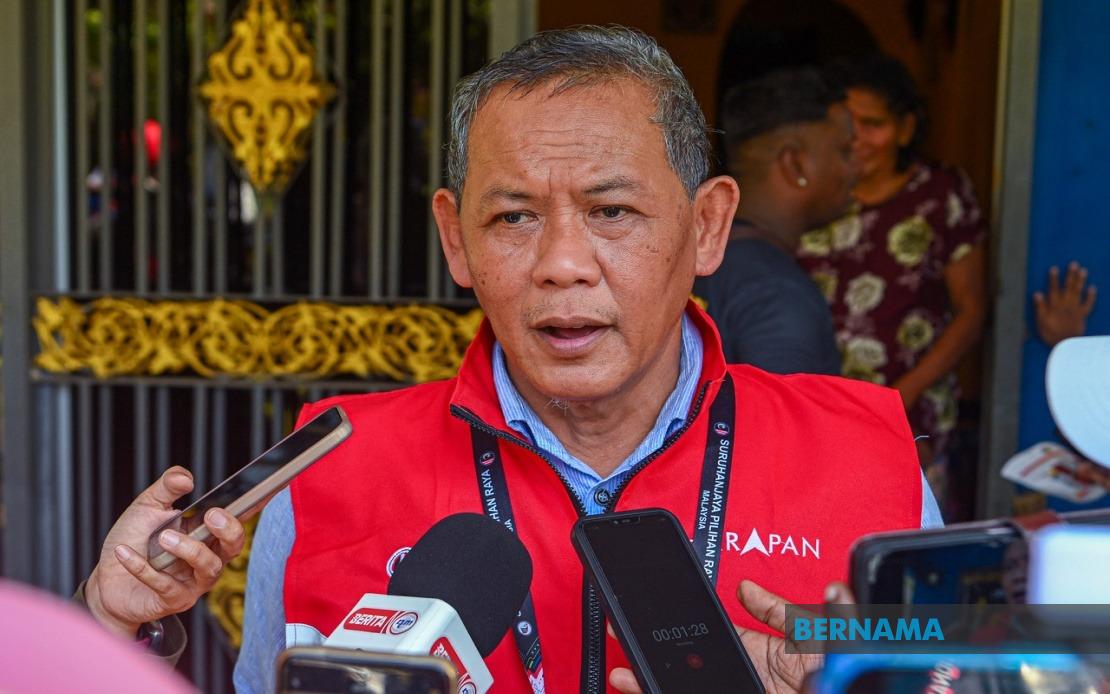
Pakatan Harapan has unveiled a more inclusive electoral manifesto for the 16th Negeri Sembilan state election, signalling a strategic shift in the coalition's approach to economic support by extending its programmes beyond low-income families to encompass the wider middle class. The coalition's 10-point platform, titled 'Negeri Sembilan Kekal Harapan' (Negeri Sembilan Stays with Harapan), represents an attempt to broaden the base of beneficiaries across Negeri Sembilan's diverse socioeconomic landscape ahead of polling day on August 1.
State Pakatan Harapan chairman Datuk Seri Aminuddin Harun outlined the strategic rationale for this expanded approach during a community engagement programme with the Indian community at Sekang Estate in Linggi. He contended that by including the M40 middle-income group alongside traditional B40 support, the coalition's initiatives would reach a substantially larger proportion of the state's population and generate more meaningful improvements to living standards across multiple income brackets.
The repositioning represents a departure from the coalition's earlier electoral strategy, which concentrated assistance exclusively on the B40 bottom forty per cent income segment. Aminuddin explained that initiatives spanning education access, social welfare, and economic opportunities have been deliberately expanded to encompass families within the M40 middle forty per cent bracket, acknowledging that Malaysia's expanding middle class faces its own set of economic pressures and aspirations.
This tactical recalibration reflects broader political considerations within Malaysia's competitive electoral landscape. As the middle class continues to grow and face challenges including housing affordability, education costs, and rising living expenses, political parties increasingly recognize the importance of addressing their concerns alongside traditional support for lower-income groups. Pakatan Harapan's decision to explicitly incorporate the M40 category suggests acknowledgment that electoral success in contemporary Malaysia requires appealing to a cross-section of income groups rather than concentrating narrowly on the poorest segments.
Aminuddin, who simultaneously holds the positions of Menteri Besar, PKR vice-president, Port Dickson Member of Parliament, and Negeri Sembilan PKR chairman, faces a competitive three-way contest in the Linggi state seat. His challengers include the incumbent Barisan Nasional representative Datuk Mohd Faizal Ramli and Parti Pribumi Bersatu Malaysia candidate Zamri Md Said, reflecting the fragmented political landscape that has characterized Negeri Sembilan and Malaysian state politics more broadly.
The coalition has deliberately emphasized its track record of implementation rather than merely vote-winning promises. Since assuming control of the state government in 2018, Pakatan Harapan has sought to establish a reputation for delivering on electoral commitments, contrasting this purportedly disciplined approach with what the party characterizes as hollow campaign pledges from rivals. Aminuddin argued that translating manifesto commitments into concrete government action represents a far more demanding undertaking than simply articulating popular policy positions during campaign periods.
The emphasis on delivery accountability carries particular significance in Malaysian state politics, where voters have increasingly demonstrated willingness to switch allegiances based on perceived government performance. Negeri Sembilan's electoral dynamics have proven fluid in recent elections, with voters shifting between coalitions based on assessments of state-level governance effectiveness, development outcomes, and financial management rather than simply following national political trends.
Beyond policy substance, Aminuddin made a pointed appeal for electoral maturity and social responsibility from all contesting parties. He specifically urged political competitors to avoid raising divisive issues that could destabilize communal harmony within Negeri Sembilan, a reflection of broader Malaysian concerns about election-related social tensions and polarization. This appeal carries particular weight given Malaysia's multiethnic composition and historical sensitivity to communal friction, especially during competitive electoral periods.
The dissolution of the Negeri Sembilan State Legislative Assembly on June 5 initiated the formal election timeline, with the Election Commission scheduling early voting for July 28 and the main election for August 1. This compressed campaign period presents particular challenges for all contesting coalitions and candidates to effectively communicate their platforms, differentiate themselves from competitors, and mobilize supporters across the state's diverse constituencies.
For Malaysian political observers, the Negeri Sembilan contest offers an important bellwether for broader electoral trends. As a relatively moderate state without the pronounced ethnic or religious polarization affecting some other Malaysian states, voter behaviour in Negeri Sembilan often reflects pragmatic assessments of governance and economic performance. The outcome could provide insights into whether Pakatan Harapan's expanded approach to incorporating middle-income voters proves electorally effective, and whether the coalition can maintain state-level control against resurgent Barisan Nasional competition and Bersatu's role as a disruptive third force in Malaysian politics.

