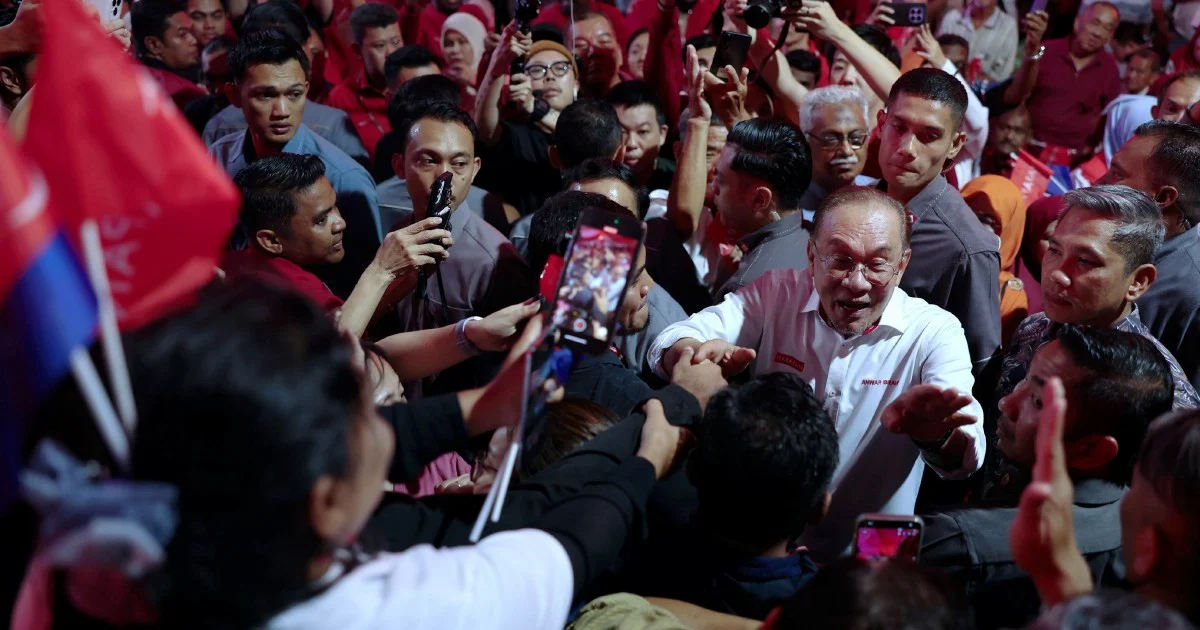
Pakatan Harapan made its formal entry into the Johor state electoral battleground today by announcing the complete roster of candidates it will field across all state constituencies in the July 11 polls. The coalition's chairman, Datuk Seri Anwar Ibrahim, presented the full 56-candidate slate at an event in Tangkak, setting the stage for what promises to be a keenly contested election in one of Malaysia's most politically significant states.
The decision to field a comprehensive candidate list signals PH's determination to mount a serious challenge to the incumbent Barisan Nasional government and its allies, who currently control the state assembly. Johor has historically served as a crucial political battleground, and control of the state carries substantial implications for the broader Malaysian political landscape. The coalition's move reflects its assessment that favourable conditions may exist to reverse electoral outcomes from previous contests.
Anwar's role in personally unveiling the candidates underscores the strategic importance PH places on the Johor contest. As the federal Prime Minister, his active involvement in state-level campaigning demonstrates the coalition's intent to mobilise resources and credibility at the highest levels. The event in Tangkak, a stronghold within the Johor political landscape, was carefully selected to launch what will be an intensive grassroots campaign across the state's constituencies.
The composition of the candidate slate will likely attract considerable scrutiny from political analysts and rival parties. Questions surrounding the selection of candidates—including the balance of party representation within the coalition, the inclusion of fresh faces versus seasoned incumbents, and the strategic placement of stronger contenders in winnable seats—form the basis of electoral strategy. PH's candidate choices will reveal much about where the coalition believes it has genuine prospects of picking up seats.
Johor's electoral dynamics present both opportunities and challenges for PH. While the state has traditionally leaned towards opposition support in urban centres and among certain demographic groups, rural constituencies have proved more resistant to PH's messaging. The coalition's candidate allocation across these varied constituencies will need to reflect a sophisticated understanding of local politics and ground sentiment in each area. Experienced campaigners and local personalities may be positioned to maximise PH's chances in competitive seats.
The Barisan Nasional coalition, which retains the chief minister's office, has maintained its grip on Johor through a combination of incumbency advantage, resource allocation, and traditional support networks. However, shifting electoral patterns across Malaysia in recent years have demonstrated that no state is entirely secure for any political formation. The July 11 election will test whether national sentiment, if favourable to PH, can translate into state-level gains even in traditionally conservative territories.
For Malaysian voters in Johor, the election represents an opportunity to pass judgment on the current state administration's performance across key areas including economic development, service delivery, and governance. Issues affecting livelihoods—employment, cost of living, infrastructure, and healthcare—are likely to feature prominently in the campaign messaging across all parties. The state's position as an economic engine for Malaysia means that voter concerns about prosperity and competitiveness will carry particular weight.
The broader implications of the Johor election extend beyond the state itself. A significant PH performance could reshape the balance of power within Malaysia's federal political structure, while conversely, a strong Barisan result would strengthen the ruling coalition's hand in federal-level politics. Southeast Asian observers also monitor such contests as indicators of Malaysia's political trajectory and the durability of the PH-led federal administration.
Campaigning in Johor tends to be vigorous and competitive, with all sides deploying substantial organisational capacity. PH will need to articulate a compelling vision for how its governance would differ from the incumbent administration, backed by practical policy proposals that resonate with diverse voter constituencies. The coalition's ability to project unity across its constituent parties—often a challenge in Malaysian opposition politics—will be crucial to maximising its electoral impact.
The July 11 election date provides a defined campaign period for all contesting parties to make their cases to voters. PH's formal candidate announcement marks the beginning of an intensive phase where the coalition will seek to build momentum, secure ground support, and persuade swing voters that an alternative administration would serve Johor's interests more effectively. The coming weeks will reveal whether the coalition's calculations about electoral opportunity in Johor align with actual voter sentiment across the state's diverse constituencies.

