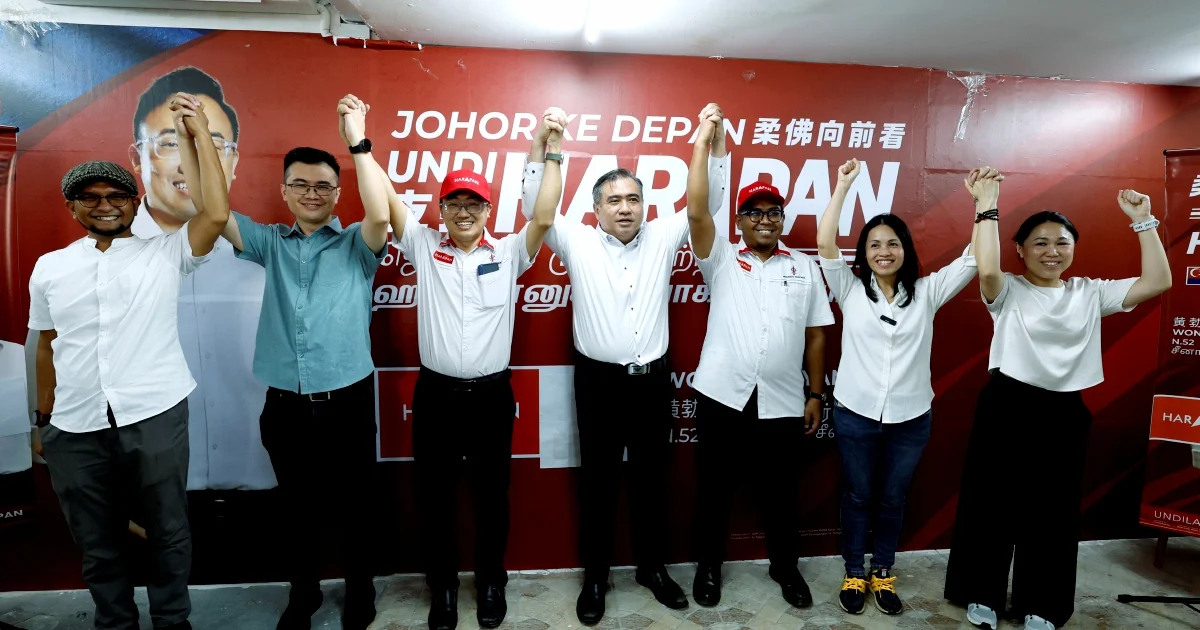
Pakatan Harapan is maintaining strategic silence on who will become Johor's next Menteri Besar, choosing instead to concentrate all efforts on winning the state election before addressing leadership appointments. The coalition's focus on victory ahead of personnel matters underscores the competitive nature of Johor politics, where the race remains fluid and any public positioning on the top job could disrupt internal unity or invite unwanted scrutiny from rivals.
The decision to defer the announcement reflects a calculated political approach. By withholding the candidate's name until after polling day, PH avoids the kind of internal jockeying that can weaken a coalition's message during the campaign. Johor, as Malaysia's second-largest state by area and economy, represents a significant prize, and the coalition recognises that maintaining cohesion is essential to overcoming entrenched competition.
Once Pakatan Harapan secures a mandate from voters, the coalition's top leadership council will convene to make the formal selection. This mechanism ensures that the decision involves senior figures across the component parties—PKR, DAP, and Amanah—allowing each to have a voice in shaping the state government. The process honours the multi-party nature of the coalition while preventing any single party from unilaterally claiming the chief minister's post.
Johor's political landscape has shifted considerably in recent years. The state, long a Barisan Nasional stronghold, has become increasingly competitive as voter sentiment evolves and opposition movements gain traction. Local issues such as water security, industrial development, and economic opportunity dominate conversation among residents. A state leadership capable of addressing these concerns will prove crucial to PH's appeal and to retaining power if the coalition prevails.
The emphasis on winning first mirrors the pragmatism that has characterised PH's recent political recovery. Rather than engaging in premature debates about distribution of ministerial positions, the coalition recognises that its credibility depends on delivering results. Voters in Johor, like those across Malaysia, are increasingly performance-driven, preferring leaders who address immediate needs over those preoccupied with internal power arrangements.
Johor's strategic importance extends beyond state boundaries. As a gateway to Singapore and a major economic hub, the state's governance affects regional trade, logistics networks, and investment flows across Southeast Asia. An effective state government can facilitate commerce and attract foreign capital, while poor administration creates friction that ripples outward. This context adds weight to PH's determination to field its strongest possible leadership once the electorate has spoken.
The coalition's approach also provides flexibility. Circumstances on the ground during the election campaign may influence which candidate emerges as the most credible or popular choice. By deferring the decision, PH can respond to voter feedback and campaign dynamics, potentially adjusting its strategy if certain candidates generate stronger resonance in particular districts or demographic groups. This adaptive capacity could prove valuable in a closely contested race.
Critically, the decision underscores the difference between campaign promises and governance realities. Pakatan Harapan has learned from past elections that overcommitting to specific personalities before securing power can create expectations difficult to manage. By separating the election campaign from the selection process, the coalition maintains room to negotiate, build consensus, and make decisions that reflect post-election political conditions rather than pre-election assumptions.
For political observers across Malaysia and the region, the strategy offers instructive lessons about coalition management. Unlike some opposition movements that fracture when internal differences surface, PH has developed mechanisms for deferring divisive decisions until victory is assured. This discipline has been central to its electoral competitiveness and explains why it remains a viable alternative government despite facing well-resourced and historically dominant opponents.
Johor voters heading to polls will cast ballots without knowing with certainty who the chief minister will be, yet this transparency about process may actually strengthen PH's credibility. The commitment to decide through the leadership council rather than decree demonstrates respect for democratic procedure and multi-party consensus. Such institutional commitment, however modest it may seem, distinguishes between governing approaches and matters to voters assessing which coalition can be trusted with state administration.
As campaigning intensifies, Pakatan Harapan's leadership will maintain this disciplined messaging. The party machinery across Johor will emphasise policy platforms, economic development plans, and institutional reforms rather than personality cults around any individual leader. This approach acknowledges that sustainable political support in a diverse state requires building coalitions around ideas and competence rather than individual personalities.

