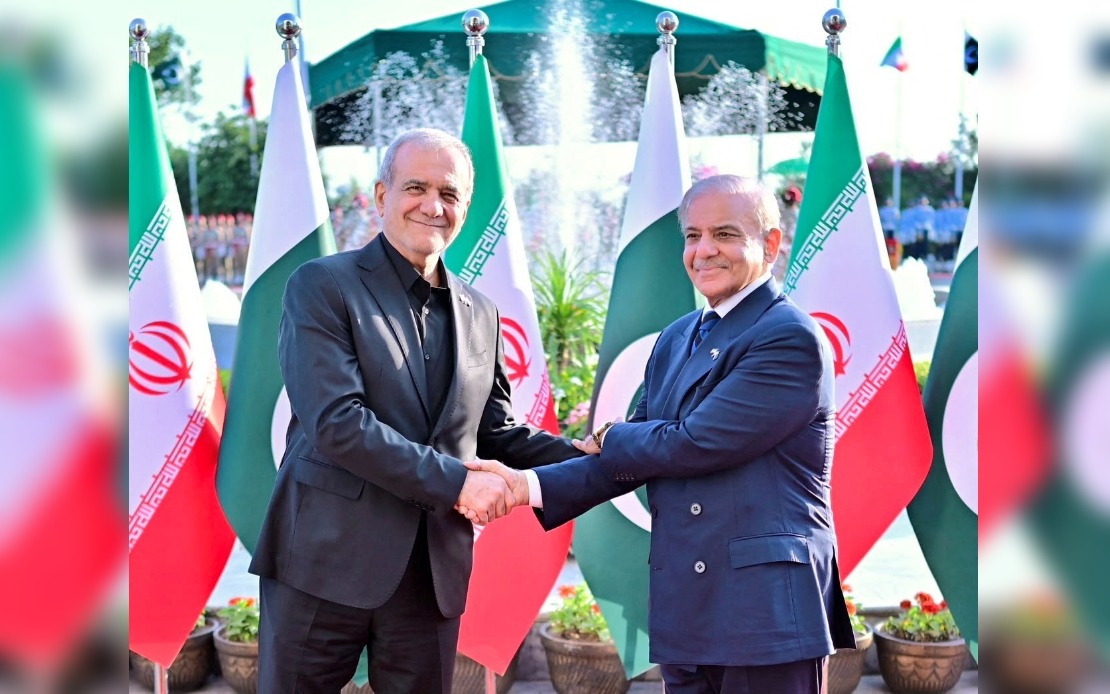
Pakistan's Prime Minister Shehbaz Sharif has taken a firm diplomatic stance supporting Iran's possession of ballistic missiles, a position that underscores Islamabad's deepening alignment with Tehran at a critical moment in Middle Eastern geopolitics. During high-level talks with Iranian President Masoud Pezeshkian in Islamabad, Sharif argued that Iranian missile capabilities should not be subjected to international restrictions or scrutiny, particularly since these weapons were deliberately excluded from the memorandum of understanding signed between Iran and the United States on June 17.
The Pakistani prime minister's defence of Iran's defence systems reflects a broader argument about equitable international standards. Sharif pointedly challenged what he characterised as double standards, emphasizing that if other nations maintain ballistic missile arsenals without restriction, Iran ought not face discriminatory constraints. His intervention came as Pezeshkian led a high-level Iranian delegation through Islamabad, signalling the importance both countries place on their bilateral relationship amid escalating regional tensions. The Pakistani leadership expressed gratitude for Iran's confidence in Islamabad's mediation role, with Sharif pledging unwavering support between the two nations characterised as brothers.
Islamabad's mediatory efforts between Washington and Tehran represent a significant diplomatic achievement in recent months. Before facilitating the June agreement, Pakistan had already brokered a temporary ceasefire between the adversaries in April, demonstrating Islamabad's capacity to navigate one of the world's most fraught geopolitical relationships. Key figures in Pakistan's diplomatic and military establishment, including Deputy Prime Minister Ishaq Dar and Field Marshal Syed Asim Munir, the Chief of Army Staff, played instrumental roles in these negotiations. This involvement reflects how Pakistan has positioned itself as an indispensable third party capable of dialogue with both Washington and Tehran when other mediators lack credibility.
The ballistic missile question has emerged as a contentious issue within broader West Asian security discussions. Iran views its missile programme as essential for national defence, particularly following military strikes by Israel and the United States on February 28 that demonstrated the vulnerability of nations lacking credible retaliatory capabilities. Iranian President Pezeshkian made this calculation explicit during the Islamabad visit, arguing that without defensive missiles, Iran would face the same devastating consequences currently unfolding in Gaza. This perspective reflects Tehran's assessment that conventional diplomacy and non-military deterrence have proven insufficient against more militarily capable adversaries in the region.
US President Donald Trump's recent statement acknowledging Iran's entitlement to ballistic missiles provided unexpected support for Pakistan's position. Speaking to journalists in Paris on June 17, Trump conceded the logic of Iran maintaining comparable weapons systems to other nations, stating that excluding Iran from capabilities possessed by other countries would be inherently unfair. This acknowledgment, while not representing binding policy, nonetheless validated the argument that missile restrictions imposed solely on Iran constitute discriminatory treatment rather than equitable arms control.
Pakistan's diplomatic initiative has not proceeded without obstruction. Sharif acknowledged that international spoilers remain intent on undermining the nascent US-Iran understanding, viewing successful de-escalation in the Middle East as contrary to their strategic interests. These unnamed actors, according to the Pakistani prime minister, oppose progress toward sustainable peace arrangements in the region. The statement implicitly referenced Israel, which has escalated military operations across Lebanon and occupied Palestinian territories, creating conditions that complicate diplomatic efforts and provide justification for military buildups among Iran and its allies.
The ceremonial reception accorded to President Pezeshkian during his Islamabad visit underscored the significance Pakistan attributes to bilateral relations with Iran. Six Pakistani Air Force fighter jets escorted the Iranian presidential aircraft, while President Asif Ali Zardari joined Sharif in welcoming the visitor, and a 21-gun salute honoured the occasion. These protocols reflected not merely diplomatic courtesy but recognition of shared strategic interests and Islamabad's commitment to deepening security and economic partnerships with Tehran amid regional turbulence.
For Malaysia and other Southeast Asian nations, Pakistan's role as a regional mediator carries implications extending beyond South Asian dynamics. Islamabad's success in facilitating US-Iran dialogue demonstrates how middle-power countries can leverage geographical positioning, cultural connections, and established diplomatic relationships to influence outcomes affecting global stability. As Southeast Asia increasingly engages with Middle Eastern affairs through trade, energy investments, and security partnerships, understanding how major regional actors navigate complex disputes becomes relevant to maintaining stable international frameworks that benefit smaller economies.
The exclusion of missile systems from the US-Iran agreement represents a pragmatic acknowledgment of red lines neither side was prepared to cross. Iran's insistence on maintaining ballistic capabilities reflects assessment that these weapons provide essential strategic stability against better-armed adversaries. The American acceptance of this boundary, however tentative, suggests recognition that demanding Iranian disarmament while tolerating missile programmes elsewhere lacks credibility and sustainability. Pakistan's articulation of this principle serves both its relationship with Iran and its broader diplomatic objective of promoting regional stability through acknowledged reciprocity and mutual restraint among major powers.
Moving forward, the durability of Pakistan's mediation and the US-Iran understanding will depend partly on whether international actors genuinely commit to respecting the agreement's parameters. If external pressure mounts to reintroduce missile restrictions into the arrangement, or if spoiler nations escalate military operations, the agreement risks unraveling before producing tangible benefits. Pakistan's continued advocacy for Iran's defensive autonomy suggests Islamabad intends to shoulder diplomatic responsibilities in defending the agreement against external pressure, positioning itself as guarantor of commitments made during the negotiations that brought both sides to the negotiating table.

