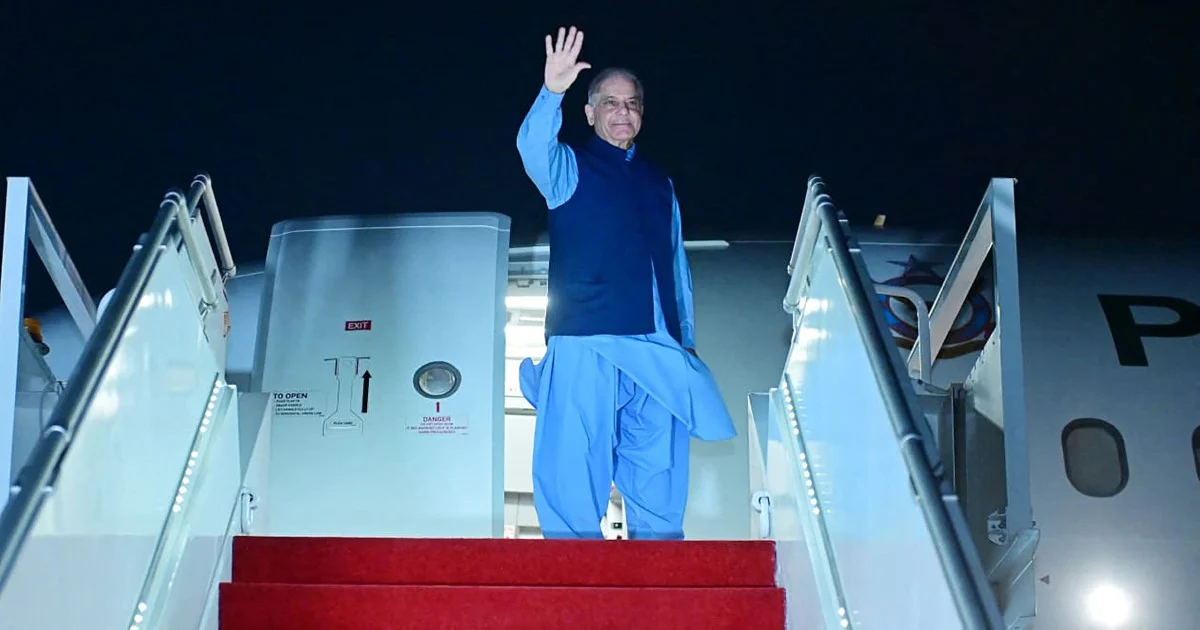
Pakistan's Prime Minister Shehbaz Sharif arrived in Switzerland on Sunday to take part in technical-level discussions between the United States and Iran, marking Islamabad's involvement in high-stakes diplomatic efforts aimed at reducing military hostilities across the Middle East. The timing of his journey underscores Pakistan's strategic positioning as a regional power keen to participate in dialogue that could reshape geopolitical dynamics affecting South and West Asia.
The technical talks represent an important channel for communication between Washington and Tehran at a moment when military tensions in the region have elevated concerns about potential broader conflict. These discussions, operating at a lower diplomatic level than formal state visits, often provide flexibility for negotiators to explore practical solutions without the rigid protocols that accompany higher-level summits. Pakistan's participation signals Islamabad's desire to be part of constructive engagement, despite its own complex historical relationships with both superpowers.
Pakistan's strategic importance in Middle Eastern affairs cannot be understated. As a nation with significant military capabilities, substantial Muslim-majority population, and historical ties across the Islamic world, Islamabad frequently finds itself in a position to facilitate dialogue between conflicting parties. The country has previously served as a backchannel for communications during periods of high tension, and Sharif's presence in Switzerland reflects this traditional role as a respected mediator in regional disputes.
For Southeast Asian observers and Malaysian policymakers, Pakistan's diplomatic manoeuvres carry implications for the broader balance of power in Asia. A successful de-escalation between the United States and Iran could stabilize shipping lanes, reduce military deployments, and create more predictable conditions for trade and investment across the Indian Ocean and beyond. Malaysia, as a maritime trading nation heavily dependent on Middle Eastern oil and gas, has a vested interest in stability across this region. Elevated tensions between Washington and Tehran inevitably drive up energy costs and create uncertainty that affects regional economies, including Southeast Asia's.
The nature of technical-level talks suggests negotiators will focus on concrete mechanisms for reducing hostilities rather than attempting to resolve deeper political differences. These discussions might address military de-confliction procedures, intelligence-sharing protocols, or frameworks for preventing accidental escalation. Such practical arrangements, while unglamorous, often prove more durable than grand political agreements that require domestic political consensus in both capitals.
Pakistan's role in these discussions also reflects Islamabad's effort to maintain balanced relationships with multiple major powers. In recent years, Pakistan has sought to strengthen ties with the United States while also maintaining important economic and strategic partnerships with China and Russia. By participating in US-Iran talks, Sharif's government demonstrates its willingness to support American diplomatic objectives, which could enhance Pakistan's standing in Washington at a time when bilateral relations have occasionally been strained over counterterrorism operations and other disagreements.
The broader Middle Eastern context makes these talks particularly significant. Recent years have witnessed repeated cycles of military confrontation between American and Iranian forces, punctuated by periods of heightened tensions that have threatened to spiral into larger conflicts. Any sustainable reduction in these tensions would benefit not only the immediate region but also global markets and supply chains that depend on stability across the Middle East. For nations like Malaysia that import crude oil and depend on free passage through critical shipping channels, such stability is foundational to economic security.
Sharif's participation in Switzerland also underscores how traditional diplomacy continues to operate behind the scenes, even as public discourse focuses on military posturing and rhetorical exchanges. These technical meetings, often unreported by mainstream media until afterwards, constitute the essential groundwork for any eventual political breakthroughs. Pakistan's presence adds weight to these discussions, particularly given Islamabad's credibility with Iranian leadership and its relationship with American policymakers.
The success of these technical-level talks remains uncertain, as fundamental disagreements between Washington and Tehran on numerous issues persist. However, the willingness of both sides to engage in dialogue, facilitated by respected regional partners like Pakistan, suggests that diplomatic channels remain active and that neither side has abandoned hopes for negotiated settlement. For the broader Indo-Pacific region, including Southeast Asian nations watching developments closely, such diplomatic engagement offers at least the possibility that military escalation might be contained, allowing trade, investment, and economic growth to continue with reduced disruption from geopolitical crises.

