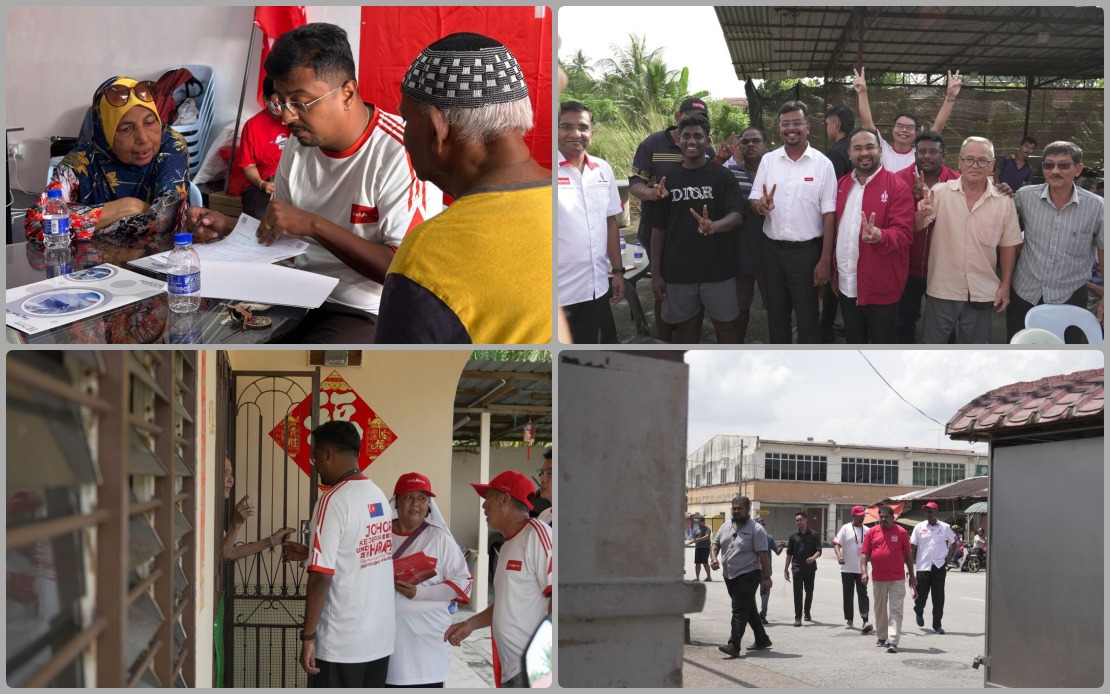
Dr. A. Ruban, the Pakatan Harapan candidate vying for the Paloh state assembly seat in Johor, was admitted to a hospital in Batu Pahat on July 7 after suffering acute pain from a pre-existing spinal condition. His campaign manager, Abdul Majid Abd Aziz, disclosed that the candidate required urgent medical attention following a flare-up of his slipped disc complaint, which had restricted his mobility throughout the morning.
The hospitalisation comes during a particularly demanding phase of campaigning, with intense ground engagement activities placing considerable physical strain on the candidate. Abdul Majid explained that Dr. Ruban's recurring back problems, stemming from a previous surgical intervention on his spine, have been exacerbated by the relentless schedule of public appearances and community walkabouts required during election season. The rigorous nature of grassroots campaigning, combined with fatigue accumulated over consecutive days of canvassing, appears to have triggered the spinal deterioration that necessitated immediate treatment.
According to the campaign team's assessment, Dr. Ruban's condition is not deemed critical, and medical staff have indicated that discharge from hospital is anticipated within one or two days. The candidate remains under observation to manage pain and inflammation associated with the disc condition. His medical history of spinal complications had previously required surgical intervention, making him susceptible to recurring episodes when subjected to extended physical exertion.
Despite the temporary setback to the candidate's campaign presence on the ground, the Pakatan Harapan machinery operating in the Paloh constituency remains mobilised and committed to sustained voter engagement. Abdul Majid assured stakeholders that the party's campaign infrastructure would continue functioning at full capacity, ensuring that Dr. Ruban's policy platform and electoral messaging reaches the voting population through alternative channels and volunteer-led activities.
The strategic response from the PH campaign demonstrates an important reality in modern election contests: the candidate's personal brand and individual charisma, while significant, can be supplemented by broader party machinery and coordinated community outreach. This approach allows campaigns to maintain momentum even when key figures face unexpected health interruptions, a particularly relevant consideration in Malaysian politics where campaigns often depend heavily on individual candidate visibility and personal connection with voters.
The Paloh contest represents a competitive four-way battle involving multiple political coalitions and independent challengers. Dr. Ruban's campaign confronts competition from Perikatan Nasional candidate D. Jeevakumar, incumbent Barisan Nasional representative Lee Ting Han, and independent contender G. Kamaleswaren. This fragmented electoral landscape in Paloh means that even brief campaign disruptions can potentially influence the outcome, particularly if voter engagement by opposition factions intensifies during periods of reduced activity by other competitors.
The hospitalisation raises broader questions about the physical and health-related demands placed on political candidates during election cycles in Malaysia. Candidates across all parties undertake gruelling schedules of walkabouts, community events, and public appearances, often with minimal rest periods. The toll this exacts on candidates' health—whether existing conditions or new ailments—remains largely unaddressed within Malaysia's electoral framework, where no standardised provisions exist for candidates facing medical emergencies during campaigns.
For the Johor electorate, the incident underscores the human dimension of political competition. Voters often encounter candidates at their most energetic and articulate moments during campaigns, yet behind closed doors many candidates endure considerable physical strain. Dr. Ruban's situation, while specific to his spinal condition, reflects a broader pattern where candidates sacrifice personal health and family time in pursuit of electoral success, a sacrifice that frequently goes unrecognised in public discourse.
The timing of the hospitalisation—occurring just four days before the scheduled July 11 Johor state election poll—adds urgency to the situation. Early voting was already underway when Dr. Ruban was admitted, meaning a portion of the electorate had already cast their votes. Any absence by the candidate from the final days of campaigning could impact last-minute voter persuasion efforts, though the significance depends on how competitive the Paloh race ultimately proves.
The Pakatan Harapan strategy of maintaining campaign activities through organisational support rather than singular candidate reliance reflects lessons learnt from previous elections. Malaysian campaigns increasingly recognise that while individual candidates matter, the capacity to sustain momentum through party volunteers, community leaders, and coordinated media efforts provides resilience against such disruptions. Whether this approach proves sufficient in Paloh's competitive environment will become evident following the July 11 polling day.
For Malaysian healthcare observers, this incident highlights the occupational health vulnerabilities of political candidates—a demographic rarely studied in occupational health research. The combination of irregular eating patterns, extended standing and walking, high stress levels, and limited sleep during campaigns creates conditions likely to exacerbate pre-existing medical conditions. As Malaysian elections grow increasingly competitive and campaigns more demanding, attention to candidate health and adequate campaign period regulations may warrant policy consideration.

