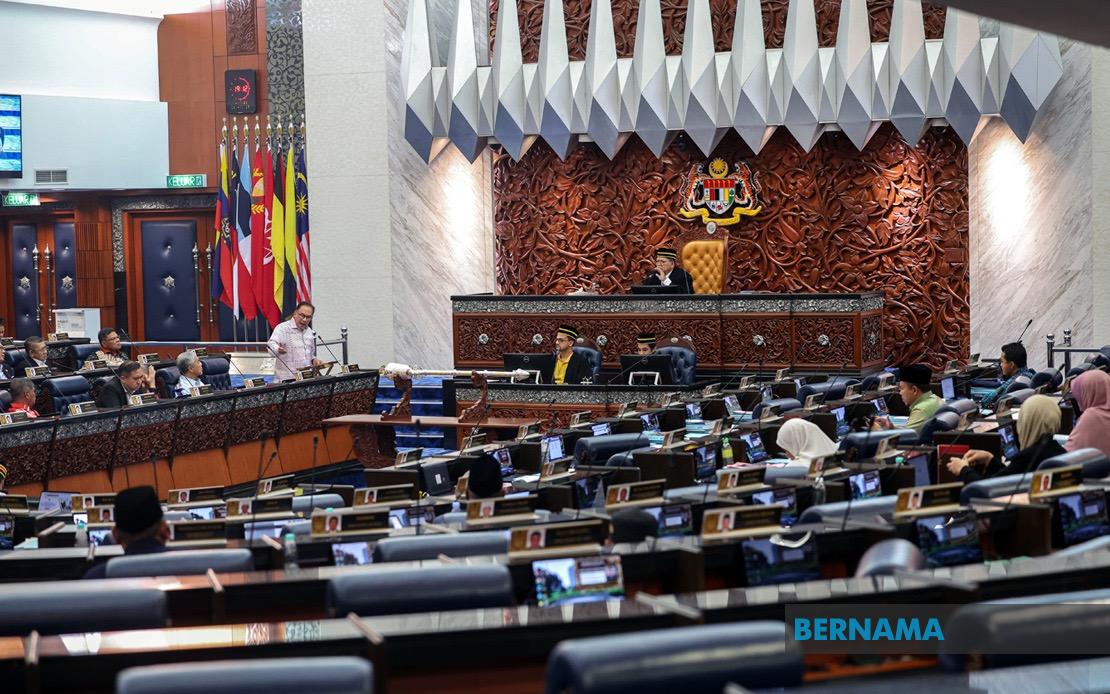
Parliament's lower house has given its backing to redirect RM14.5 billion in unspent proceeds from Malaysian Government Investment Issues towards the nation's Development Fund, marking another step in the government's management of its capital expenditure financing. The motion, debated by opposition and government lawmakers before passing by majority voice vote in mid-July, reflects the country's structured approach to separating borrowing powers for infrastructure and developmental spending from revenue-dependent operating costs.
The backdrop to this parliamentary action involves a substantial RM95 billion issuance of MGII instruments undertaken between January and May 2026, according to clarifications provided by Deputy Finance Minister Liew Chin Tong during the Dewan Rakyat session. The vast majority of this borrowing programme has been earmarked for specific purposes: RM55 billion addresses the refinancing of MGII securities approaching maturity, while a further RM2 billion has been set aside to help cover the redemption of Malaysian Islamic Treasury Bills, which represent short-term shariah-compliant debt instruments in the government's arsenal. The remainder, totalling RM38 billion, will partially offset the projected fiscal shortfall for 2026.
When isolating the earlier months of the year, the government had grossed RM40 billion through new MGII issuance from January through May. Subtracting the RM25.5 billion required to service maturing obligations from this figure yields the RM14.5 billion net proceeds that lawmakers approved for channelling into the Development Fund. This distinction between gross and net borrowing underscores how much of the government's debt management involves the perpetual cycle of rolling over existing liabilities rather than securing entirely fresh capital.
The Development Fund itself operates as a separate financial instrument, receiving inflows from multiple sources beyond MGII transfers. The Deputy Finance Minister outlined that funding channels include transfers from the Consolidated Revenue Account—essentially surplus government revenue—allocations from the Consolidated Loan Account housing borrowed funds, repayments of previous development loans, and various receipts specifically designated for development purposes. This multi-source funding model allows the government to maintain flexibility in allocating resources to capital projects without over-relying on any single revenue stream.
Critical to understanding Malaysia's fiscal architecture is the legal distinction between development and operating expenditure that Liew articulated during the debate. Under the existing statutory framework, the government retains the authority to borrow funds exclusively for development spending—infrastructure, asset creation, and capital formation. Conversely, operating expenditure encompassing civil service salaries, administrative costs, and maintenance must be financed strictly through government revenue and tax collections. This bifurcated system, increasingly common in developing economies seeking fiscal discipline, attempts to prevent borrowing for recurrent spending and theoretically constrains the accumulation of unproductive debt.
Government securities and MGII instruments, while serving the treasury's financing needs, simultaneously function as investment vehicles for domestic financial institutions navigating Malaysia's investment landscape. The Deputy Finance Minister emphasized this dual benefit during his response to parliamentary inquiries about potential crowding-out effects—a technical concern regarding whether large government bond issuances might displace private sector borrowing in the domestic financial market. Major institutional investors including the Employees Provident Fund and the Retirement Fund Incorporated, he noted, require consistent opportunities to deploy member contributions and accumulated reserves into securities offering reasonable returns.
The crowding-out concern carries genuine weight in smaller financial markets where government borrowing can absorb available credit and potentially inflate interest rates, pricing out private enterprises seeking capital. Liew countered this worry by highlighting that Malaysia has deliberately been contracting its new borrowing requirements year after year in recent periods, suggesting the government recognizes these risks and has taken steps to moderate its demand on domestic credit markets. This measured approach reflects a broader acknowledgement that excessive government borrowing, even for development, can create macroeconomic imbalances.
From the perspective of institutional investors and the financial system broadly, the availability of government securities offers distinct advantages. Without reliable domestic investment opportunities in government debt, Liew reasoned, large reserve holders like pension funds might increasingly seek overseas placements, potentially weakening demand for ringgit-denominated assets and undermining the currency's stability. This dynamic places the government in a delicate position: it must borrow sufficient amounts to provide investment opportunities for domestic funds, yet refrain from borrowing excessively which would crowd out private investment and create fiscal vulnerabilities.
The parliamentary approval process itself, though procedural in appearance, carries symbolic importance for fiscal governance. Obtaining legislative endorsement for major borrowing decisions and fund transfers reinforces institutional checks on executive financial authority and maintains transparency around the government's use of public credit. The debate between Datuk Seri Ismail Abd Muttalib and Datuk Zulkafperi Hanapi, alongside government responses, created a public record of the rationale and mechanics underlying these financial decisions.
Looking ahead, the government has signalled its intention to return to parliament with a further motion addressing MGII proceeds anticipated from June through December 2026, suggesting this represents an ongoing management process rather than a one-time transfer. This iterative approach allows parliament to exercise continuing oversight and provides flexibility should economic circumstances shift during the year. For Malaysia's broader fiscal and development agenda, the approval paves the way for these capital resources to support infrastructure and developmental initiatives throughout the latter half of 2026.
For regional observers and Malaysian investors, these parliamentary actions reveal the mechanics of how Southeast Asia's third-largest economy manages its balance sheet in an environment demanding both development spending and fiscal restraint. The separation of development and operating budgets, the structured management of debt issuance, and the institutional safeguards embedded in the approval process collectively represent the administrative infrastructure that enables Malaysia to finance infrastructure ambitions while maintaining sufficient fiscal credibility to access international capital markets at reasonable rates.

