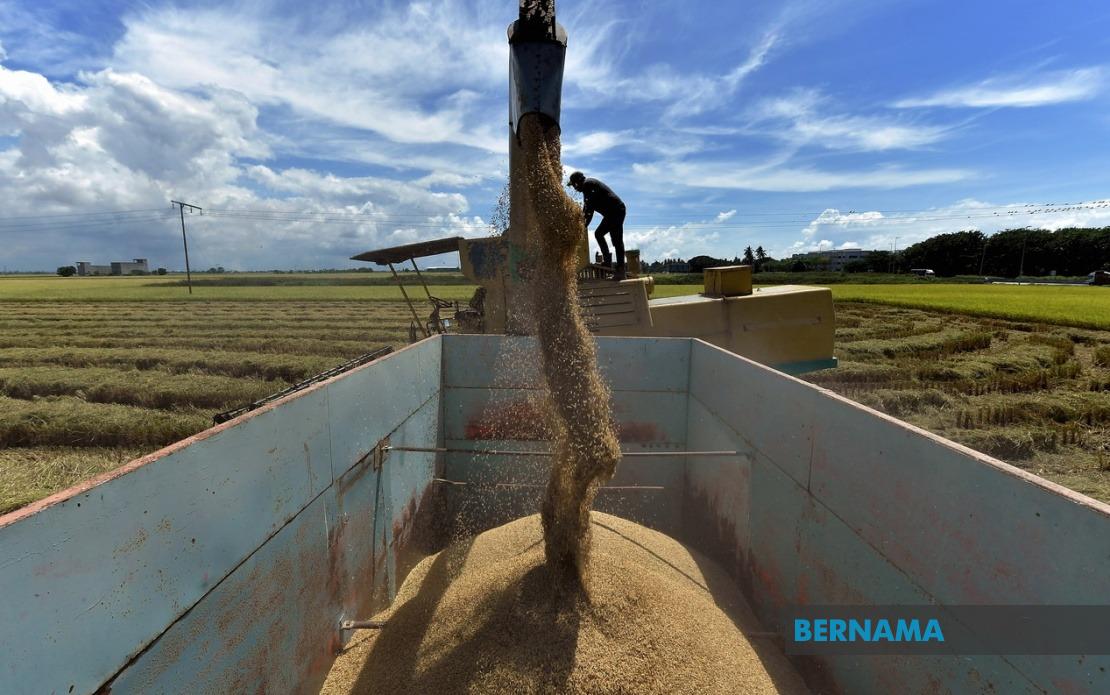
Malaysia's parliament has taken decisive action to fortify the nation's rice supply chain by approving the Control of Padi and Rice (Amendment) Bill 2026, a legislative measure designed to combat illicit activities within the agricultural sector and safeguard the interests of padi farmers. The Bill secured passage through the Dewan Rakyat on July 13 following cross-party deliberation, reflecting bipartisan recognition of the need to modernise regulatory protections in this strategically important industry.
At the heart of the amendments lies a significant recalibration of enforcement mechanisms, particularly through Section 22 of Act 522, which substantially elevates penalties for violations. Individuals convicted of offences now face maximum fines reaching RM250,000, while companies and other corporate entities confront potential penalties of up to RM1 million. These figures represent a dramatic departure from the existing framework, underscoring parliament's determination to impose consequences that genuinely deter misconduct rather than merely functioning as administrative nuisances for well-resourced operators.
Deputy Minister of Agriculture and Food Security Datuk Chan Foong Hin articulated the rationale behind this enforcement upgrade during the parliamentary debate, emphasising that the previous penalty structure had remained static since the foundational Act was enacted three decades ago in 1994. The absence of any meaningful adjustment to the fine regime across such an extended timeframe had rendered the existing penalties increasingly disconnected from both economic realities and the scale of infractions occurring within the industry. Official seizure data compiled by enforcement authorities documented that the monetary value of rice smuggling and illicit appropriation of domestically produced white rice constituted a substantial drain on the national economy, yet the punishments imposed bore no reasonable proportionality to either the magnitude of these operations or the profits accumulated by offenders.
Chan pointedly noted that the padi and rice sector operates as a multi-billion-ringgit enterprise, and unscrupulous participants have exploited the lenient penalty environment to engage in lucrative criminal activities with minimal deterrent effect. By recalibrating fines to levels commensurate with potential profits from contraband operations, the amended legislation aims to shift the cost-benefit calculus that currently incentivises misconduct. This modernisation of penalties serves simultaneously as a protective measure for legitimate padi farmers, whose market position has been undermined by smuggling networks and artificial price manipulation orchestrated by traders operating outside the regulatory framework.
Parliamentary debate revealed nuanced perspectives on implementation challenges, with lawmakers from various blocs advocating for complementary measures beyond penalty enhancement. Datuk Idris Ahmad, representing Bagan Serai under the Perikatan Nasional banner, contended that elevated penalties would prove ineffectual without corresponding institutional strengthening, specifically proposing that enforcement agencies develop comprehensive prosecution guidelines and establish specialised training programmes for prosecutors. This emphasis on prosecutorial capacity reflects recognition that detecting violations and securing convictions requires sophisticated expertise and coordinated strategy rather than merely the existence of draconian penalties.
Opposition voices contributed practical suggestions reflecting their constituencies' concerns. Tan Hong Pin of Bakri pressed the ministry to examine whether the proposed penalty levels had been calibrated appropriately, and advocated for creation of an independent oversight committee tasked with systematically evaluating Padiberas Nasional Berhad (BERNAS), the state-owned enterprise responsible for managing the padi and rice supply chain. This proposal acknowledges the particular vulnerability of the sector to cartelisation and the possibility that governmental oversight bodies may become captured by entrenched interests without external scrutiny mechanisms.
Tech-oriented solutions emerged as another focal point during the legislative process. Azli Yusof, representing Shah Alam for Pakatan Harapan, advocated implementation of a comprehensive digital traceability architecture spanning the entire padi and rice supply chain, enabling real-time visibility of product movement from farm through retail distribution. Such a system would create an auditable trail rendering leakages and diversions immediately detectable by both regulatory authorities and supply chain stakeholders. Complementing this vision, Manndzri Nasib of Tenggara proposed that individual rice packages be affixed with QR codes, thereby empowering consumers and enforcement personnel to verify product authenticity, track warehouse inventory transitions, and identify hoarding or mislabelling with minimal friction.
These technological proposals carry particular resonance for the Malaysian context, where digital adoption in agriculture remains unevenly distributed and where informal supply chains continue to compete with formalised distribution networks. By embedding traceability mechanisms at the package level, policymakers could theoretically create transparency sufficient to eliminate the information asymmetries that currently permit market manipulation. The dual advantage lies in simultaneously protecting consumers from counterfeit products whilst constraining the operational space available to illicit traders.
The passage of the Bill reflects evolving parliamentary consensus that food security represents a governance challenge requiring not merely punitive measures but comprehensive systemic redesign. Malaysia's vulnerability to supply disruptions and its substantial rice import dependency make the padi sector's stability a matter of national strategic importance. By strengthening regulatory oversight, elevating penalties, and creating space for technological innovation in supply chain management, the legislation articulates a modernised vision of agricultural governance responsive to contemporary challenges including transnational smuggling networks and sophisticated market manipulation techniques.
The amendments assume particular significance given regional dynamics, as rice prices and availability constitute flashpoint issues across Southeast Asia. By demonstrating parliamentary capacity to enact protective legislation maintaining domestic supply integrity, Malaysia contributes to regional stability whilst signalling commitment to farmer welfare. The Bill's passage therefore transcends domestic agricultural policy, functioning as a statement of institutional capacity and a reassurance to farming communities that their livelihoods remain protected against illicit competition and market distortions.

