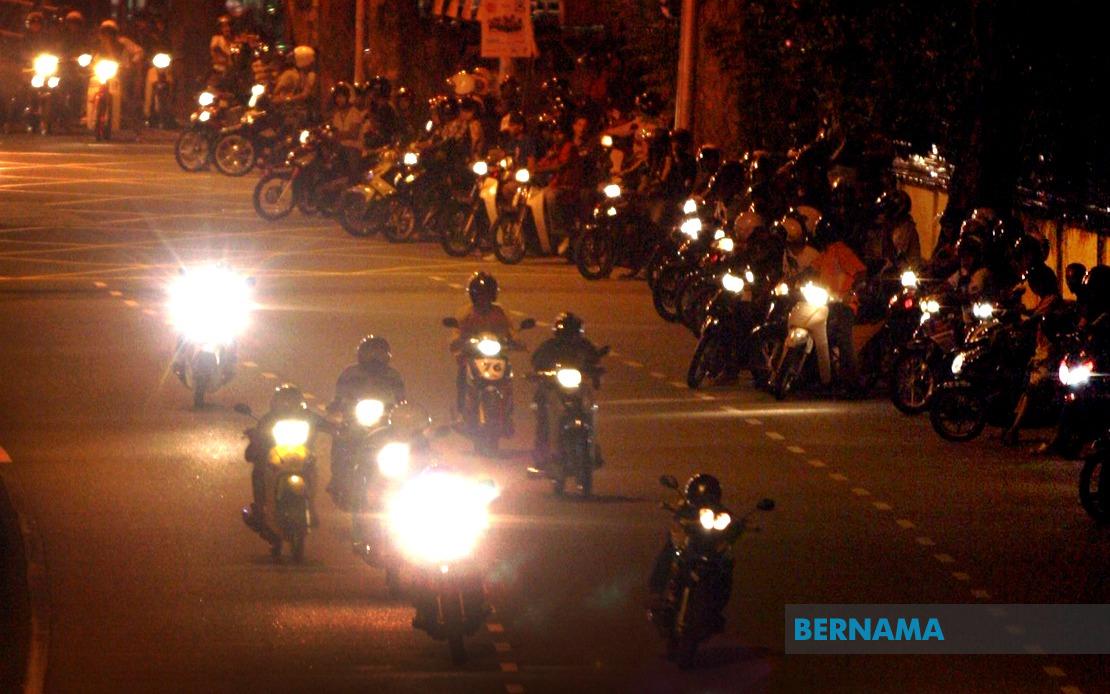
Lawmakers across the Dewan Rakyat have thrown their weight behind a comprehensive crackdown on illegal racing, advancing proposals that would fundamentally reshape penalties for street racing offences. During parliamentary debate on the Road Transport (Amendment) Act 2026, members representing both government and opposition benches converged on the need for stiffer consequences, with some calling for permanent licence revocation alongside existing imprisonment and fine provisions. The unified push reflects growing public concern about street racing culture and its deadly consequences for Malaysian communities.
Khairil Nizam Khirudin, the PN member for Jerantut, introduced a progressive dimension to enforcement by advocating for mandatory rehabilitation schemes that would complement punitive measures. His proposal centres on structured programmes combining disciplinary training with community service obligations, designed to reform offenders rather than simply incarcerate them. This approach acknowledges that deterrence alone may be insufficient; transformation of driver behaviour through education represents an evolving strategy in road safety policy. The rehabilitation framework would theoretically help younger offenders, who comprise a substantial portion of illegal racing participants, redirect their impulses toward lawful activities.
A particularly contentious issue raised by multiple MPs involves the modification workshops that supply enhanced motorcycles for racing purposes. Khairil Nizam advocated for cross-ministry coordination between the Transport Ministry and the Ministry of Domestic Trade and Cost of Living to deploy regulatory tools under Section 66 of the Road Transport Act 1987. Such collaboration could establish enforcement mechanisms targeting workshops engaged in illegal modifications, disrupting the supply chain that enables racing infrastructure. The proposal recognises that addressing illegal racing requires upstream intervention at manufacturing and modification points, not merely downstream prosecution of individual racers.
Datuk Willie Mongin, GPS member for Puncak Borneo, articulated the hardline position gaining traction in parliament by proposing permanent licence revocation as standard punishment for illegal racers. He advocated minimum penalties of RM300,000 fines or five-year prison sentences paired with permanent loss of driving privileges. Mongin's framing emphasises governmental resolve, suggesting that half-measures undermine enforcement credibility. This proposal, if enacted, would create lasting consequences extending far beyond incarceration, effectively removing repeat offenders from legitimate road networks indefinitely.
The legislative debate gained urgency following the Simpang Renggam tragedy in Johor on June 1, when luxury vehicles engaged in illegal racing caused multiple fatalities. Wan Razali Wan Nor, PN member for Kuantan, invoked this incident to broaden the scope beyond motorcycles to encompass high-powered cars and SUVs. He stressed that extending Section 42A provisions to cover all vehicle categories reflects the escalating danger posed by affluent offenders operating powerful automobiles. The tragedy exposed a blind spot in enforcement: while public discourse frequently focuses on motorcycle racing among younger demographics, wealthy drivers participating in illegal competition receive comparatively less scrutiny despite equivalent danger.
Shaharizukirnain Abd Kadir from PN-Setiu proposed vehicle destruction as an escalation tactic, recommending that excessively modified motorcycles be seized and destroyed rather than impounded. This preventative approach eliminates assets that enable future racing. Destruction contradicts traditional impoundment systems where vehicles may eventually return to owners, sometimes creating perverse incentives where offenders view fines as cost of operation. The proposal reflects frustration with recycling patterns where seized vehicles re-enter illegal racing circuits through secondary transactions.
Parental accountability emerged as an unconventional enforcement angle championed by Khairil Nizam, proposing legal responsibility for parents whose children engage in street racing. This framework attempts to leverage family structures as additional enforcement mechanisms, though implementation raises complex questions about defining parental liability and evidentiary thresholds. The proposal reflects recognition that adolescent racing culture often develops within social ecosystems where adults exercise supervisory capacity, yet current law isolates punishment to individual racers.
Beyond racing specifically, parliamentarians expanded the legislative agenda to address drink-driving and drug-impaired operation, both frequently intertwined with illegal racing incidents. Jeli MP Zahari Kechik proposed establishing formal compensation mechanisms requiring convicted drivers to cover victims' hospital expenses and welfare payments. This victim-centred approach transforms enforcement from purely punitive toward restorative justice principles. Zahari Kechik's framework acknowledges that financial restitution represents only partial accountability given permanent disabilities many victims sustain. Datuk Seri Dr Ismail Abd Muttalib from PN-Maran supported strengthening existing enforcement against impaired drivers, emphasizing that fatal accident prevention requires sustained operational capacity rather than legislative revision alone.
The collective proposals from 24 participating MPs—spanning both ruling coalition and opposition parties—signal parliamentary consensus that existing penalties inadequately deter racing participation. The deliberation process highlighted perceived weaknesses in current enforcement architecture, suggesting that incremental adjustments insufficient address deeply embedded cultural factors driving street racing participation. Whether parliament implements these proposals through the 2026 amendment remains uncertain, though the debate's tenor suggests serious legislative momentum.
For Malaysian road users and enforcement agencies, these parliamentary proposals indicate evolving policy direction emphasising permanent consequences over temporary sanctions. The emphasis on licence revocation rather than restoration, vehicle destruction rather than impoundment, and rehabilitation alongside punishment suggests a comprehensive reconceptualization of illegal racing enforcement. Implementation challenges remain substantial—distinguishing illegal racing from legitimate vehicle modification, establishing parental liability standards, and maintaining victim compensation systems all demand clarification through regulatory drafting. Nevertheless, the parliamentary discussion reflects genuine commitment to addressing a phenomenon that claims dozens of Malaysian lives annually and traumatises communities through unpredictable violence.

