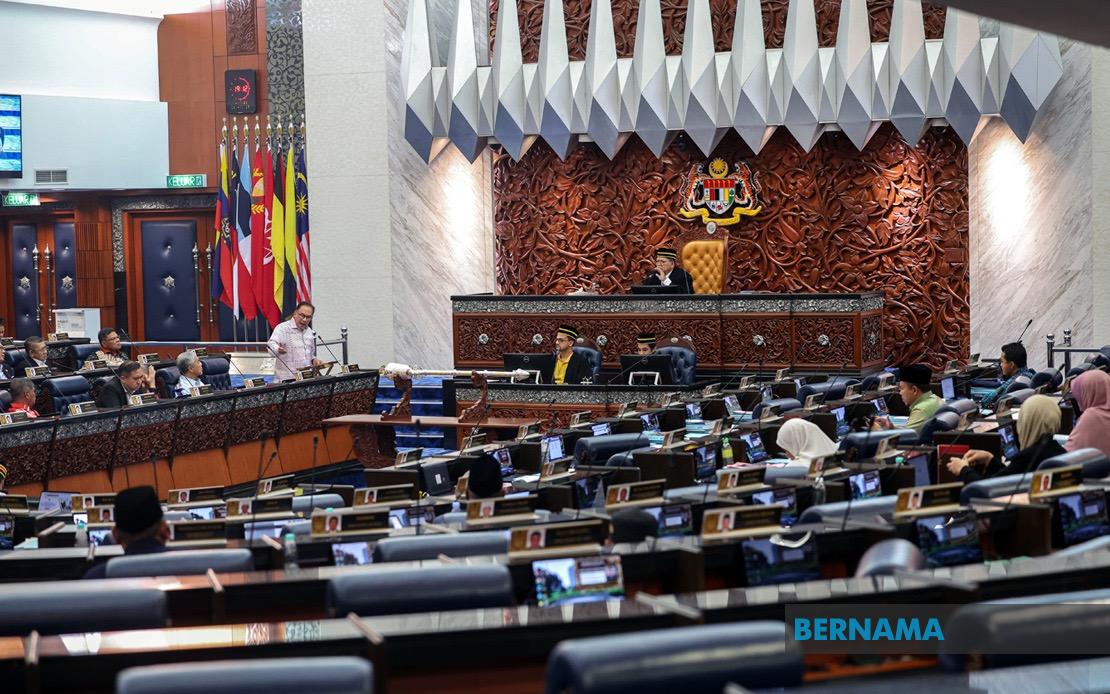
The Dewan Rakyat convened this week to debate substantive amendments to Malaysia's Sexual Offences Against Children legislation, with parliamentarians from across the political spectrum advancing a range of proposals aimed at closing enforcement gaps and strengthening protections for young victims. The breadth of consensus among the 26 MPs who participated in the discussion underscores growing recognition that existing legal and institutional frameworks face significant deficiencies in addressing the evolving threat posed by child sexual predators, particularly those exploiting digital platforms to target vulnerable minors.
A central concern raised repeatedly throughout the debate centres on perpetrators who operate from jurisdictions beyond Malaysia's borders, leveraging weak enforcement regimes in other countries as safe havens from prosecution. Abd Ghani Ahmad, representing Jerlun under Perikatan Nasional, emphasised that Malaysia must more robustly activate its Mutual Legal Assistance arrangements and extradition protocols to ensure that offshore predators face meaningful legal consequences rather than impunity. This issue carries particular urgency within Southeast Asia, where disparities in child protection enforcement across the region create opportunities for transnational offenders to evade accountability by relocating their operations.
Beyond criminal accountability mechanisms, Abd Ghani Ahmad called for substantially tighter coordination between the Royal Malaysia Police, the Immigration Department, the Attorney-General's Chambers, the Department of Social Welfare, hospitals, and schools. He argued that integrated protocols would enable more efficient investigation practices, particularly with respect to the preservation and analysis of digital evidence—an increasingly critical component of cases involving online grooming, child sexual abuse material distribution, and similar offences. The fragmentation of institutional responsibilities has historically resulted in investigative delays and lost or compromised evidence, outcomes that undermine prosecutions and extend trauma for victims.
Datuk Seri Doris Sophia Brodi, the GPS representative for Sri Aman, built upon these proposals by advocating specifically for the creation of a dedicated task force focused on digital sexual crimes against children. Such a unit, she reasoned, would bring together expertise and resources from multiple agencies to accelerate case handling, particularly in matters with cross-border dimensions. Equally significant, Brodi underscored the importance of upstream prevention efforts, calling for intensified digital literacy instruction in schools and enhanced parental awareness campaigns targeting the recognition of grooming behaviours and exploitation tactics employed by predators online.
The rehabilitation and long-term recovery of survivors emerged as another major thematic concern. Brodi stressed that prosecution and incarceration of offenders represents only one component of an effective response; survivors require sustained psychological support, financial assistance to offset treatment costs, protective measures to preserve their identity and privacy, and comprehensive recovery programmes that address the deep trauma inflicted by sexual abuse. This perspective aligns with international best practice in victim-centred justice frameworks, yet remains underdeveloped within Malaysia's existing institutional landscape.
Datuk Mas Ermieyati Samsudin, the Perikatan Nasional MP for Masjid Tanah, proposed the establishment of a specialised prosecution unit dedicated to child sexual offences, mirroring models that have proven effective in other jurisdictions. She also advocated for substantial expansion of the cadre of child psychology experts within public sector facilities, a critical shortfall given the high demand for trauma-informed clinical services. To address the financial barriers that frequently prevent survivors from accessing necessary therapeutic interventions, Samsudin called for the creation of a dedicated victim support fund covering psychological treatment, legal representation, and rehabilitation costs—recognising that financial hardship should not compound the suffering of already vulnerable young people.
Samsudin framed these proposals against the backdrop of a concerning trend whereby Malaysian nationals may intentionally relocate to jurisdictions with demonstrably weaker child protection enforcement regimes to perpetrate offences with reduced risk of consequence. The legislative amendments under consideration, she argued, serve the critical purpose of closing loopholes that currently permit such behaviour, thereby reinforcing the principle that Malaysian law extends extraterritorially to protect Malaysian children regardless of where abuse occurs.
RSN Rayer, representing Jelutong for Pakatan Harapan, reinforced the need for expanded legal jurisdiction while simultaneously emphasising the necessity of bolstering domestic investigative capacity. He highlighted that simply extending legal reach means little without corresponding increases in investigative personnel, training, and resources dedicated to child sexual abuse cases. The current investigative workforce, he suggested, operates at capacity, creating bottlenecks that delay justice and leave survivors in prolonged uncertainty.
Young Syefura Othman, the PH MP for Bentong, introduced the concept of a National Child Sexual Offender Registry, structured similarly to successful models implemented internationally, with carefully controlled access extended to enforcement agencies and child-focused institutions including schools, childcare facilities, care homes, and welfare establishments. Her proposal reflects the principle that convicted offenders should face meaningful restrictions on their capacity to work in environments providing access to children. To operationalise this approach, Othman advocated for mandatory background checks on sexual offence history for all individuals—whether employees or volunteers—engaged in welfare homes, nurseries, kindergartens, schools, tahfiz centres, religious institutions, sports clubs, and any organisations serving young people.
The Sexual Offences Against Children (Amendment) Bill 2026 specifically addresses the jurisdictional constraints that have historically hampered Malaysia's capacity to prosecute offenders whose abuse occurred beyond national borders. The legislation, as proposed, would effectively close a significant gap that has allowed perpetrators to exploit territorial boundaries as a shield against accountability. For Malaysia and other Southeast Asian nations grappling with the transnational dimensions of child exploitation, this represents a necessary evolution in legal frameworks designed for an earlier era of primarily localised crime.
The extensive cross-party participation in the parliamentary debate, with representatives from government coalition parties, Perikatan Nasional, and Pakatan Harapan all contributing substantive proposals, signals genuine political consensus on the severity of the challenge and the inadequacy of present responses. The discussion extended across 26 MPs before the session adjourned, with proceedings resuming the following day, demonstrating the depth of parliamentary attention to this issue. The convergence of proposals around specialist units, enhanced international cooperation, victim-centred support mechanisms, and strengthened prevention through education and registry systems reflects evolving international understanding of what effective child protection systems require.

