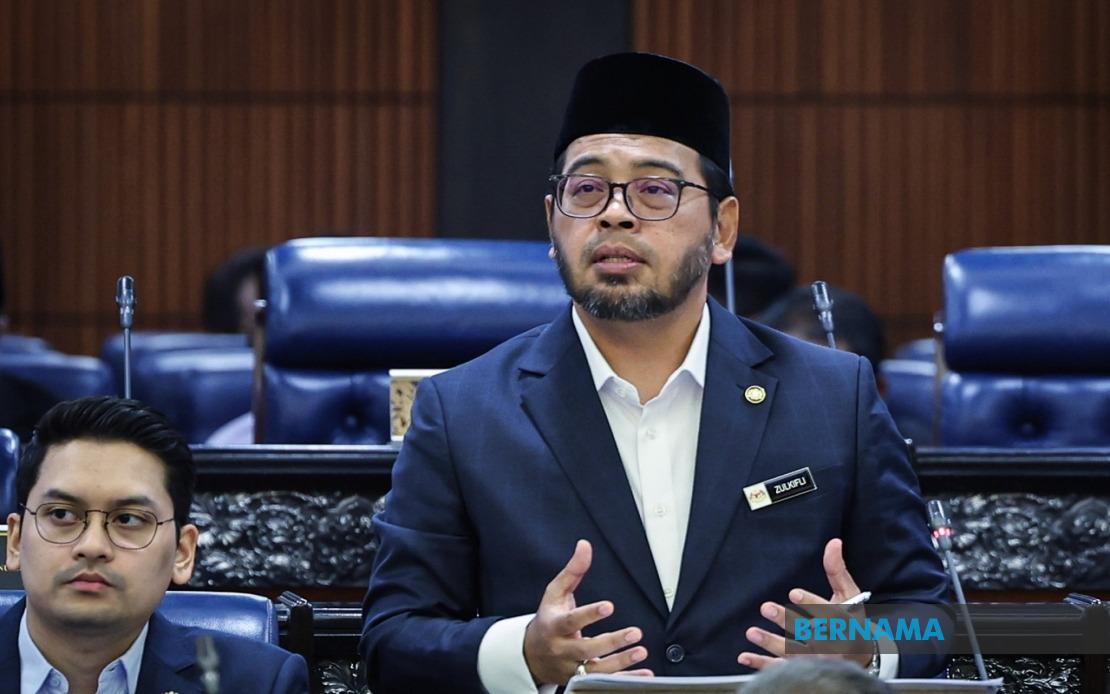
Parliament convened for an extended sitting on August 11 to scrutinise the findings of a Royal Commission of Inquiry into Lembaga Tabung Haji, with lawmakers across the political spectrum demanding sweeping institutional reforms and transparent investigations into alleged misconduct that precipitated the Islamic pilgrimage fund's financial crisis. Over ten hours of continuous debate, members focused their attention not merely on past failings but on constructing a robust framework to prevent future governance breaches and restore public confidence in an organisation entrusted with the savings of millions of Malaysian Muslims preparing for hajj.
The scale of TH's financial deterioration emerged starkly during the sitting, with Finance Minister II Datuk Seri Amir Hamzah Azizan detailing nearly RM13 billion in cumulative losses spanning fourteen problematic investments. Of this staggering sum, the government has already absorbed RM10.2 billion through a 2018 rescue operation involving Urusharta Jamaah Sdn Bhd, whilst TH itself has borne an additional RM2.6 billion in impairment losses between 2018 and 2025 for ventures that remained under its management. These figures underscore the magnitude of mismanagement that precipitated parliamentary intervention and the substantial taxpayer burden incurred to stabilise the institution.
One investment exemplifying the depth of TH's predicament involved Al-Rawda Real Estates Development & Project Management Co Ltd, to which 1.4 billion Saudi riyals—approximately RM1.5 billion—was channelled to an intermediary for leasing hotel properties in Madinah and Makkah to accommodate hajj pilgrims. The counterparty's failure to meet rental obligations forced TH to write down the entire RM1 billion investment as a complete loss in 2024, illustrating how inadequate due diligence and investment oversight allowed substantial capital to be deployed into ventures with minimal protection mechanisms or contractual safeguards.
Parliamentarians concentrated considerable energy on demanding legislative action, particularly emphasising the urgency of amending the Tabung Haji Act 1995 to establish clearer governance parameters and accountability mechanisms. Beyond legislative reform, lawmakers called for strengthened investment oversight protocols, enhanced financial management systems, and explicit insulation of TH's leadership from political interference—structural changes essential to preventing the confluence of weak internal controls and external political pressures that contributed to historical losses. The recurring theme throughout the debate underscored that institutional strength must derive from robust systems and processes rather than relying on the probity of individual office-holders.
Minister in the Prime Minister's Department (Religious Affairs) Dr Zulkifli Hasan articulated this principle explicitly when concluding the debate, emphasising that governance frameworks and checks-and-balances must transcend personnel changes to ensure depositor interests remain perpetually protected. His formulation—that individuals may rotate whilst systems must endure—reflected a sophisticated understanding that institutional safeguards cannot depend on the character or commitment of transient leadership but must be embedded in immutable procedural architecture. This conceptual framework guided much of the parliamentary discussion regarding what legislative and administrative instruments would prove necessary to prevent repetition of past failures.
The government has already signalled its commitment to enforcement action, with authorities initiating investigations that have resulted in the detention of several individuals suspected of involvement in bribery, abuse of power, and governance breaches. Parliament's call for thorough and transparent investigations into misconduct findings identified by the Royal Commission reflected widespread concern that institutional reform must be paired with personal accountability—that those responsible for losses and mismanagement face proportionate consequences within Malaysia's legal system. Without visible enforcement, MPs contended, public confidence would remain fragile regardless of structural reforms implemented.
Government officials welcomed a proposal to establish a multi-agency task force to monitor investments at heightened risk of incurring further losses, a mechanism designed to provide early warning of emerging problems and coordinate rapid intervention across regulatory agencies. This institutional innovation reflects lessons learned from TH's historical experience, where poor investment surveillance permitted problems to compound before detection. The task force concept acknowledges that single-institution oversight had proven inadequate and that cross-agency coordination enhances capacity to identify and address deteriorating investment performance before losses crystallise.
The government's decision to delay release of the RCI report, intended to afford TH sufficient time to implement the Commission's recommendations before public disclosure, drew implicit endorsement from the government's ministerial representatives, who characterised the delay as strategically sound. This decision permitted TH to undertake foundational reforms and financial restructuring prior to public scrutiny, potentially avoiding panic among depositors or market turbulence that premature disclosure might have triggered. However, the extended delay also generated criticism among opposition quarters, with some MPs departing the parliamentary proceedings in protest, accusations that proved inflammatory given the stakes involved for over 10 million depositors whose hajj savings remained at stake.
The RCI report, released publicly on July 29, documented extensive governance weaknesses spanning the 2014-2020 period and articulated 25 recommendations for institutional improvement. By late July, TH had implemented approximately 75 per cent of these recommendations, indicating relatively rapid responsiveness to the Commission's findings. This implementation rate suggested that substantive institutional change was already underway even before parliamentary scrutiny commenced, though lawmakers emphasised that continued momentum and completion of all remaining recommendations remained essential to restoring full depositor confidence.
Haj affordability emerged as a crucial consideration within the reform debate, with cost protection representing a tangible commitment to depositor interests. The government has maintained the hajj pilgrimage cost at RM33,300 for three consecutive seasons spanning 2024 to 2026, a commitment that signals stability and accessibility even amid financial restructuring. This price maintenance, achieved through government support and improved operational efficiency, demonstrates that reform need not necessarily burden individual pilgrims, provided that institutional recovery is managed competently and government support mechanisms function effectively.
The parliamentary sitting highlighted fundamental tensions between political oversight and technical governance—between the legitimate democratic accountability mechanisms that legislatures provide and the professional, insulated decision-making processes that financial institutions require to function effectively. MPs recognised that TH's vulnerability to political interference had contributed to its predicament, yet parliament itself remained the institution ultimately responsible for establishing the legislative and regulatory framework within which TH must operate. This paradox generated subtle discussions regarding how to construct governance architectures that remain fundamentally accountable to elected representatives whilst simultaneously protecting operational autonomy from partisan interference.
For Malaysian depositors and the broader Muslim community dependent on TH, the parliamentary proceedings signalled that institutional reform was advancing beyond rhetorical commitment toward concrete implementation, albeit against a backdrop of substantial already-incurred losses. The government's willingness to absorb RM10.2 billion in rescue costs, coupled with parliamentary pressure for continuing investigation and structural change, suggested that reconstruction of public confidence would be prolonged and contested. Nevertheless, the convergence of government action, parliamentary oversight, and institutional implementation offered reasonable prospect that TH would ultimately emerge from its crisis with strengthened governance frameworks capable of protecting depositor interests across future generations of hajj pilgrims.

