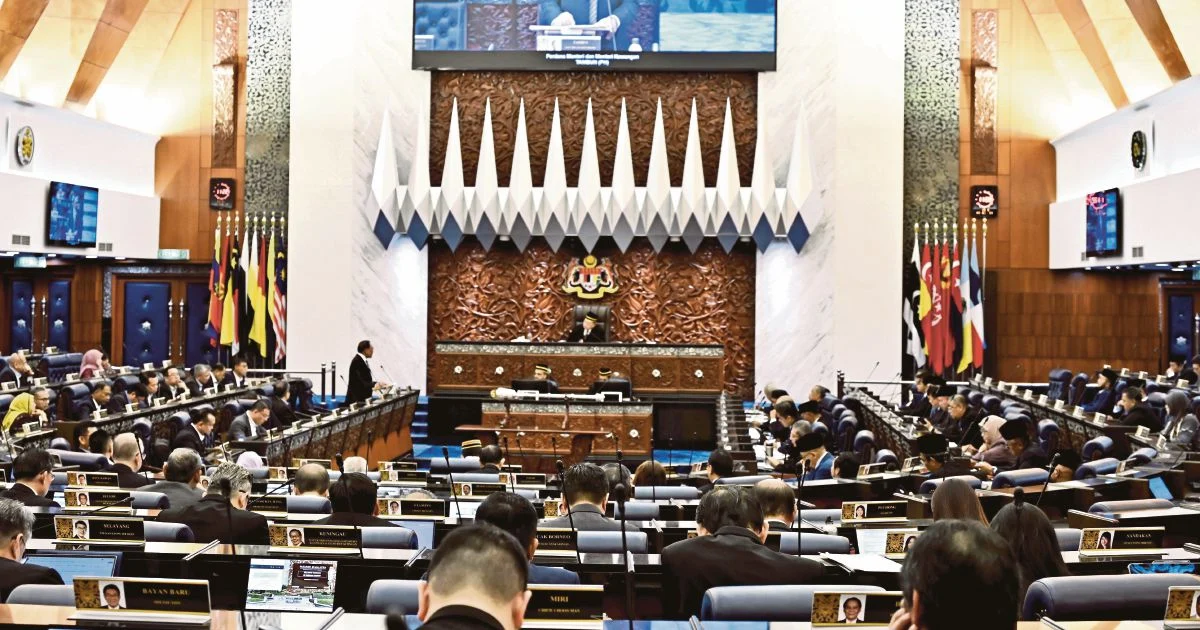
The Dewan Rakyat descended into acrimonious debate within minutes of convening today, as parliamentary tensions boiled over into a direct confrontation between opposition and government lawmakers. The flash point centred on questions surrounding the status of the opposition leader and broader dynamics within the ruling coalition, prompting accusations of political bullying that exposed deeper fissures in Malaysia's fractious coalition politics.
The escalation began when procedural questions about the opposition leader's formal recognition triggered a sharp exchange. What started as a technical parliamentary matter quickly transformed into a proxy battle over the relationship between PAS and Bersatu, the two parties that form the backbone of the current government arrangement. The speed with which civility collapsed underscores the volatility coursing through Malaysia's political establishment, where alliances remain fragile and trust between coalition partners continues to erode.
For observers tracking Malaysian politics, the outburst reflects deeper anxieties within the government majority. Bersatu, which maintains a modest parliamentary footprint compared to its coalition partners, has grown increasingly concerned about its political space being compressed by the larger and better-organised PAS machinery. These concerns have periodically surfaced in parliament, though rarely with such directness and heat as witnessed today.
Takiyuddin, who holds significant influence within the opposition bloc, seized on the parliamentary dispute to air grievances about how smaller coalition partners are treated within government arrangements. His intervention suggests that opposition strategists see political value in highlighting fractures within the ruling coalition, knowing that public disputes over internal dynamics can undermine public confidence in governmental stability and competence.
The government MP's forceful response indicates that the ruling coalition will not tolerate what it perceives as external interference in internal coalition affairs. The intensity of the rebuttal suggests nervousness about the narrative gaining traction, particularly if ordinary Malaysians begin viewing the government as internally divided and unable to manage its own partners effectively. Such perceptions can gradually erode public confidence in administration and decision-making.
PAS has emerged as the dominant force within the current government structure, a position it has leveraged to expand its influence across multiple ministries and state-level governance. This concentration of power within one coalition partner inevitably creates resentment among smaller players like Bersatu, which despite holding the prime ministership through its leader, commands fewer parliamentary seats and therefore less structural influence within the broader machinery of government.
The parliamentary explosion today demonstrates how Malaysian politics continues to operate through personal and organisational rivalries that periodically overwhelm institutional norms. While procedural disputes are common in legislatures worldwide, the Malaysian parliament's susceptibility to rapid escalation into personal attacks and coalition-based posturing reflects the personalised nature of local political culture and the absence of sufficiently robust institutional mechanisms to manage disagreement.
For Southeast Asian observers, the incident provides a window into how coalition politics functions in Malaysia's mixed parliamentary system. Unlike systems with clear government-opposition binaries, Malaysian arrangements require constant negotiation and management of multiple competing interests. When these negotiations break down, as occurred today, the entire system experiences shocks that can ripple through policy implementation and public administration.
The implications extend beyond parliament itself. If the government majority genuinely believes that opposition lawmakers are deliberately sowing discord within coalition ranks, this could trigger defensive responses that might include further tightening of party discipline, reduced consultation among coalition partners, or even reshuffles designed to reinforce loyalty. Any of these moves could paradoxically intensify the very tensions they aim to resolve.
Bersatu's position remains particularly precarious. As the numerically weakest component of the government alliance, it requires ongoing accommodation from larger partners to maintain relevance and influence. When those accommodations appear insufficient, party leaders face pressure from their own members to speak out, yet such public complaints risk triggering retaliation from coalition partners wielding greater parliamentary numbers.
The timing of today's eruption also matters. Parliamentary sessions inevitably generate intensity and heightened emotion, particularly when contentious matters surface early in proceedings. The concentration of multiple grievances into a single heated exchange may have implications for subsequent parliamentary business, potentially affecting the smooth passage of government legislation or setting a combative tone for future sittings.
Moving forward, both government and opposition will assess whether today's clash hardens positions or clears the air. In Malaysian politics, such exchanges sometimes serve as safety valves, allowing tensions to dissipate through public airing. Alternatively, they can harden factional divides and create lasting damage to working relationships, making future cooperation more difficult and reducing the possibility of consensus on matters of national importance.
The broader question facing Malaysian democracy concerns institutional maturity and the capacity of political leaders to disagree substantively while maintaining the basic courtesies and respect necessary for functional governance. Today's parliamentary eruption suggests that this challenge remains very much unresolved.

