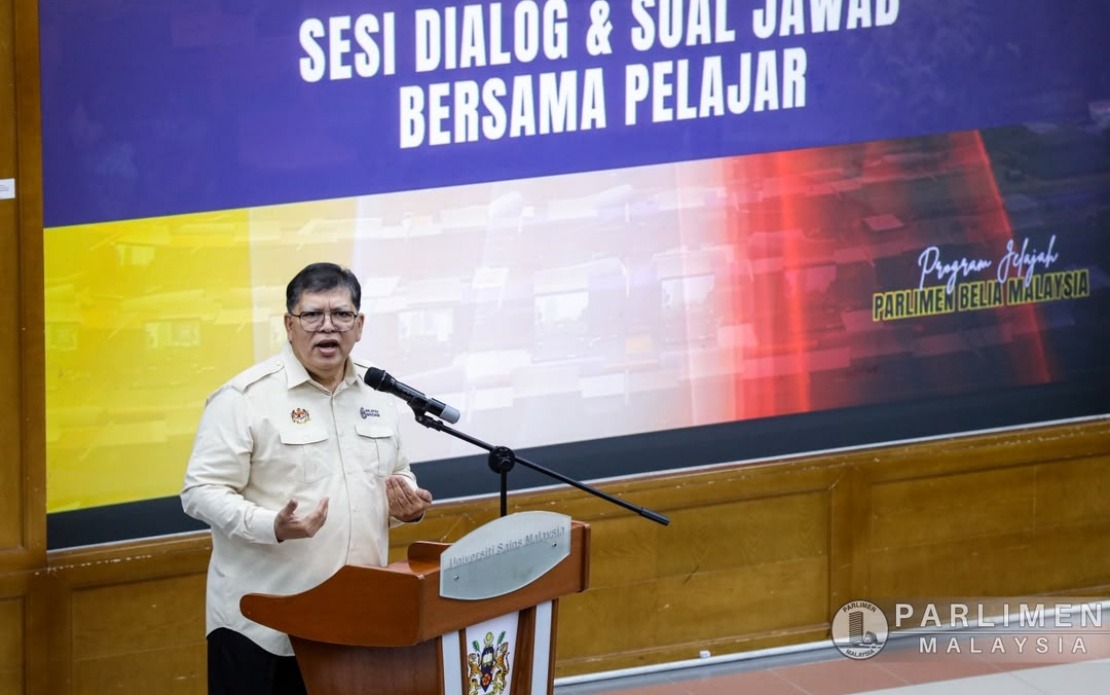
The Dewan Rakyat must function as both a symbol of institutional integrity and a practical classroom in democratic governance, according to Speaker Tan Sri Johari Abdul, who has issued a pointed appeal to all Members of Parliament to demonstrate exemplary behaviour as the nation prepares for the inaugural sitting of the reinvigorated Malaysian Youth Parliament in mid-September. The timing of this call reflects growing recognition that Parliament's conduct carries pedagogical weight—every parliamentary utterance and gesture is now visible to the public through digital broadcasts and social media coverage, making the chamber itself a teaching instrument for younger generations watching and learning.
Johari framed Parliament not merely as a debating forum for elected representatives, but as the republic's preeminent legislative institution and the foundational reference point for how Malaysians—particularly the young—understand democratic practice. This conceptualization elevates the stakes of routine parliamentary conduct beyond procedural politics into matters of national civics education. The Speaker's emphasis on this educational dimension suggests an acknowledgment that formal institutions shape behaviour and attitudes in profound, often invisible ways. When youth observe their legislators in action, they absorb lessons about the norms and values that supposedly govern public discourse in their country.
The specific qualities Johari identified—dignity, orderliness, integrity, factual accuracy, and courtesy—paint a picture of parliamentary culture markedly distinct from the adversarial partisanship that sometimes characterises modern legislatures worldwide. His appeal for solution-oriented rather than performative debate carries particular resonance for Malaysian readers, given recurring concerns about political polarisation and the quality of public discourse. By explicitly asking MPs to model these virtues, the Speaker positioned improved parliamentary conduct as a civic responsibility with intergenerational implications.
The Malaysian Youth Parliament itself represents a significant institutional evolution. Originally launched in 2015 under the Ministry of Youth and Sports, the programme was transferred to Parliament Malaysia's direct management in October 2023, signalling the government's confidence in expanding the legislature's educational remit beyond lawmaking into active youth engagement and democratic formation. This shift transformed the Youth Parliament from a peripheral ministry programme into a core parliamentary initiative, reflecting a strategic belief that engagement with young people serves Parliament's institutional interests and the nation's democratic health simultaneously.
Operationally, the Youth Parliament functions as a comprehensive simulation of actual legislative practice rather than a mere mock exercise. The programme comprises 222 seats mirroring parliamentary constituencies nationwide, creating a proportional representation challenge that mirrors genuine political geography. Crucially, the parties formed within this platform are explicitly non-partisan and unconnected to Malaysia's actual party system—a design choice that prioritises democratic principle-learning over factional loyalty. To date, more than ten such youth organisations have established affiliated parties within the framework, each competing to recruit members and contest youth elections.
Parliament Malaysia has set an ambitious outreach target of reaching 300,000 Malaysians aged eighteen to thirty for registration before the youth elections scheduled for August. The electoral calendar builds momentum through carefully sequenced phases: nomination day on July 8, announcement of official candidates on July 11, a campaign period spanning July 12 to August 7, and online voting on August 8 and 9. This structured timeline mirrors actual electoral processes, exposing participants to the logistics and temporal dimensions of democratic participation. The choice of online voting through the e-PBMy system reflects both logistical pragmatism and a recognition that young Malaysians navigate digital platforms as naturally as older generations navigate physical ballot boxes.
The substantive work of the Youth Parliament will unfold through three annual sittings, each lasting two days, with individual members serving two-year terms. This schedule balances continuous engagement with realistic time commitments for participants who are likely juggling education, work, and other responsibilities. The structure also prevents the institution from becoming a permanent legislative body competing for attention with the actual Dewan Rakyat, maintaining clear institutional distinctions while maximising the benefits of regular, repeated exposure to parliamentary processes.
For Malaysian policymakers and observers, the Youth Parliament initiative carries several implications worth considering. First, it represents an investment in democratic legitimacy at a moment when trust in institutions globally faces pressures from polarisation and misinformation. By engaging young people directly in the mechanics and culture of democratic deliberation, Parliament signals confidence in the system's values and capacity to attract new generations. Second, the programme functions as a testing ground for parliamentary innovation—the practices, procedures, and norms developed within the Youth Parliament may inform refinements to the actual legislature. Third, Youth Parliament participants who proceed into political careers will carry embedded understandings of parliamentary dignity and ethical debate, potentially influencing the culture of Malaysian politics for decades.
Speaker Johari's emphasis on the exemplary responsibility of current MPs speaks implicitly to concerns about parliamentary conduct and public perception. Recent decades have seen increasing scrutiny of legislative behaviour globally, with voters questioning whether elected representatives embody the values they claim to champion. By positioning the Dewan Rakyat as a school for democracy, Johari has reframed MPs' conduct not as a matter of personal preference or party tactics, but as a public trust affecting millions of younger Malaysians forming their first impressions of democratic institutions. This rhetorical move—transforming behavioural expectations from regulatory requirements into educational obligations—may prove more persuasive than procedural enforcement mechanisms alone.
The Malaysian Youth Parliament also addresses a recognised deficit in civic education across Southeast Asia. Many young people understand democracy abstractly through textbooks but lack exposure to how legislative institutions actually function—the compromises negotiated, the arguments deployed, the procedural rules that shape outcomes. By creating a space where youth can experience parliamentary work directly, Malaysia's initiative responds to this pedagogical gap. The non-partisan design ensures that participants encounter diverse viewpoints and coalition-building imperatives, developing the collaborative skills necessary for democratic societies to function beyond mere voting.
Looking forward, the success of the reinvigorated Youth Parliament will likely depend heavily on the integrity of the parliamentary example Johari has called for. If the actual Dewan Rakyat lapses into fractious partisan behaviour, disrespectful conduct, or fact-free assertions, the educational value of the Youth Parliament will be substantially undermined—participants will learn that the ideals discussed in their institution differ markedly from the reality of actual politics. Conversely, if current MPs embrace the Speaker's challenge to maintain high standards of debate and conduct, they will have contributed meaningfully to democratic culture-building in Malaysia, investing in the political maturity of the next generation of national leaders.
Malaysians interested in participating can register through the official Youth Parliament portal at https://pbmy.parlimen.gov.my/my/, which provides detailed information about eligibility, selection processes, and programme details. The initiative represents one of Southeast Asia's more comprehensive attempts to institutionalise youth democratic participation, and its outcomes over the coming years will merit close attention from policymakers across the region considering similar programmes.

