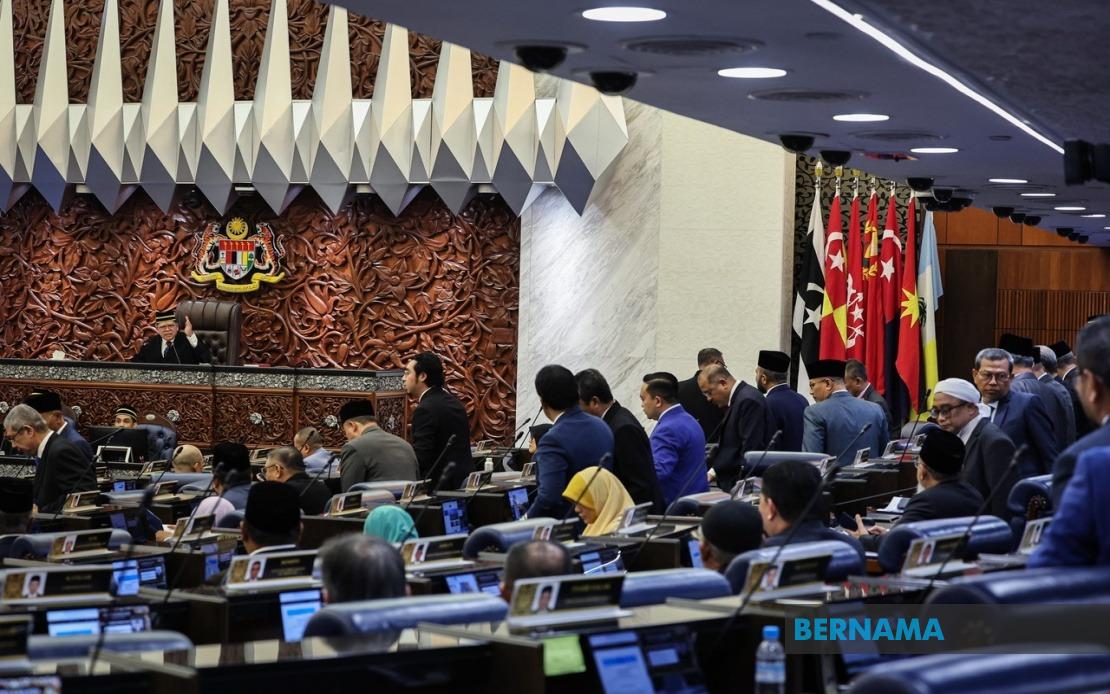
The Malaysian Parliament convened for an extraordinary session on August 11 to allow members across the political spectrum to thoroughly examine the findings of the Royal Commission of Inquiry into Lembaga Tabung Haji, in what officials described as a significant step toward heightened governmental accountability. The special sitting represented a deliberate parliamentary exercise aimed at enabling comprehensive legislative scrutiny of the financial institution's affairs, a matter of considerable public concern given Tabung Haji's role as a crucial savings and investment vehicle for Malaysian pilgrims.
Speaker Tan Sri Johari Abdul underscored that the parliamentary chamber was providing substantial opportunity for MPs to engage in substantive debate on the commission's key findings, framed explicitly within the broader imperative of safeguarding public interest and reinforcing transparency standards in government operations. His statement reflected a recognition that parliamentary deliberation on such inquiries serves as a vital mechanism for democratic oversight and institutional accountability in Malaysia's governance framework.
The extraordinary sitting was convened following a formal request from Prime Minister Datuk Seri Anwar Ibrahim, submitted through official channels to the Speaker's office. The procedural mechanism employed was Standing Order 11(3) of the Dewan Rakyat's Standing Orders, a legislative tool specifically designed to permit special parliamentary sessions beyond the ordinary calendar when matters of significant national importance warrant additional deliberative time and attention.
Tan Sri Johari confirmed his compliance with the Prime Minister's request, noting that adherence to Standing Order 11(3) guided his decision to authorize the sitting. This procedural compliance, while technically routine, carried substantive weight given the symbolic importance of subjecting a major institutional review to full parliamentary examination. The Speaker's emphasis on procedural regularity alongside substantive opportunity reflected an attempt to reinforce the legitimacy of the deliberative process itself.
The timing of this parliamentary debate followed the completion of the RCI's comprehensive review of Tabung Haji's operations and governance structures. The inquiry had examined various concerns surrounding the institution's financial management and administrative practices, making the subsequent parliamentary debate a natural culmination of the investigative process. Opening parliamentary doors to broad debate essentially transformed the commission's findings from an executive-level report into a matter requiring legislative attention and cross-party engagement.
For Malaysian readers, the significance of this parliamentary intervention extends beyond procedural formality. Tabung Haji, established as a dedicated savings scheme for Malaysian Muslim pilgrims, holds considerable social and religious importance for the country's Muslim majority. Any governance or financial irregularities affecting the institution directly impact hundreds of thousands of Malaysians who depend on the scheme for their annual pilgrimage savings. Parliamentary scrutiny thus carries genuine consequence for an institution embedded in Malaysia's social fabric.
The emphasis on allowing MPs from "both sides" to participate in the debate underscored a commitment to bipartisan examination of the inquiry's conclusions. Such cross-party engagement on institutional accountability matters is increasingly important in Malaysia's contemporary political context, where parliamentary proceedings frequently reflect partisan divisions. By explicitly encouraging opposition and government MPs alike to contribute to the deliberation, the Speaker sought to frame the debate as a unified national exercise in democratic accountability rather than a politically divisive exercise.
The briefing by the responsible minister that followed the parliamentary debate was positioned as an informational complement to legislative discussion, ensuring that MPs possessed authoritative understanding of the RCI's substantive findings before engaging in detailed deliberation. This sequencing—parliamentary debate preceding ministerial briefing—reflected a considered approach to privileging legislative scrutiny within the institutional hierarchy of accountability.
For Southeast Asian observers, Malaysia's parliamentary approach to handling institutional inquiries offers a comparative case study in how democracies balance executive prerogative with legislative oversight. The use of special parliamentary procedures to examine independent commission findings demonstrates a recognition that formal institutional reviews require legislative legitimation through public debate, a principle increasingly relevant across the region as governments confront questions about governance standards and public trust.
The broader context of this parliamentary sitting reflects Malaysia's ongoing efforts to strengthen governance standards following various institutional challenges in preceding years. By providing ample parliamentary space for examination of the Tabung Haji inquiry, the government signaled a commitment to transparency that extends beyond formal compliance with regulatory procedures to encompass substantive public engagement with institutional accountability. This framing positioned parliamentary debate not merely as a procedural necessity but as a positive affirmation of democratic values and institutional integrity, principles essential for maintaining public confidence in Malaysia's governmental systems and financial institutions.

