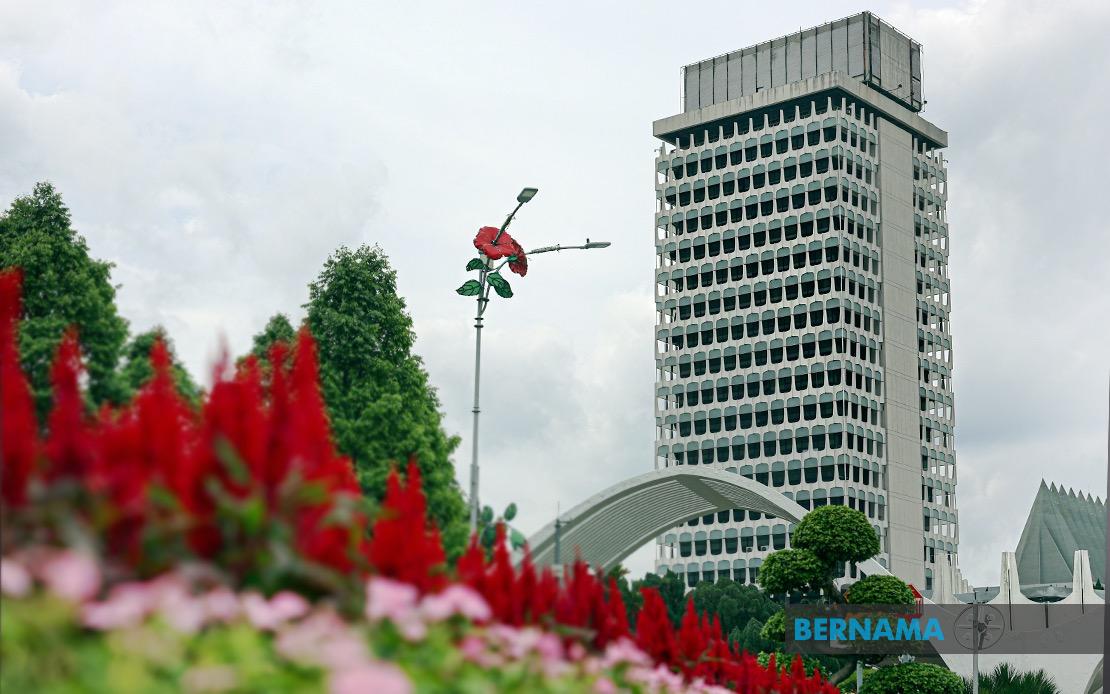
Parliament opens its doors again on Monday for a 16-day sitting that will test the government's legislative agenda and parliamentary consensus on several high-stakes measures. The Second Meeting of the Fifth Session of the 15th Parliament, running until July 16, arrives at a politically charged moment, with constitutional reforms and road safety amendments expected to dominate floor debate and shape the trajectory of key policy areas.
Two constitutional amendments will return for reconsideration after faltering during the previous parliamentary session. The Constitution (Amendment) Bill 2026 proposes to cap the prime minister's tenure at 10 years—a structural reform that carries profound implications for executive power and succession planning in Malaysian politics. When this measure was previously presented, it fell short of securing the required two-thirds majority in the Dewan Rakyat, meaning its proponents will need to either negotiate additional support or accept parliamentary rejection. The constitutional threshold for such amendments remains deliberately stringent, reflecting the framers' intent to protect fundamental law from shifting political winds.
Accompanying this is a second constitutional proposal addressing the separation of the Attorney General and Public Prosecutor roles. This reform addresses longstanding concerns about the concentration of prosecutorial and legal advisory powers within a single constitutional office, a structure that critics argue lacks adequate checks and balances. Following its initial tabling, this bill was diverted to the Parliamentary Special Select Committee for deeper examination, suggesting lawmakers wanted additional technical and jurisprudential scrutiny before proceeding. The committee's deliberations will shape the bill's prospects when it returns to the full chamber.
Road safety legislation will command immediate attention, with Transport Minister Anthony Loke's amendments to the Road Transport Act 1987 scheduled for tabling on the session's first day and debate the following day. The package encompasses 42 substantive clauses addressing 11 distinct areas, marking one of the most comprehensive revisions to Malaysia's road transport framework in decades. The amendments specifically target the scourge of illegal street racing—a phenomenon that has claimed lives, disrupted urban communities, and strained law enforcement resources. Beyond racing, the reforms directly address "tonto" syndicates, criminal networks that have increasingly threatened road user safety through organised vehicular crime and protection rackets.
The transport reforms represent a shift toward harsher penalties and more sophisticated enforcement architectures. Rather than relying solely on traditional prosecution methods, the amendments introduce what Loke characterised as "tougher measures" complemented by strengthened enforcement mechanisms. For Malaysian road users and residents in cities experiencing racing menaces, these provisions offer concrete tools for police and municipal authorities to disrupt criminal activity. The legislation also seeks to improve compliance through enhanced monitoring capabilities, reflecting international best practices in transportation safety management.
Parliament will also grapple with the Cybercrime Bill 2026, another piece of security legislation that merits careful scrutiny. In an era when digital threats span from personal data breaches to infrastructure attacks and disinformation campaigns, cybercrime legislation carries significant implications for both national security and civil liberties. The bill's specific provisions remain subject to parliamentary debate, but its inclusion on the agenda signals the government's prioritisation of digital resilience—a pressing concern across Southeast Asia, where cyber incidents have disrupted financial systems, health services, and government operations.
Geopolitical developments loom over these deliberations. The 16-day sitting will occur amid ongoing tensions in West Asia, a region integral to global energy markets. For Malaysia—an economy dependent on stable energy supplies and international trade—disruptions to Middle Eastern oil and gas production carry direct consequences for domestic fuel prices, electricity generation costs, and industrial competitiveness. Legislators are expected to address how recent geopolitical volatility has rippled through Malaysia's energy sector and what policy responses might insulate the country from further shocks. This discussion will likely encompass renewable energy transition timelines, strategic petroleum reserves, and diplomatic efforts to stabilise international energy markets.
Dewan Rakyat Speaker Tan Sri Johari Abdul has set explicit expectations for parliamentary conduct, emphasising that lawmakers must balance their obligations to both constituents and the nation. His intervention arrives against a backdrop of concurrent Johor State elections, which risk drawing MPs' attention away from parliamentary business. Johari reminded members that their primary duty remains legislative work conducted according to the Standing Orders—that Parliament remains the supreme venue for hammering out policy, not a secondary stage for electoral theatre.
Johari's remarks underscore a persistent tension in Malaysian democracy: the competing demands on politicians' time and loyalty. He called for fact-based, data-driven debate focused on cost-of-living pressures, educational quality, healthcare provision, employment creation, and community wellbeing—the mundane but vital concerns that define governance. His insistence that sentiment and polemics yield to constructive problem-solving reflects frustration with parliamentary exchanges that prioritise rhetoric over substantive policymaking. Whether lawmakers heed this exhortation will partly determine whether the sitting yields meaningful legislative progress or devolves into partisan point-scoring.
The cumulative agenda—constitutional reform, transport safety, cybersecurity, and energy policy—represents an unusually substantive parliamentary session for Malaysia. Each element touches core state functions and public welfare. The constitutional amendments, in particular, signal that Malaysia's political leadership recognises the need for structural renewal, even as achieving consensus on fundamental law remains fiercely contested. For Malaysian observers and regional analysts, this sitting will reveal whether Parliament retains the capacity to deliberate complex matters across partisan lines, or whether polarisation has rendered the legislature primarily a venue for government imposition and opposition protest.
Parallel to the Dewan Rakyat sitting, the upper house—the Dewan Negara—will commence its own 10-day session from July 20 to August 4. This bicameral rhythm reflects Malaysia's Westminster-influenced parliamentary structure, whereby the Senate reviews and refines legislation emerging from the lower chamber. The Senate's deliberations on these constitutional amendments and sectoral bills may prove consequential, particularly given the appointed upper house's somewhat greater insulation from electoral pressures and its capacity to inject technocratic perspectives into legislative review.

