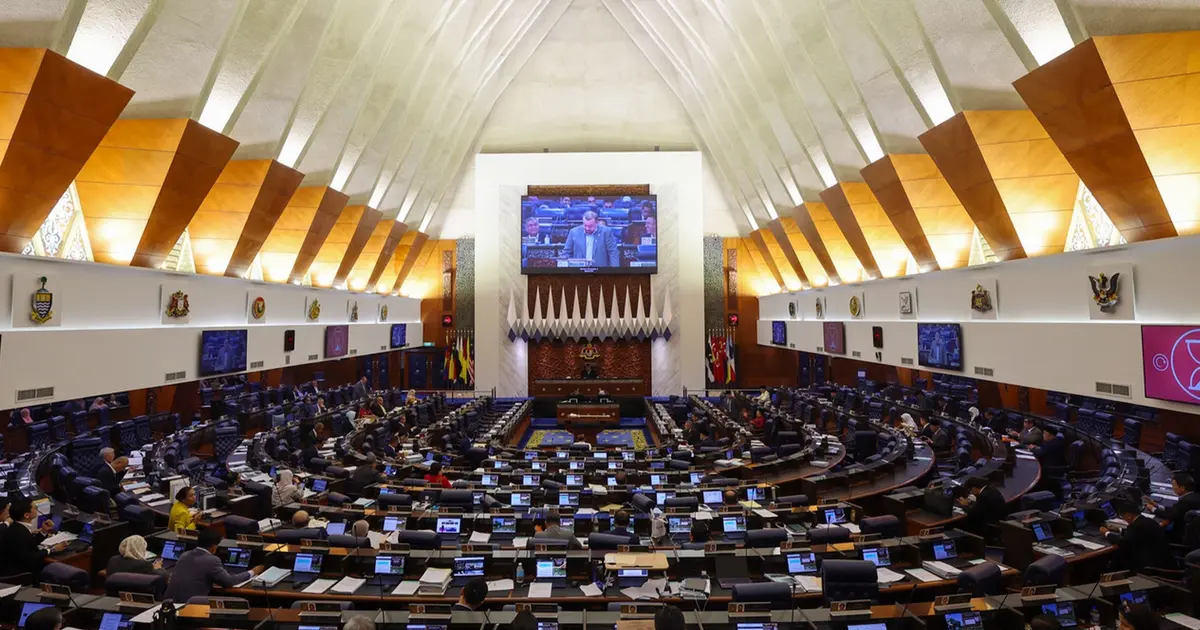
Malaysia's parliament reconvenes on Monday with a packed legislative calendar featuring four significant bills, foremost among them a renewed effort to impose a constitutional ceiling on prime ministerial terms. The measure, which seeks to limit consecutive occupancy of the nation's highest executive office to a single decade, represents a continuation of constitutional reform efforts that have periodically emerged as touchstones of governance debate in Malaysian politics.
The prime minister term-limit bill carries particular symbolic weight given its previous appearance before the Dewan Rakyat, where it encountered a substantial procedural obstacle. During the preceding parliamentary sitting, the proposed legislation fell short of securing the two-thirds supermajority required under Malaysia's constitutional amendment procedures. This elevated threshold reflects the framers' intention to ensure that fundamental alterations to the constitutional order command broad consensus across the political spectrum rather than prevailing through simple majority votes that might represent narrower factional interests.
The failure to achieve the necessary supermajority raises important questions about the current state of cross-party alignment on executive power constraints. Constitutional amendments in the Malaysian system demand demonstration of substantial unity, effectively requiring government and significant opposition participation. The earlier shortfall suggests either insufficient unanimity behind the concept itself or tactical differences over implementation details and timing—dynamics that will become evident as this week's debate unfolds.
From a Southeast Asian governance perspective, Malaysia's grappling with prime ministerial tenure limits reflects broader regional conversations about executive accountability and institutional safeguards. Neighbouring democracies have experimented with various constitutional mechanisms addressing similar concerns. The specific proposal to establish a 10-year cap represents a judgment that this duration balances effective governance continuity against the risks of excessive incumbent advantage and institutional decay that can accompany indefinite tenure.
The three additional bills joining this legislative week have not been detailed, but their concurrent scheduling alongside such a prominent constitutional matter suggests they address pressing governance matters demanding urgent parliamentary attention. The bundling of major legislative items reflects fiscal year-end patterns common in Westminster-influenced parliaments, where governments consolidate outstanding business before periodic recesses.
Success this time would require either strengthened consensus formation between government benches and substantial opposition contingents, or alternatively, a shift in parliamentary mathematics through member changes or strategic coalition adjustments. Malaysia's recent political history demonstrates the fluidity with which such calculations can shift, particularly given the relative fragmentation of parliamentary representation across multiple parties and the potential for negotiated realignment on specific measures.
The constitutional amendment path chosen for this initiative—rather than statutory reform—underscores the drafters' assessment that only entrenched constitutional provisions can effectively bind future prime ministers and parliaments. Ordinary legislation remains vulnerable to repeal through simple majorities, whereas constitutional text requires supermajorities and, in some Malaysian jurisdictions, additional consent mechanisms. This strategic choice reflects confidence that the proposed limit represents fundamental governance architecture rather than temporary policy.
International comparative experience offers instructive lessons. Thailand's 2017 Constitution established dual limitations on prime ministerial service, while other jurisdictions employ alternative mechanisms such as restricting consecutive service while permitting non-consecutive terms. Malaysia's single consecutive decade represents a distinctive approach meriting consideration of whether it achieves its intended equilibrium between stability and constraint.
For Malaysian citizens and businesses, the outcome carries implications extending beyond formal constitutional revision. Extended prime ministerial tenure correlates with particular governance styles, policy continuities, and bureaucratic dynamics that accumulate significance across years. The tenure question thus connects to deeper debates about institutional renewal, succession planning, and whether institutional design should automatically enforce leadership change or trust parliamentary discretion to manage executive continuity.
The parliamentary sitting commencing Monday will test whether the intervening period since the previous failed attempt has produced sufficient consensus-building, intellectual clarification, or political repositioning to achieve the required support. Media coverage and parliamentary interventions will illuminate the reasoning of those supporting and opposing this constitutional threshold, revealing competing visions of how Malaysian democratic institutions should balance executive effectiveness against power distribution concerns.
Regional observers will monitor the proceedings with particular interest, as Malaysia's constitutional amendment outcomes frequently influence discussions across ASEAN jurisdictions wrestling with similar governance questions. Success or failure carries symbolic weight beyond Malaysian borders, potentially influencing how neighbouring governments approach their own institutional architectures and executive power arrangements.
The timing of this renewed attempt, alongside three other major bills, demonstrates parliament's ambition to address substantive governance matters in the current sitting. Whether the supermajority requirement proves attainable will depend on the intervening period's political developments and whether interested parties perceive the timing and circumstances as conducive to such a consequential constitutional step. The coming days will provide clarity on the depth of commitment to this particular reform agenda.

