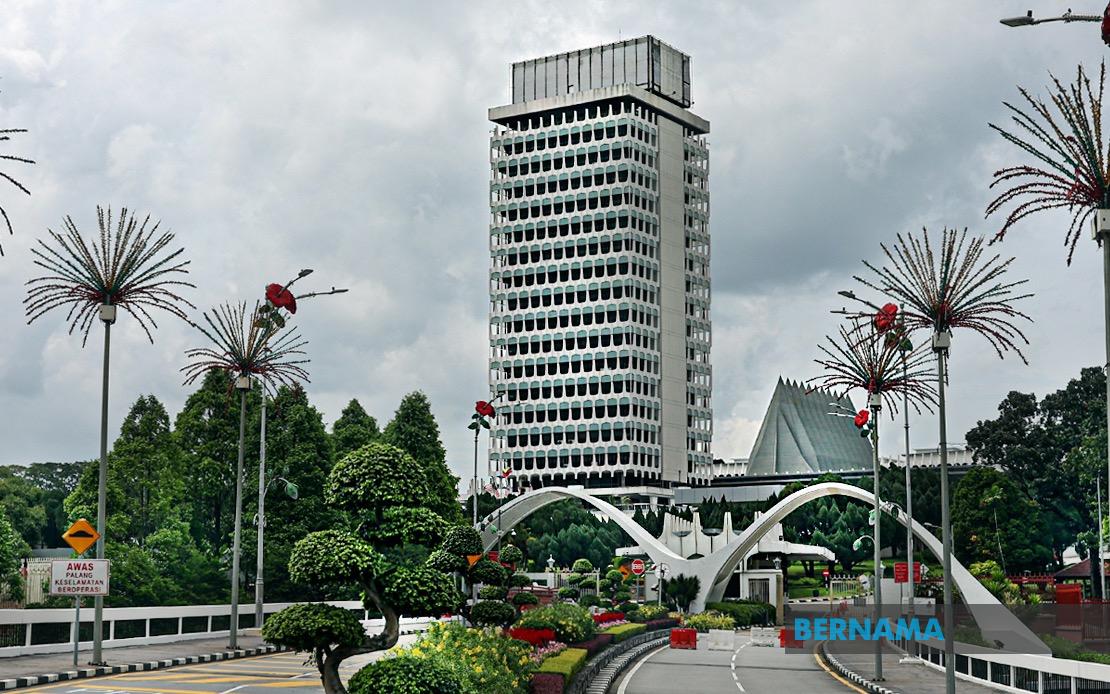
The Dewan Rakyat reconvenes today for a 16-day sitting that will see parliamentarians grapple with pressing energy sector reforms, economic headwinds, and Malaysia's diplomatic approach to Myanmar's political crisis. Among the most substantive agenda items are questions concerning the rollout of the Corporate Renewable Energy Supply Scheme, the cascading effects of the global energy squeeze on domestic business, and the practical application of Malaysia's Five-Point Consensus framework in managing relations with the crisis-stricken nation.
Energy transition remains at the forefront of parliamentary scrutiny as Rodziah Ismail raises questions about the implementation progress of CRESS, a scheme designed to facilitate renewable energy supply arrangements for the industrial sector. Her inquiry extends beyond basic uptake figures to examine the System Access Charge rate review and its implications for one of Malaysia's strategic economic ambitions: positioning the nation as a regional data centre hub. This line of questioning is particularly timely given the interplay between energy costs and operational viability for computationally intensive facilities. The minister will be pressed on whether current power supply arrangements and associated charges remain competitive against regional alternatives, and how emerging Battery Energy Storage Systems technology figures into future planning.
The broader economic fallout from escalating global energy prices emerges as a parallel concern. Mohd Syahir Che Sulaiman has submitted questions to the Minister of Economy probing the National Economic Action Council's response to accelerating job losses and business contractions linked to the energy crisis. This reflects mounting pressure on the government to demonstrate concrete, measurable results from its mitigation measures rather than merely announcing policies. The sitting will provide parliamentary members and the public with an opportunity to assess whether government responses have meaningfully cushioned communities from economic shocks or whether additional intervention is warranted.
Fuel subsidy policy has also drawn parliamentary attention, with Datuk Seri Hasni Mohammad questioning the rationale and adequacy of recent standardisation efforts. His inquiry touches on the decision to implement MyKad-based fuel subsidy targeting and whether the 200-litre entitlement for both petrol and diesel suffices for typical consumer needs. This probing suggests lingering political sensitivity around subsidies, a perennial flashpoint in Malaysian public discourse where cost-of-living pressures meet fiscal sustainability concerns.
Foreign policy toward Myanmar constitutes another significant parliamentary focus. William Leong Jee Keen will seek clarification from the Foreign Minister on how Malaysia's diplomatic stance reflects the Five-Point Consensus framework, an Association of Southeast Asian Nations initiative aimed at de-escalating Myanmar's internal conflict. The question implicitly asks whether Malaysia's stated foreign policy position translates into coherent action or whether rhetorical commitment masks policy uncertainty. Given ASEAN's well-documented divisions over Myanmar engagement, Parliament's attention signals domestic interest in clarifying Malaysia's precise positioning within regional geopolitical tensions.
Digital infrastructure and data sovereignty emerge as interconnected concerns in the digital age. Datuk Seri Amirudin Shari raises questions about coordinating state-level initiatives, particularly Selangor's Dark Fiber Network, to ensure national data sovereignty protections. His inquiry also touches on whether data governance considerations are meaningfully embedded in Malaysia's drive toward becoming an AI-ready nation by 2030. These questions reflect growing awareness among parliamentarians that technological infrastructure carries national security implications beyond conventional considerations.
Educational standards and federal-state coordination receive parliamentary attention through Datuk Idris Ahmad's inquiry into Islamic Education curriculum effectiveness. His questions probe the Prime Minister on assessment mechanisms for student development and coordination mechanisms between federal authorities and state Islamic Religious Councils. This reflects concerns about consistency and quality in religious education across Malaysia's federal structure, touching on governance structures that have long proven challenging to harmonise.
The Malaysia Agreement 1963 implementation timeline surfaces again in parliamentary discourse, with Isnaraissah Munirah Majilis seeking clarity on progress toward the longstanding commitment to increase parliamentary seats allocated to Sabah and Sarawak to 35 per cent of the national total. This constitutes a perennial bone of contention in Malaysian federalism, with Sabah and Sarawak repeatedly advocating for greater parliamentary representation commensurate with their constitutional status. Parliament's continued engagement with this question suggests the issue remains unresolved and politically sensitive.
The sitting will also see the Public Accounts Committee present findings on health insurance premium increases and private hospital charges, examining their broader public health implications. This represents Parliament's oversight function operating across multiple government portfolios, including the Ministries of Finance and Health, as well as the central bank. The framing suggests parliamentary concern that rising private sector healthcare costs may create perverse incentives or affordability barriers contrary to public health objectives.
The Prisons Amendment Bill 2026 will feature in subsequent parliamentary debate, indicating ongoing legislative attention to correctional system reforms. The breadth of today's parliamentary agenda underscores the multiplicity of governance challenges Malaysia confronts simultaneously, spanning energy transition, economic resilience, regional diplomacy, digital governance, educational standards, and institutional reform. The second sitting of the 15th Parliament's fifth session, scheduled to run through July 16, will likely generate considerable public interest given the salience of these issues for ordinary Malaysians navigating current economic uncertainties and watching regional developments with concern.

