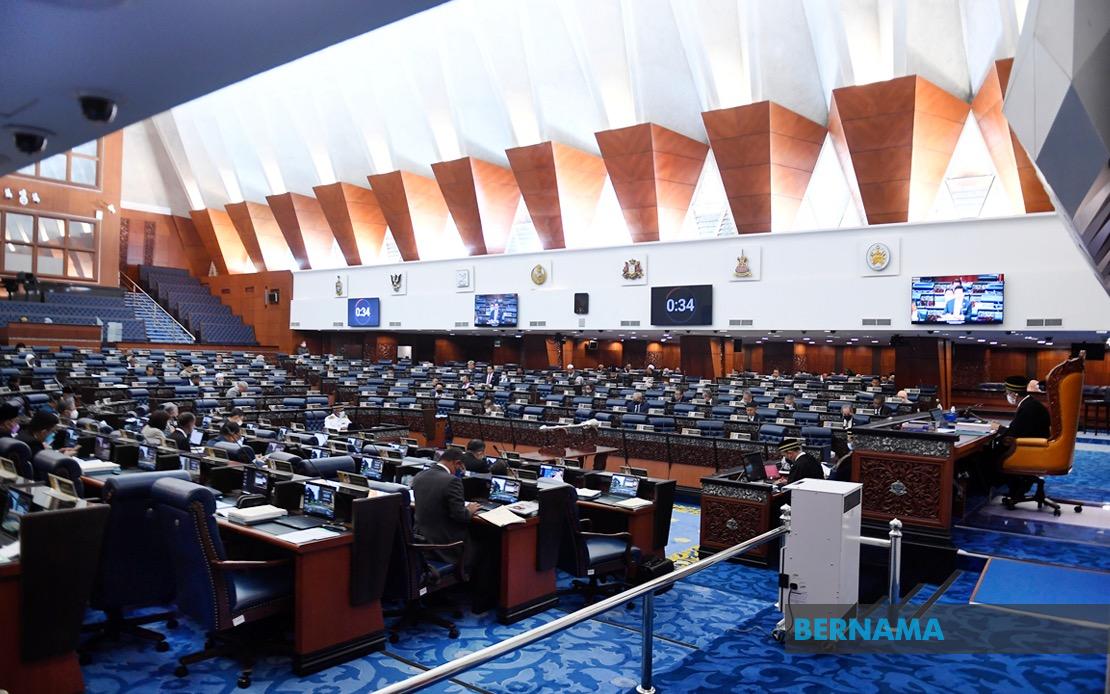
Malaysia's Parliament is set to examine two contentious governance issues today: the perceived inequity in how federal allocations reach state governments and the enforcement machinery behind restrictions on announcing development projects during election campaigns. The sitting will provide lawmakers an opportunity to scrutinise the implementation of these policies and their real-world implications for both state-level administrations and ordinary Malaysians ahead of crucial regional polls.
Doris Sophia Brodi, the GPS representative for Sri Aman, has tabled a parliamentary question challenging the Prime Minister to address persistent claims that federal allocations to state governments lack proportionality relative to the revenue those states generate. This concern touches upon a perennial tension in Malaysia's federal structure, where resource distribution between Putrajaya and the states remains a flashpoint for political friction. Brodi's inquiry will push the government to articulate its methodology for allocating federal funds and explain how the MADANI administration is attempting to recalibrate the distribution mechanism to achieve greater equity. The question goes beyond bureaucratic procedure—it strikes at the heart of federalism and whether wealthier or more productive states receive their fair share of national resources.
Simultaneously, Shahidan Kassim from Perikatan Nasional will interrogate whether the ban on announcing government allocations or projects after the close of nominations for elections remains legally enforceable. This prohibition exists to prevent ruling administrations from using public funds and infrastructure announcements as implicit campaign material during election periods. With elections scheduled for Johor, Melaka, and Negeri Sembilan, the timing of Kassim's question is particularly significant. He seeks clarification on what enforcement mechanisms the government intends to deploy to ensure that officials refrain from project announcements that could influence voter behaviour. The issue reflects broader concerns about electoral integrity and the potential weaponisation of state resources for partisan advantage.
Beyond these structural governance questions, Parliament's agenda reflects mounting public anxieties about digital threats and economic pressures facing Malaysian households. Ismail Sabri Yaakob will push the Communications Minister to detail governmental strategies for combating the proliferation of artificially generated content, particularly deepfake videos that increasingly deceive the public. The emergence of sophisticated AI-powered visual manipulation represents an unprecedented challenge to information integrity, with implications for everything from consumer trust to democratic discourse. The government must articulate not only detection methodologies but also verification and labelling protocols that social media platforms will implement to flag manipulated content.
The parliament session also addresses Malaysia's infrastructure readiness for technological transformation. Chong Zhemin will question the Energy Transition and Water Transformation Minister about whether the national electricity grid possesses sufficient capacity to service the explosive growth anticipated from data centres and artificial intelligence operations. This question reflects recognition among lawmakers that Malaysia's aspirations to position itself as a regional technology hub depend fundamentally on reliable, abundant power supply. The exponential energy demands of data processing and AI workloads could strain existing infrastructure, and parliament is rightfully demanding transparency about preparedness.
Social safety-net programmes will also come under parliamentary examination. Awang Hashim intends to query the effectiveness of the mySalam health insurance scheme, specifically whether it meaningfully protects the B40 bottom-income group. Additionally, Syahredzan Johan will seek data on redemption rates for the MADANI Book Vouchers scheme across 2024 and 2025, offering insight into whether low-income Malaysians are actually accessing the intended benefits of government assistance programmes. These questions matter because they expose gaps between policy intention and real-world uptake among vulnerable populations.
Employment and workforce participation will feature prominently as well. Mumtaz Md Nawi will interrogate the Human Resources Minister regarding the practical success of TalentCorp's Career Comeback Programme, which aims to encourage women to re-enter Malaysia's labour market after career breaks. Women's workforce participation remains below regional benchmarks, and parliament's scrutiny of whether specific incentive programmes are actually catalysing re-entry reflects broader acknowledgment that demographic and economic challenges require targeted intervention.
The government's flagship cost-of-living initiative, Program Jualan Rahmah MADANI, will also face parliamentary scrutiny. Iskandar Dzulkarnain will demand updated implementation figures across state constituencies nationwide and will press the Domestic Trade and Cost-of-Living Minister regarding plans to increase programme frequency. This initiative, which provides subsidised goods at controlled prices, represents the government's visible commitment to alleviating affordability pressures. Parliament's focus suggests concerns that current programme frequency may be insufficient to meet demand or make meaningful impact.
Beyond Question Time, the Dewan Rakyat will resume winding-up debates on the Sexual Offences Against Children (Amendment) Bill 2026, reflecting parliament's serious engagement with child protection legislation. Concurrently, lawmakers will consider amendments to the Employment Insurance System Bill 2025, addressing worker protections and insurance mechanisms, alongside consideration of the Cyber Crime Bill 2026, which will update Malaysia's digital security and enforcement capabilities.
Collectively, today's parliamentary session reveals how Malaysian governance is navigating simultaneous challenges: ensuring equitable federal-state relations, maintaining electoral integrity, confronting digital-age deception, facilitating technological transformation, strengthening social safety nets, promoting inclusive employment, and updating cybersecurity frameworks. These diverse agenda items underscore that contemporary governance demands attention to both structural institutional questions and the lived experiences of ordinary Malaysians navigating an increasingly complex technological and economic environment.

