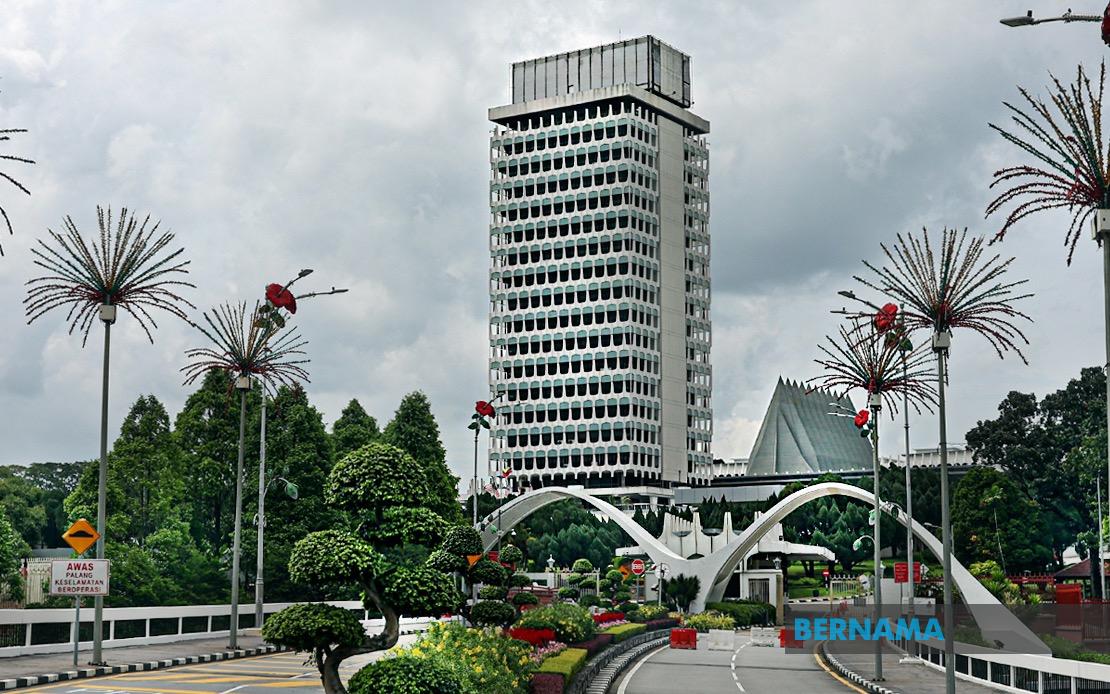
Parliament convened this week to tackle pressing economic and policy challenges facing Malaysia, with the Strait of Hormuz trade situation emerging as a central concern for the government's economic planning. The opening session of the Second Meeting of the Fifth Session of the 15th Parliament will feature detailed questioning of senior ministers about how disruptions to one of the world's most critical shipping lanes are affecting local manufacturers and the broader economy.
Datuk Dr Richard Rapu @ Aman anak Begri, representing the GPS-Betong constituency, will press the Economy Minister for a comprehensive assessment of how Strait of Hormuz disruptions are hitting Malaysian industries. The focus will centre on operational pressures, particularly rising costs for companies that depend on reliable maritime trade routes, and preliminary data on inflation trends for the second quarter of 2026. This line of questioning reflects genuine concern among business-focused lawmakers that geopolitical volatility in the Middle East could undermine Malaysia's competitiveness and price stability at home.
Beyond immediate trade concerns, the legislator will also demand clarity on contingency frameworks embedded in the 13th Malaysia Plan, seeking assurance that the government has credible strategies to defend Malaysia's GDP growth targets if the global economy slides into prolonged recession. The question carries weight given Malaysia's export-dependent economy and exposure to international demand shocks. Policymakers must demonstrate they have backup plans to insulate critical sectors and maintain economic momentum even as external headwinds intensify.
The haj pilgrimage system will also come under parliamentary scrutiny. Onn Abu Bakar from the PH-Batu Pahat seat will interrogate the Prime Minister on proposals to overhaul haj management ahead of the 2027 pilgrimage season. His questions will focus on cost containment for pilgrims, shortening the waiting period that forces many Malaysians to queue for years before undertaking the religious journey, and strengthening health and welfare protections for those performing the haj. These are not merely administrative matters; they touch on social equity and the quality of life for millions of Muslim Malaysians and their families who save for years to complete this religious obligation.
Artificial intelligence governance has emerged as a pressing legislative priority as lawmakers recognise the dual nature of AI technology—its immense potential alongside serious social risks. Wong Shu Qi, the PH-Kluang representative, will question the Digital Minister on whether the forthcoming Artificial Intelligence Governance Bill will contain robust safeguards against specific harms. The inquiry zeroes in on deepfake production targeting children in sexual exploitation contexts, fraudulent identity spoofing, and non-consensual distribution of intimate content. Malaysia, like many Southeast Asian nations, has seen emerging problems with AI-enabled abuse and fraud, making this legislative moment critical for establishing clear boundaries before harmful applications become entrenched.
Food security concerns tied to Middle Eastern geopolitics will form another major discussion point. Datuk Dr Radzi Jidin, the PN-Putrajaya member, will seek details from the Agriculture and Food Security Minister on comprehensive intervention strategies spanning the short, medium, and long term. The question acknowledges that the Middle East conflict has ramifications for Malaysia's agricultural sector and supply chains—whether through disrupted fertiliser imports, altered commodity flows, or wider economic uncertainty that affects farming investment. The government must articulate how it plans to shield food producers and consumers from these external shocks while building domestic resilience.
The legislative agenda extends to fundamental cybersecurity and road safety frameworks. The Cybercrime Bill 2026 is scheduled for tabling, signalling Parliament's intent to modernise Malaysia's defences against evolving digital threats—from ransomware attacks on critical infrastructure to online fraud and harassment. The bill's passage would provide law enforcement with updated tools and clearer legal authority to combat crimes that increasingly blur the line between physical and digital harm. Complementing this is the Road Transport Act Amendment Bill 1987, which suggests Parliament is revisiting decades-old legislation to address contemporary traffic management and vehicle regulation challenges.
The 16-day sitting, scheduled to run until July 16, provides lawmakers with sufficient time to examine these multifaceted issues in depth. The confluence of topics—global trade disruptions, social welfare reform, technological governance, food security, and criminal law modernisation—reflects a parliament wrestling with how Malaysia navigates a volatile international environment while safeguarding domestic prosperity and social stability. The breadth of concerns signals that Malaysian policymakers recognise the interconnected nature of modern challenges, where geopolitical shocks, technological disruption, and domestic welfare are no longer siloed issues but rather intersecting forces that shape national resilience.
For Malaysian businesses, the parliamentary discussion on Hormuz disruptions carries immediate relevance. Companies dependent on imported raw materials, energy, or components sourced via that crucial waterway face heightened uncertainty about supply continuity and cost trajectories. The government's contingency planning, or lack thereof, will influence how aggressively firms can invest in expansion or innovation. Similarly, clarifications on AI governance rules will shape how Malaysian technology firms and startups navigate development of AI applications, balancing innovation incentives against societal protection mandates that are increasingly non-negotiable in digital-first economies.
The haj management overhaul speaks to Malaysia's demographic and social realities. With an ageing population of Muslim citizens and a tradition of collective savings for pilgrimage, streamlining wait times and controlling costs represents social policy with real economic consequences—money that stays in domestic circulation rather than leaving for foreign exchange. Simultaneously, the food security questions reflect recognition that Malaysia, despite agricultural productivity, remains vulnerable to international commodity shocks and supply chain disruptions that no single nation can fully insulate itself against.
These parliamentary debates also underscore the region's awareness that Southeast Asia, including Malaysia, sits at the intersection of global power competition and economic vulnerability. The Strait of Hormuz is thousands of kilometres away, yet its stability directly affects Malaysian manufacturing costs and inflation. The Middle East conflict similarly reverberates through commodity markets and trade finance mechanisms that touch Malaysian firms. By bringing these issues into parliamentary spotlight, lawmakers are signalling to constituents and markets that Malaysia's leadership is engaged with external realities rather than insulated from them, a message that itself carries weight for investor confidence and public reassurance during uncertain times.

