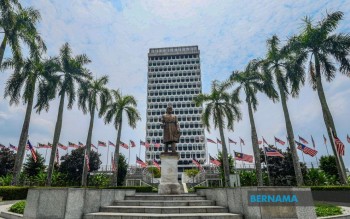
Prime Minister Datuk Seri Anwar Ibrahim has confirmed that Parliament will convene for a special sitting on August 11 to examine and debate the findings of the Royal Commission of Inquiry investigating Lembaga Tabung Haji (TH). The announcement came during remarks to the media following his attendance at the official opening of Maybank's new headquarters at Menara Merdeka Maybank in Kuala Lumpur. Anwar noted that discussions regarding the timing and logistics of the parliamentary session had already been held with Dewan Rakyat Speaker Tan Sri Johari Abdul.
The tabling of the RCI report will occur at 10 am on August 11, with parliamentary proceedings scheduled to continue into the afternoon, allowing sufficient time for comprehensive debate among members. This extended sitting format reflects the significance and complexity of the issues raised in the commission's investigation, which examined the pilgrim fund manager's operations across a critical six-year period. The decision to hold a dedicated parliamentary session underscores the government's commitment to transparency regarding the findings and its intent to allow elected representatives adequate opportunity to scrutinize the report's conclusions.
The Royal Commission's investigation, spanning the period from 2014 to 2020, uncovered substantial concerns regarding Tabung Haji's financial stewardship and strategic decision-making. The inquiry identified numerous investments that subsequently deteriorated significantly in value, thereby eroding the asset base of the Islamic pilgrimage savings institution. These problematic investment choices form the central focus of the commission's recommendations, which advocate for a thorough forensic audit to establish accountability and determine the circumstances leading to the financial deterioration.
Beyond investment failures, the RCI report documented evidence of irregular financial transactions and instances where information was deliberately withheld or obscured. These findings suggest systemic governance weaknesses and potential breaches of fiduciary responsibility that warrant rigorous examination. The identification of suspicious transactions indicates that the problems facing Tabung Haji may extend beyond poor investment judgment to encompass more serious questions of financial management propriety. Such revelations are particularly sensitive given Tabung Haji's role as custodian of savings for Muslim pilgrims across Malaysia, many of whom are ordinary Malaysians relying on the institution for their Hajj aspirations.
The forensic audit recommended by the commission represents a necessary escalation in investigative intensity beyond the RCI's own scope. A forensic examination will employ specialized accounting and investigative techniques to trace financial flows, document decision-making processes, and potentially identify individuals responsible for specific transactions or strategic failures. For Malaysian stakeholders and the broader investing public, such an audit provides assurance that the government takes seriously the obligation to protect public funds and maintain institutional integrity. The findings could ultimately inform policy reforms and enhanced oversight mechanisms for statutory bodies managing significant financial assets.
Tabung Haji's difficulties represent a cautionary narrative within Malaysia's broader institutional governance landscape. The organization, established with a specific mandate to facilitate Islamic pilgrimage through systematic savings schemes, has encountered challenges that reflect potential vulnerabilities affecting other public institutions. The severity of asset deterioration identified in the RCI report suggests that governance lapses, whether through inadequate internal controls, insufficient board oversight, or deliberate misconduct, can rapidly erode institutional value. For Malaysian investors and savers, particularly those within the Islamic financial ecosystem, the Tabung Haji situation underscores the importance of robust regulatory frameworks and transparent management practices.
The timing of the August 11 parliamentary sitting follows the RCI report's release on Wednesday night, allowing a brief period for media analysis and public digestion of the findings before legislative debate commences. This interval permits parliamentarians to prepare substantive contributions and enables civil society organizations and concerned stakeholders to submit relevant commentary for legislators' consideration. The public nature of parliamentary proceedings ensures that details of the investigation and recommended remedies will receive widespread dissemination, maintaining transparency regarding a matter of considerable public interest.
From a regional perspective, Malaysia's handling of the Tabung Haji inquiry reflects evolving standards of institutional accountability in Southeast Asia. The establishment of a Royal Commission itself, coupled with parliamentary debate and anticipated forensic audits, demonstrates a commitment to investigative rigor that may serve as a reference point for governance practices elsewhere in the region. However, the substantive challenges facing Tabung Haji also highlight the need for continuous vigilance regarding institutional management, particularly within organizations managing funds with both commercial and religious significance.
The parliamentary debate on August 11 will likely encompass discussions regarding responsibility attribution, remedial measures for affected pilgrims, and structural reforms to prevent recurrence of similar governance failures. Opposition members will undoubtedly scrutinize the findings intensively, while government legislators may address implementation timelines and budgetary implications of recommended interventions. The proceedings will also provide legislators opportunity to question relevant government officials regarding oversight mechanisms and future institutional development.
Looking forward, the forensic audit and subsequent parliamentary recommendations will shape the trajectory of Tabung Haji's recovery and reform. Malaysian pilgrims and their families, numbering in the hundreds of thousands, have direct stakes in the institution's restoration to financial health and operational integrity. The August 11 sitting represents a critical juncture in accountability proceedings that will determine not only consequences for past mismanagement but also the framework for institutional governance moving forward. Anwar's commitment to scheduled parliamentary debate signals the government's willingness to subject state institutions to legislative scrutiny, establishing a precedent that may influence oversight practices across Malaysia's public administration.

