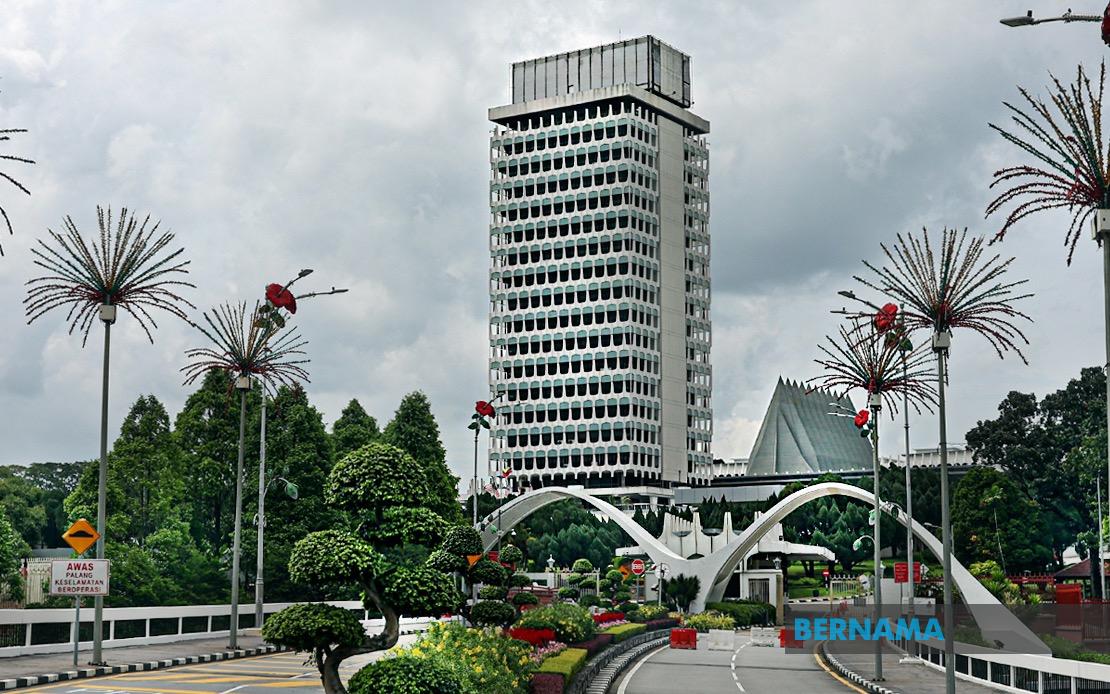
Parliament resumes business today with lawmakers set to scrutinise three significant policy areas that touch the everyday lives of millions of Malaysians: the nation's water security, competition in the property market, and the regulation of social media platforms. The 16-day sitting extends through July 16 and will feature questions addressing long-term planning for water resources, the capacity of enforcement agencies to police anti-competitive conduct, and the balance between digital safety and personal privacy.
Johor's water infrastructure emerges as an immediate priority. Suhaizan Kaiat, the Pulai MP from Pakatan Harapan, will press the Energy Transition and Water Transformation Minister on the government's strategic vision for expanding the state's water supply capacity. His question signals growing parliamentary concern about Johor's ability to meet escalating demand from its rapidly expanding population and industrial base. The query specifically invokes three complementary approaches: constructing new dams to capture and store water, upgrading treatment plants to improve efficiency, and investing in recycled water systems that recover and reuse wastewater for non-potable applications. For a state that has experienced periodic water rationing and faces rising agricultural and manufacturing water needs, this line of questioning reflects recognition that demand-side management alone cannot solve the problem. The minister's response will likely sketch timelines, capital expenditure estimates, and details of partnerships with private developers, providing critical intelligence about whether the government intends rapid expansion or measured incremental improvement.
The Malaysia Competition Commission's role in restraining housing price inflation will also come under parliamentary spotlight. Datuk Seri Ismail Abd. Muttalib, representing Maran for Perikatan Nasional, will ask the Domestic Trade and Cost of Living Minister what concrete measures the ministry is deploying to sharpen MyCC's monitoring capability. Housing affordability remains a politically volatile issue across Malaysia, with young voters and first-time buyers increasingly priced out of the property market. Ismail's question targets not merely MyCC's general oversight capacity but specifically its ability to identify and prosecute price-fixing and market manipulation schemes in the housing sector. Developers offering suspiciously similar packages at identical prices, or coordinating price movements to maintain margins, represent classic anti-competitive conduct that MyCC must detect and investigate. His supplementary question probes the effectiveness of those investigations, seeking assurance that MyCC possesses adequate resources, legislative authority, and technical expertise to uncover sophisticated collusive arrangements. The response will reveal whether the government views housing affordability as primarily a supply-side problem or increasingly recognises that market distortions amplify scarcity and inflate prices beyond fundamental economic value.
Digital regulation and personal data protection intersect in Syahredzan Johan's question on social media age verification. The Bangi MP from Pakatan Harapan will ask the Communications Minister to clarify the stated purpose of implementing age verification rules for social media users and explain how the government will prevent licensed service providers from amassing excessive personal information. Age verification presents genuine tension between legitimate child protection objectives and invasive surveillance risk. Parents and policymakers across Southeast Asia increasingly recognise that young adolescents lack maturity to resist algorithmic manipulation and exploitation, while platforms benefit from early user acquisition and prolonged engagement. Malaysia's approach must therefore specify what data collection is strictly necessary versus what merely increases commercial value. Syahredzan's emphasis on proportionality and data deletion reflects international best practice established under Europe's General Data Protection Regulation and emerging frameworks across the region. His question will expose whether Malaysia's implementation protects children while respecting adult privacy or whether it becomes a backdoor for mass surveillance justified by child safety rhetoric.
These three parliamentary inquiries collectively address infrastructure resilience, market competition, and digital regulation—domains where government authority shapes economic opportunity and quality of life. Water security determines whether businesses can operate reliably and households can meet basic needs. Fair housing markets determine whether ordinary Malaysians can accumulate wealth through homeownership or whether speculative conduct locks them into perpetual renting. Digital rules determine whether Malaysians enjoy open platforms or suffer intrusive monitoring disguised as protection. The Dewan Rakyat's focus on these issues signals that MPs across the political spectrum recognise governance gaps that require correction. Whether today's questions yield substantive commitments or merely procedural reassurances will indicate the government's genuine commitment to tackling structural problems rather than managing symptoms through rhetoric and incremental adjustment.

