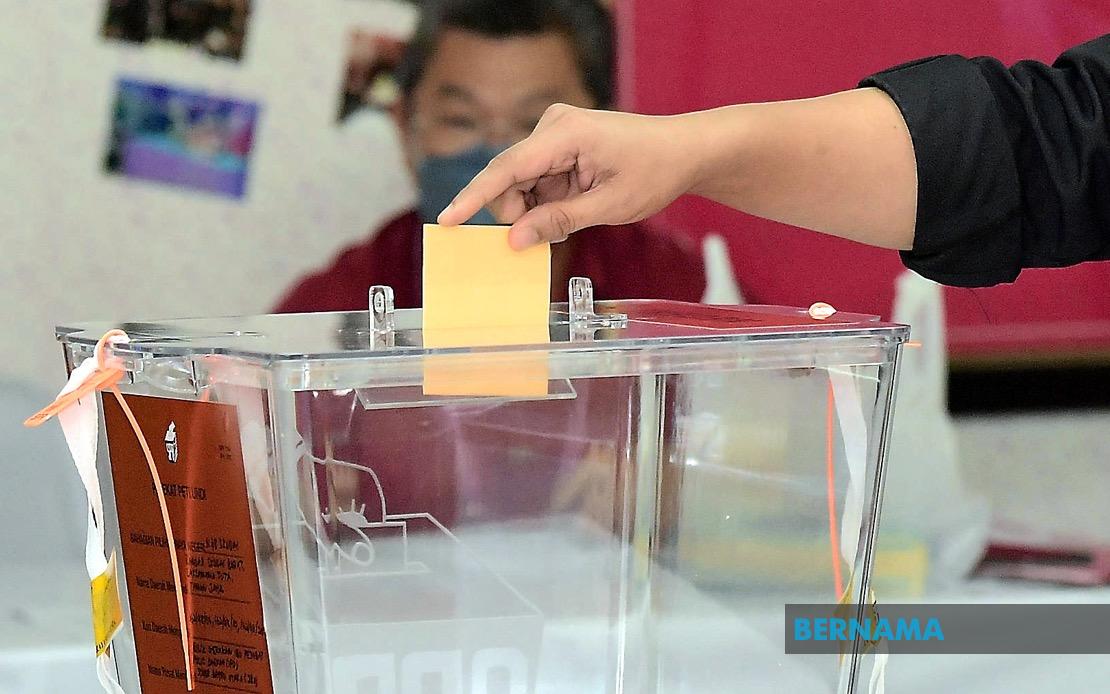
Johor's opposition-aligned partners have publicly accepted the results of the state election held on July 11, with the Islamic party PAS commending voters for their choice while two coalition allies announced plans to assess their electoral performance. The outcome delivered a decisive mandate to Barisan Nasional, which secured 29 of 56 state seats, sufficient to form government without relying on the support of smaller parties or independent representatives.
PAS commissioner for Johor Datuk Dr Mahfodz Mohamed issued a statement acknowledging the people's decision on the same day polls closed, framing the loss as an opportunity for the Perikatan Nasional coalition to consolidate and prepare for larger battles ahead. His remarks reflected a measured tone common in Malaysian politics when parties face electoral setbacks, emphasizing continuity of purpose rather than dwelling on immediate defeats. The PAS leadership indicated that despite the disappointing performance in Johor, the party would maintain its ideological commitments around religious values, communal interests, and welfare while gearing up for the more consequential federal election expected in coming years.
The congratulations extended to Menteri Besar Datuk Onn Hafiz Ghazi and his BN administration underscored that PAS, despite losing ground, respects the institutional legitimacy of the incoming government. This diplomatic gesture carries significance in Malaysian politics, where coalition relationships often involve parties that compete during elections but must cooperate afterward in parliament and state assemblies. By publicly validating the election process and its outcome, PAS avoids the divisive rhetoric that could destabilize Perikatan Nasional or create friction within opposition ranks.
Bersatu, the political vehicle of former Prime Minister Mahathir Mohamad and currently led by Muhyiddin Yassin, took a more analytical approach to the results. Secretary-general Datuk Seri Mohamed Azmin Ali announced that the party would undertake a comprehensive examination of its performance in Johor to identify where strategies fell short and where adjustments could strengthen future campaigns. Bersatu's response suggests internal discussions about messaging, candidate selection, and voter targeting—areas where opposition coalitions frequently struggle in states dominated by Barisan Nasional's institutional advantages and grassroots machinery.
The most striking commentary came from Parti Bersama Malaysia, led by Datuk Seri Rafizi Ramli, whose nascent organization lost all 15 candidates' election deposits. Bersama's inability to retain the minimum vote share required to recover deposits represents a severe setback for a party that was merely 52 days old at the time of the election. Despite this humbling performance, Rafizi framed the loss as a learning experience, arguing that the campaign exposure and electoral exercise would equip the fledgling party with invaluable insights for future contests. This optimistic interpretation of defeat reveals the challenges facing new political entrants in Malaysia's competitive landscape, where established party machinery and voter familiarity confer substantial advantages.
The Johor election's timing proved significant, occurring during a broader political transition in Malaysia. As the nation anticipates the 16th General Election, state-level contests serve as barometers for national sentiment and as training grounds for both ruling and opposition coalitions. Johor's results suggested that Barisan Nasional retained considerable electoral appeal in the state, reversing earlier momentum that had seen Pakatan Harapan make inroads during the 2018 federal election cycle. The relatively strong showing by BN—commanding 29 of 56 seats—indicated that the coalition had successfully consolidated support among traditional voters and regained confidence among segments that had flirted with alternatives.
Pakistan Harapan's modest return of two seats demonstrated the challenge opposition coalitions face in competing against BN's entrenched structures and patronage networks, particularly in a state where BN remains dominant in rural and semi-urban constituencies. The complete shutout of Perikatan Nasional, Bersama, MUDA, and other contenders highlighted how Malaysia's first-past-the-post electoral system concentrates power among larger established parties. For Perikatan Nasional, traditionally stronger in other states like Kedah and Terengganu, the Johor result represented a missed opportunity to expand its footprint during a period of political fluidity.
The measured responses from PAS and Bersatu reflected organizational maturity and strategic calculation. Rather than dispute results or blame external factors, both parties acknowledged the verdict and committed to introspection. This approach contrasts with more volatile political responses seen in some democracies and serves to maintain democratic legitimacy in Malaysia. By accepting defeats gracefully, opposition parties demonstrate their commitment to democratic norms while positioning themselves for future contests when circumstances might shift.
For Malaysian and regional observers, the Johor election underscored several enduring patterns in Southeast Asian politics: the persistence of established ruling coalitions despite periodic challenges, the difficulty faced by new parties in breaking through electoral ceilings, and the capacity of mainstream opposition coalitions to absorb electoral losses without fracturing. The election also signaled that despite the tumultuous politics of recent years—including multiple changes of federal government—Malaysian voters have not fundamentally realigned in ways that would upend established party structures. Instead, BN's comfortable majority suggests voters still view the traditional ruling coalition as a credible steward of state governance, at least at the subnational level where bread-and-butter issues predominate.

