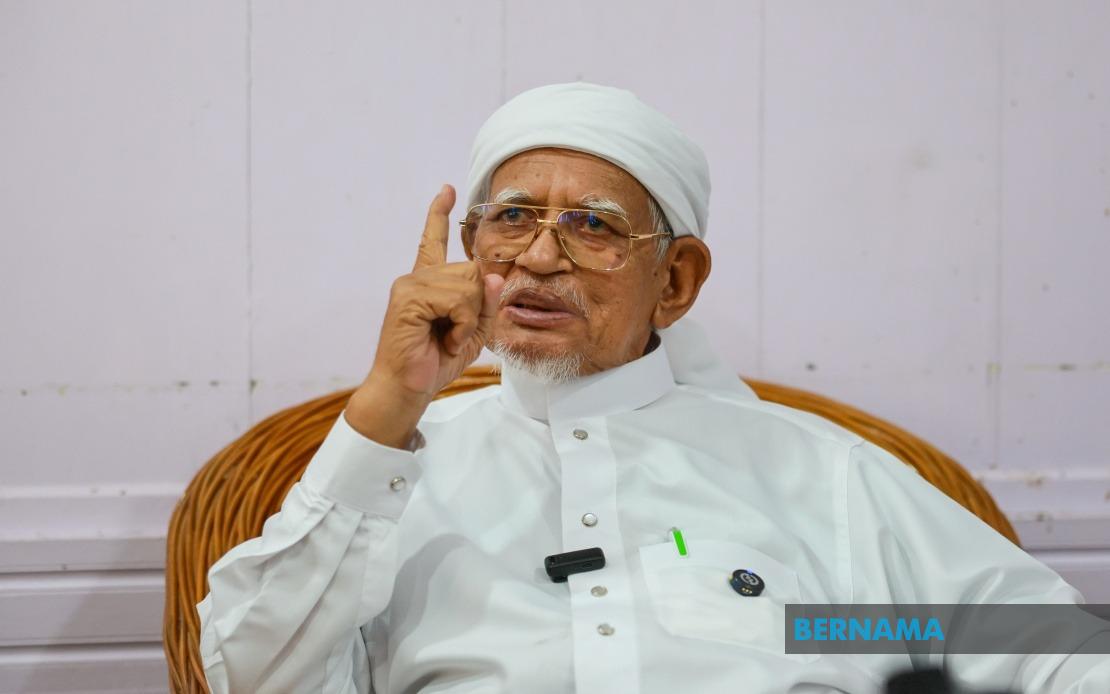
The governing coalition Perikatan Nasional faces an internal constitutional crisis following contradictory statements from two of its senior figures over whether Bersatu retains membership in the bloc. PAS president Tan Sri Abdul Hadi Awang declared in Marang on August 7 that Bersatu has automatically lost its standing as a coalition member after the party publicly signalled its intention to establish a separate political alliance with other organisations.
Abdul Hadi's position rests on a straightforward interpretation: once Bersatu announced plans to pursue coalition arrangements outside PN, the party effectively ceased being a legitimate member without requiring any formal administrative procedure. He argued that PN has no obligation to issue an official notification to Bersatu formalising its departure, as the party's own actions in seeking alternative alignments constitute automatic withdrawal from the bloc. Speaking after delivering a religious lecture at Rusila Mosque, the PAS president appeared to treat the matter as procedurally resolved rather than subject to ongoing negotiation.
Bersatu president Tan Sri Muhyiddin Yassin had previously indicated through media statements that his party would construct a new coalition partnership alongside several other political organisations following the Negeri Sembilan state election. This declaration apparently triggered Abdul Hadi's public pronouncement regarding Bersatu's status. However, the statement generated immediate pushback from the party hierarchy.
Bersatu's secretary-general Datuk Seri Mohamed Azmin Ali swiftly rejected Abdul Hadi's characterisation, asserting that the party maintains full legitimate membership within PN and that no constitutional mechanism exists permitting automatic revocation of a component party's standing. Azmin pointed specifically to the absence of any provision in the PN Constitution supporting the doctrine of automatic membership loss, establishing grounds for legal disputation over the proper interpretation of the coalition's governing framework.
According to Azmin's reading of constitutional procedure, only the PN presidential council possesses authority to determine the membership status of component parties, acting under Clause 7A of the Perikatan Nasional Constitution. He further emphasised that this council body has not yet convened to address Bersatu's position, meaning no formal determination regarding membership termination has occurred through the prescribed legal channels. This technical objection transforms the dispute from a matter of political interpretation into a question of constitutional procedure and jurisdictional authority.
The distinction between these positions carries substantial implications for PN's structural stability and decision-making legitimacy. Abdul Hadi's approach would permit the coalition's senior figures to make unilateral determinations about membership based on political conduct, while Azmin's framework insists on formal collegial deliberation through established institutional processes. The divergence reflects deeper questions about whether PN functions as a relatively informal political arrangement or a constitutionally rigorous organisation bound by documented procedures.
Azmin further contested Abdul Hadi's implicit claim that the PAS president possesses any authority to make unilateral determinations about PN membership. He rejected any suggestion that Abdul Hadi holds veto power or decision-making capacity regarding Bersatu's standing within the coalition. This repudiation of Abdul Hadi's jurisdictional reach represents a challenge not merely to a particular claim but to the very basis on which the PAS leader attempted to make his announcement, contending that Abdul Hadi lacks the constitutional standing to render such declarations.
In response to what it regards as an improper assertion of authority, Bersatu indicated its intention to lodge a formal complaint with the Registrar of Societies, the government body responsible for overseeing the registration and governance of political parties and civil organisations in Malaysia. This escalation suggests the party views the matter as sufficiently serious to warrant external regulatory oversight and intervention. The referral to the Registrar implies that Bersatu considers Abdul Hadi's statements potentially to violate regulatory expectations governing inter-party relations and coalition conduct.
For Malaysian observers monitoring coalition dynamics, this disagreement illuminates the fragility of consensus within PN, particularly as political parties manoeuvre ahead of potential electoral contests. Bersatu's simultaneous membership across competing alliance structures has become a recurring flashpoint in Malaysian politics, reflecting the party's strategic positioning as a potential kingmaker in various political configurations. The constitutional dispute signals that informal understandings guiding the coalition may prove insufficient when parties pursue divergent strategic interests.
The broader context involves Bersatu's historical pattern of shifting coalition allegiances and its pivotal role in previous government formations. The party's capacity to negotiate its status within multiple political arrangements has often depended on ambiguity regarding formal membership obligations and withdrawal procedures. This current dispute suggests that other coalition members, particularly PAS, increasingly resist such ambiguity and demand clarity about whether parties simultaneously cultivating alternative alliances can meaningfully continue PN membership.
The timing relative to the Negeri Sembilan state election carries political significance, as electoral performance often catalyses discussions about coalition restructuring and alliance reconfiguration. Bersatu's apparent strategy to negotiate an independent political position ahead of that contest has evidently prompted PAS to attempt establishing clearer boundaries around coalition membership terms.
Until the PN presidential council formally convenes to address this matter through the constitutional mechanisms that Azmin referenced, both interpretations will likely persist in public statements from coalition figures. The unresolved dispute leaves Bersatu's formal status ambiguous even as its leaders assert continued membership, creating operational uncertainty about the coalition's actual composition and decision-making authority.

