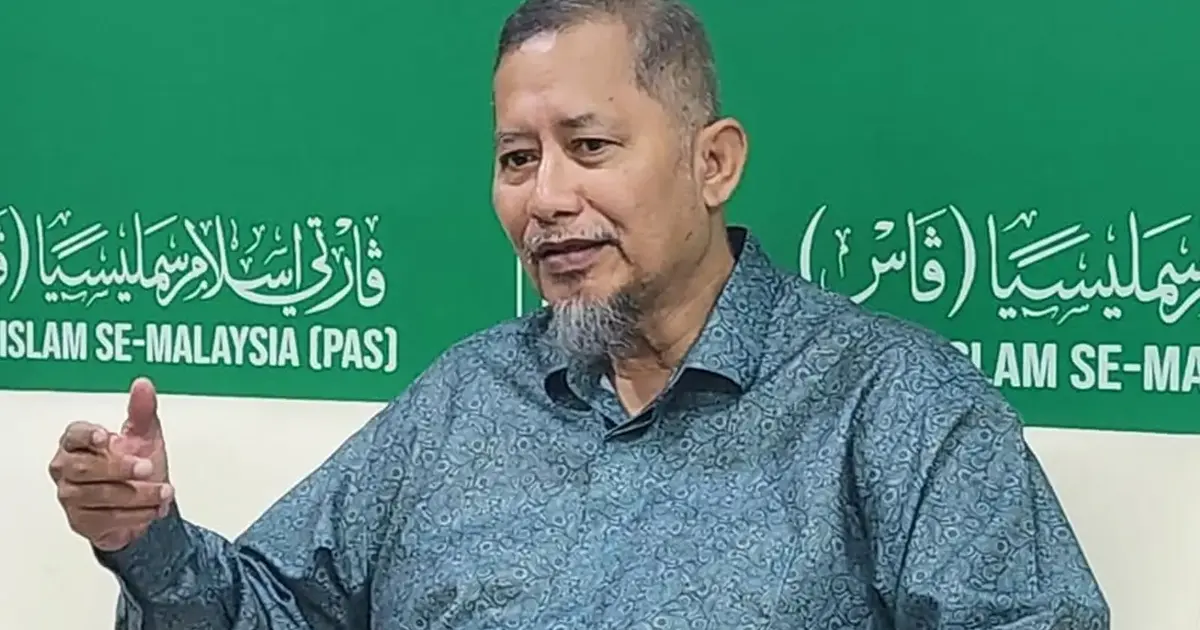
The political landscape within Perikatan Nasional (PN) appears increasingly fractious, with PAS leadership openly expressing confidence that it would decisively outperform Bersatu in any direct electoral contest. Iskandar Abdul Samad, who serves as treasurer of the Islamic party, has signalled that PAS commands greater grassroots support and organisational strength than its coalition partner, effectively drawing a line in the sand regarding the internal power dynamics within PN.
This assertion by a senior PAS figure reflects the mounting tensions between the two largest components of Perikatan Nasional, a coalition that has sought to position itself as an alternative to the ruling Barisan Nasional and opposition Pakatan Harapan blocs. The statement carries particular significance given that PN's electoral viability depends substantially on the cohesion and mutual respect between its constituent parties. Any perception of internal weakness or deepening divisions could undermine the coalition's appeal to voters seeking a third political force.
Iskandar's confidence in PAS's electoral supremacy rests on the party's assertion that it possesses deeper penetration into Muslim-majority constituencies and stronger mobilisation capabilities at the grassroots level. PAS has historically demonstrated formidable organisational networks, particularly in states such as Kelantan and Terengganu where it has governed, and these structures arguably give it structural advantages in candidate recruitment and voter turnout operations. The party's religious credentials and extensive mosque-based networks provide institutional pathways for political messaging that other parties find difficult to replicate.
Bersatu, by contrast, emerged more recently as a political entity and lacks the entrenched party machinery that PAS has cultivated over decades. While Bersatu commands certain elite-level support and has attracted prominent defectors from UMNO, its grassroots organisational depth remains comparatively underdeveloped. This structural disadvantage could prove decisive in close electoral contests where door-to-door campaigning and community engagement determine outcomes. The party's reliance on personalities rather than institutional strength further compounds its vulnerability in hypothetical direct competition with PAS.
The broader context for this declaration involves ongoing friction within PN over issues including leadership direction, strategic electoral positioning, and the distribution of winnable parliamentary and state seats. Bersatu leaders, including party president Muhyiddin Yassin, have sought to establish their formation as the leading nationalist voice within PN, potentially creating ideological and strategic tensions with PAS's Islamist orientation. These competing visions for PN's identity and future trajectory have occasionally manifested in public disagreements and behind-the-scenes negotiations over seat allocations.
For Malaysian voters and political observers, Iskandar's remarks underscore the reality that coalition politics in the country remains notoriously unstable. The apparent confidence expressed by a major party leader regarding its ability to dominate a partner suggests that PN's unity may be more transactional than principled, held together primarily by the mutual advantage of contesting elections as a combined force rather than by shared ideological commitment. Should electoral circumstances shift or post-election political calculations favour defection, such declarations could presage actual party separations.
Regionally, the PAS-Bersatu dynamic within PN mirrors broader challenges confronting multi-party coalitions across Southeast Asia, where managing internal competition whilst maintaining external electoral coherence remains perpetually difficult. Countries including Thailand, Indonesia, and the Philippines have witnessed how coalition partners simultaneously cooperate and compete, creating unpredictable political outcomes. Malaysia's three-bloc system—Barisan Nasional, Pakatan Harapan, and Perikatan Nasional—has emerged partly because no single coalition can reliably secure parliamentary majorities, making every election outcome uncertain and encouraging coalition fragmentation.
The implications for Malaysian governance extend beyond party-level competition. Should PN fracture or should one component attempt to assert dominance over others, the resulting instability could complicate efforts to form stable governments or implement coherent policy platforms. The 15th General Election in 2023 already demonstrated how fractured electoral outcomes can constrain governing room and produce unstable coalitions vulnerable to defection and floor-crossing. Any further fragmentation within existing coalitions would amplify these challenges.
PAS's apparent willingness to publicly assert its electoral superiority over coalition partners may also reflect calculations regarding potential repositioning ahead of future elections. By emphasising its organisational capabilities and voter appeal, PAS leadership may be signalling to Bersatu and other PN partners that it deserves greater recognition and seat allocations in future electoral contests. Alternatively, such statements could represent positioning for potential coalition realignment should circumstances encourage PAS to explore alternatives outside PN's framework.
Looking forward, the stability of Perikatan Nasional will likely depend on whether its constituent parties can subordinate individual ambitions to collective electoral interests. Iskandar Abdul Samad's remarks, whilst perhaps intended to project confidence, inadvertently illuminate the fragility underlying contemporary Malaysian coalition politics, where alliance partners regard each other with a mixture of necessity and reservation.