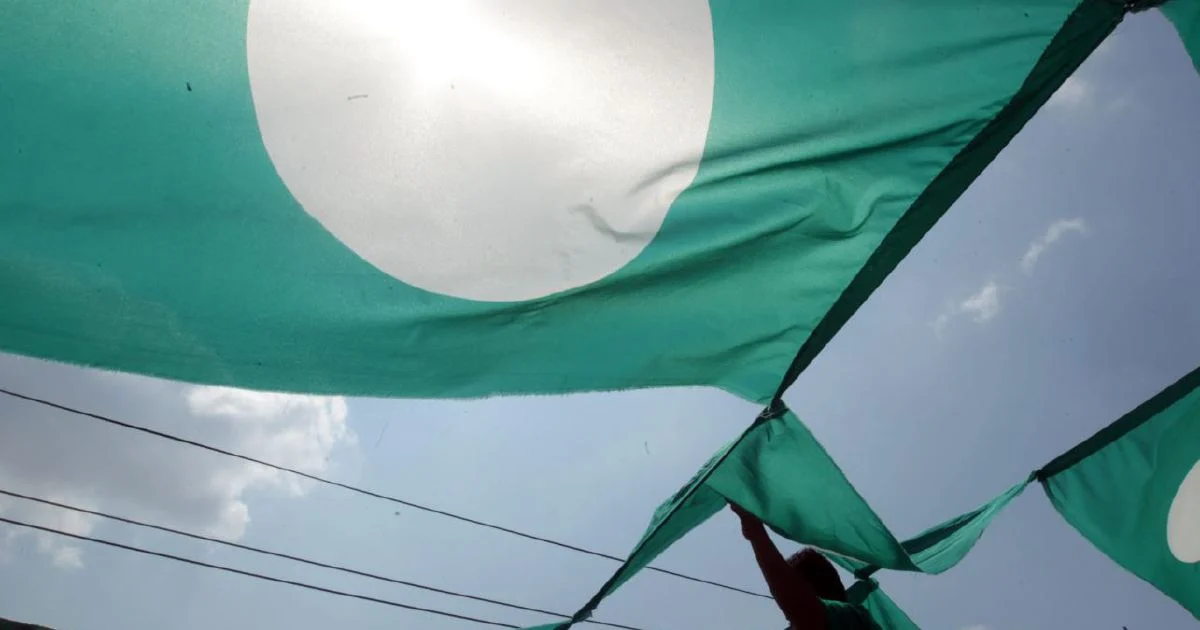
Senior officials of the Parti Islam Se-Malaysia (PAS) assembled at the party's headquarters along Jalan Raja Laut in Kuala Lumpur for a closed-door pre-council meeting of opposition parliamentarians, a gathering that signals deepening tensions within the broader opposition coalition as internal divisions resurface with increasing frequency and visibility.
The convergence of PAS leadership comes at a moment of palpable strain between the party and Bersatu, the Malaysia United Indigenous Party, with whom it has ostensibly shared the opposition benches since the 2022 general election. What began as a working partnership to check the government has evolved into a relationship marked by competing territorial claims, ideological disputes, and disagreements over strategic direction that threaten the coherence of the opposition bloc.
PAS, historically entrenched in Malaysia's Northeast through its strongholds in Kelantan and Terengganu, has long positioned itself as the standard-bearer of Islam-focused politics in the nation. The party's influence within the opposition framework has grown substantially, particularly after strengthening its parliamentary representation and consolidating control over multiple state administrations. Yet this very success has created friction with Bersatu, which seeks to establish itself as a credible alternative to the ruling Barisan Nasional and UMNO specifically.
Bersatu, the newer entrant to Malaysian politics founded by former Prime Minister Mahathir Mohamad and subsequently led by Muhyiddin Yassin, has struggled to carve out a distinct identity separate from its coalition partners. The party's attempts to position itself as a moderate, multiethnic alternative have frequently clashed with PAS's more pronounced Islamic framework and stricter interpretation of governance priorities. This ideological chasm has repeatedly manifested in disagreements over candidate selection, policy positions, and public messaging.
The gathering of opposition MPs in PAS's headquarters rather than at a neutral venue carries symbolic weight, suggesting that PAS is consolidating its influence within the opposition parliamentary caucus and potentially preparing to assert greater autonomy over its direction. Such positioning is particularly significant given Malaysia's fluid political landscape, where coalition arrangements remain contingent on shared interests rather than institutional loyalty, and where individual parliamentarians retain considerable power to shift allegiances.
Regional observers note that tensions within the opposition are mirroring broader patterns across Southeast Asia, where fractious coalition politics frequently undermine the capacity of non-governing blocs to mount effective challenges to entrenched administrations. The inability of opposition forces to maintain unity on core policy frameworks or strategic objectives has historically benefited ruling governments by allowing them to exploit divisions and secure legislative backing through selective cooperation with individual opposition members.
For Malaysian politics specifically, the PAS-Bersatu dynamic carries particular weight given the salience of religious and communal questions in the nation's political discourse. PAS's strength derives substantially from its mobilisation of Islamic constituencies and its appeal to more religiously conservative segments of the Malay-Muslim population, while Bersatu has traditionally sought to appeal to a broader cross-ethnic coalition. These fundamental differences in political positioning create persistent friction that periodic meetings and formal structures struggle to resolve.
The pre-council gathering also reflects practical concerns about parliamentary management. With opposition numbers relatively constrained in the current Dewan Rakyat, maintaining discipline among opposition MPs becomes essential for mounting coordinated challenges to government legislation or holding the executive accountable. Fracturing within the opposition caucus necessarily compromises these tactical objectives and embitters personal relationships among parliamentarians who must interact frequently across party lines.
Political analysts suggest that the convening of such meetings often precedes either significant policy shifts or restructuring of coalition arrangements. The timing and venue of this particular gathering hint that PAS leadership may be contemplating adjustments to the opposition's strategic approach or reassessing the benefits of maintaining close coordination with Bersatu on specific issues. Whether this materialises into formal realignment remains uncertain, but the frequency and prominence of such tensions underscore the fragility of opposition unity in contemporary Malaysian politics.
The broader implications extend beyond immediate parliamentary arithmetic. A weakened or divided opposition ultimately diminishes the quality of democratic accountability and legislative scrutiny that democratic systems require to function effectively. When opposition forces consume energy managing internal grievances rather than developing alternative policy frameworks or scrutinising government performance, citizens lose access to genuine alternatives and informed debate about different visions for national development.
Looking ahead, the trajectory of PAS-Bersatu relations will substantially influence the opposition's capacity to challenge the government cohesively in upcoming parliamentary sessions and potentially during the run-up to the next general election. Should these tensions crystallise into formal separation or divergent voting patterns on key legislation, the realignment could trigger significant shifts in coalition geometry that reshape Malaysian politics for years to come.