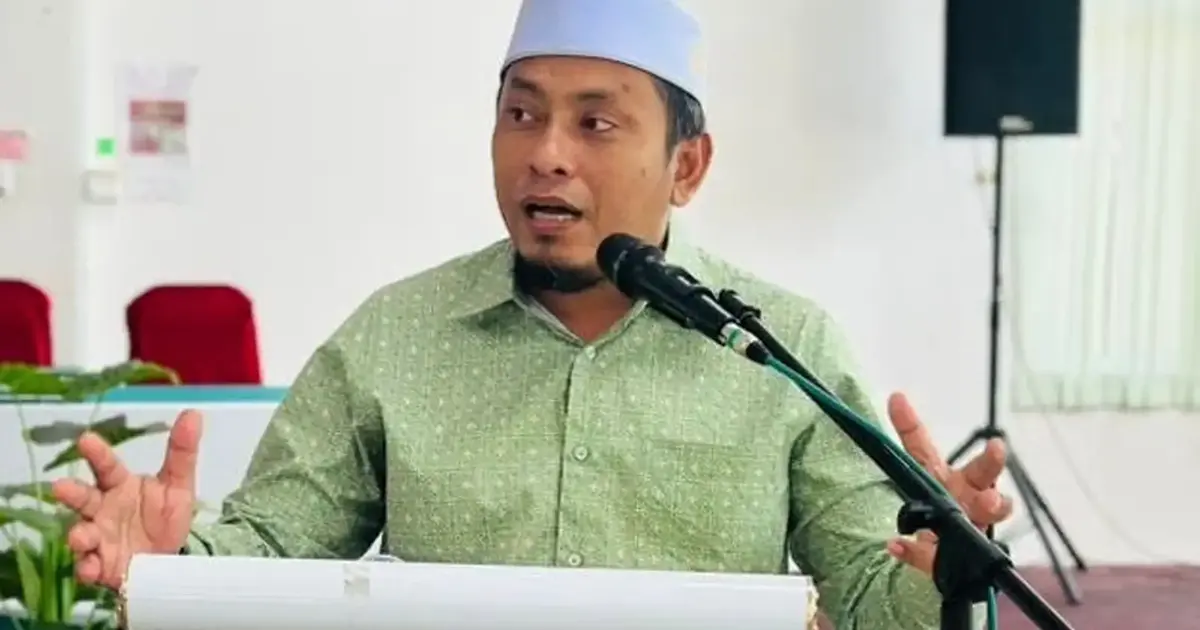
PAS has signalled its continued commitment to keeping Bersatu as a member of Perikatan Nasional, even as cracks appear in the coalition's unity over policy direction and leadership priorities. Ahmad Fadhli Shaari, the information chief of PAS, made the statement to underline the party's desire to maintain the three-component alliance that has defined Malaysian federal politics since 2020, suggesting that internal disagreements, however significant, should not derail the partnership.
The remarks come at a sensitive juncture for PN, which has repositioned itself as a dominant force in Malaysian politics following the 2022 general election and subsequent political realignments. PAS's explicit reaffirmation of its support for Bersatu's continued membership indicates anxiety within the coalition about potential fractures that could weaken its bargaining power in parliament and state governments. For regional observers, this internal dynamic underscores the fluid nature of Malaysian coalition politics, where partnerships remain perpetually vulnerable to shifts in incentive structures and personality-driven leadership changes.
Yet Ahmad Fadhli Shaari's statement contained a pointed observation that tempers the optimism embedded in PAS's inclusive rhetoric. He noted that Bersatu has increasingly adopted a confrontational posture towards the coalition's current strategic direction, suggesting tensions over how PN should evolve and position itself within the broader national political landscape. This characterisation hints at substantive disagreements rather than merely procedural squabbles—disagreements about PN's relationship with UMNO and Barisan Nasional, its legislative agenda, and potentially its vision for future electoral cooperation and power-sharing arrangements.
The underlying friction reflects the inherent complications of managing a coalition comprising parties with distinct electoral bases, ideological inflections, and leadership ambitions. PAS draws its core support from religiously conservative constituencies, particularly in the northeast and parts of the Klang Valley, and views itself as the custodian of Islam-centric governance within PN. Bersatu, conversely, has attempted to position itself as a centrist, multiethnic party capable of appealing across communal lines, though this positioning has proven inconsistent given its historical roots and Muhyiddin Yassin's political trajectory.
The confrontational approach Ahmad Fadhli Shaari referenced likely encompasses disagreements over several substantive matters. Bersatu may be pushing for stronger autonomy within the coalition structure, resisting what it perceives as PAS's growing dominance in shaping PN's Islamic policy agenda. Additionally, tensions may exist regarding how PN manages its evolving relationship with the federal government and whether the coalition should tilt closer to or further from the Unity Government framework that has governed since November 2022. Such strategic divergences, if left unresolved, risk fracturing the coalition during critical parliamentary votes or state-level political contests.
For Malaysian readers, the significance of PAS's statement lies in what it reveals about coalition stability in an era of weak majority governments and fractionalised parliamentary arithmetic. Malaysia's political system has become increasingly dependent on informal agreements and tacit understandings between multiple coalition blocs, with Bersatu's positioning particularly pivotal given its presence in several states and its federal legislative representation. A departure by Bersatu from PN, or a significant loss of internal influence, could reshape the balance of power between PN, the Unity Government, and opposition formations.
The retention language employed by Ahmad Fadhli Shaari also suggests that PAS believes Bersatu harbours genuine grievances worthy of engagement rather than dismissal. By publicly affirming PN's welcome for Bersatu, PAS attempts to de-escalate tensions and signal that the coalition remains committed to consensus-building mechanisms. This approach contrasts sharply with the confrontational posturing that has occasionally characterised PN's internal disputes in the past, indicating a degree of maturity in how the coalition manages internal disagreements.
However, PAS's desire to keep Bersatu aboard the coalition should not be misread as uncritical acceptance of Bersatu's positions or leverage. Ahmad Fadhli Shaari's acknowledgement of Bersatu's confrontational approach functions simultaneously as an implicit warning—a signal that excessive aggressiveness or strategic adventurism could test PAS's goodwill. For Bersatu leadership, the statement offers both reassurance and constraint: reassurance that coalition membership remains available, but constraint in the form of clear expectations regarding how far intra-coalition dissent can be pushed without jeopardising the partnership itself.
The broader context for these coalition tensions includes broader uncertainties about Malaysia's political trajectory following the 2023 state elections and ongoing manoeuvres ahead of the next general election due by September 2025. Both PN and the Unity Government face pressure to demonstrate effective governance and policy delivery while managing the competing interests of their constituent parties. In such an environment, coalition stability becomes a precious commodity, and statements like Ahmad Fadhli Shaari's serve the important function of publicly committing parties to continued engagement rather than rupture.
Looking forward, the viability of PN's three-component structure will likely depend on whether PAS and Bersatu can negotiate a new accommodation regarding the coalition's direction and power-sharing arrangements. The fact that Ahmad Fadhli Shaari chose to address the matter publicly, rather than allowing speculation to fester, suggests that behind-the-scenes negotiations may already be underway. For regional observers tracking Malaysian political developments, the health of the PN partnership remains a barometer of broader coalition dynamics that will shape electoral outcomes and governance arrangements throughout Southeast Asia's largest English-speaking democracy.

