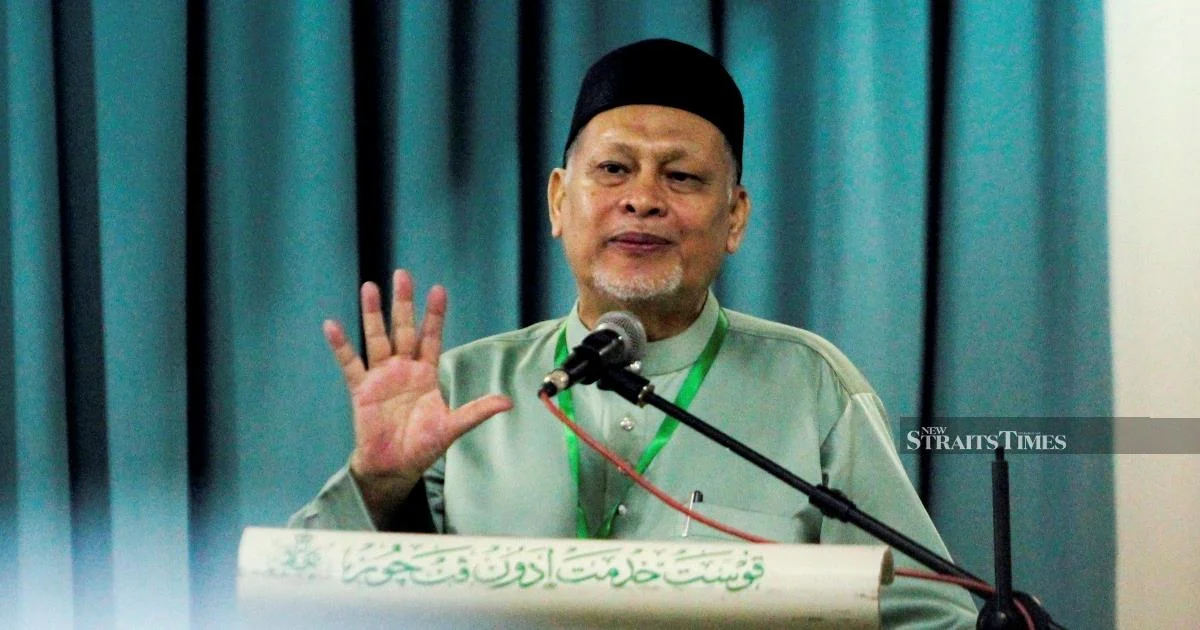
The Islamic party PAS has pushed back against what it characterises as a precipitous move by Tan Sri Muhyiddin Yassin, leader of Bersatu and Perikatan Nasional, to commit the coalition to using the PN logo across the Johor and Negri Sembilan state elections without apparent coordination with other alliance partners. PAS leaders expressed displeasure at what they view as a unilateral step, signalling deeper cracks in coalition decision-making processes that could undermine unified electoral strategy ahead of crucial regional contests.
The timing of Muhyiddin's declaration has drawn particular scrutiny within PAS ranks, which holds considerable electoral influence in both states. By announcing such a significant strategic choice without securing buy-in from coalition allies, the Bersatu chairman has created an uncomfortable position for parties that must now either fall in line or appear disunited during a critical electoral window. The move suggests either miscalculation or an assertion of dominance that risks fracturing the already fragile alliance infrastructure.
For Malaysia's coalition politics, this spat highlights the persistent tension between Perikatan Nasional's nominal structure and its operational reality. While the three-component framework theoretically operates on consensus, power dynamics within the bloc have shifted significantly since the coalition was formally established. Bersatu's position has become increasingly assertive, particularly following its role in various government formations and state administration arrangements.
The Johor and Negri Sembilan elections assume outsized importance in the Malaysian political calculus. Johor, home to over four million people and one of the federation's economic engines, remains a critical battleground. Negri Sembilan's election, though smaller in scale, holds symbolic weight as part of the broader assessment of coalition strength. Both contests will serve as bellwethers for national sentiment ahead of potential federal-level developments, making internal coalition cohesion essential.
PAS's objection must be understood within the context of its relationship with Bersatu. Historically, PAS has served as the electoral locomotive for Perikatan Nasional, particularly in Peninsular Malaysia's heartland constituencies where the party enjoys deep organisational roots and voter loyalty. The Islamic party's reservations suggest it may be seeking assurances about allocation of candidacies, campaign resource distribution, or strategic positioning ahead of these elections rather than making a principled stand against the PN logo per se.
The broader implications extend to voter messaging and brand perception. Each coalition component brings distinct voter demographics and geographic strengths to electoral contests. By attempting to enforce uniform branding across all contestants, Bersatu risks eroding the particularised appeal that individual parties leverage within their respective strongholds. Voters in certain constituencies may respond more favourably to PAS or other partner brands than to the pan-coalition identity, making flexible branding strategies sometimes more effective than one-size-fits-all approaches.
This disagreement also reflects deeper anxieties within Perikatan Nasional about its overall cohesion and durability. Unlike Barisan Nasional, which developed over decades with entrenched institutional mechanisms for managing coalition tensions, Perikatan Nasional remains a relatively recent construct with still-evolving protocols for conflict resolution. The absence of well-established procedures for handling such disputes may exacerbate disagreements that in a more mature coalition structure might be resolved through established channels.
For Malaysian observers, the episode underscores how elite-level decision-making within political coalitions often proceeds without the transparent deliberation that democratic norms might suggest. Muhyiddin's announcement appears to have circumvented normal consultative processes, suggesting either that no such protocols exist or that he believed his position warranted unilateral action. Either scenario points to governance challenges within the coalition that extend beyond mere electoral optics.
The Kelantan-based PAS leadership, speaking from Kota Baru, signalled its desire for more collegial decision-making processes going forward. The party's critique essentially constitutes a call for restoration of proper coalition hierarchy and consultation procedures, implicitly questioning whether Bersatu's recent assertiveness has overreached acceptable bounds within the partnership. This territorial statement from PAS's heartland carries additional weight, reminding other coalition participants that the Islamist party remains a pivotal force whose cooperation cannot be taken for granted.
Looking ahead, this skirmish will likely shape how both Johor and Negri Sembilan campaigns unfold. Should PAS remain genuinely aggrieved, it could potentially withhold organisational energy or candidate recruitment enthusiasm that these elections require. Conversely, the parties may quickly reach behind-the-scenes compromises that become public only through adjusted campaign materials or candidacy distributions that reflect a negotiated settlement.
The unresolved nature of this disagreement also matters for Malaysia's broader political trajectory. As Perikatan Nasional positions itself as a potential governing alternative to Pakatan Harapan, its internal management of coalition affairs signals to voters and observers whether this alliance possesses the institutional maturity and collaborative discipline necessary to govern effectively. Ongoing public disagreements over procedural matters suggest governance challenges that extend beyond electoral strategy into the realm of administrative competence and coalition management.