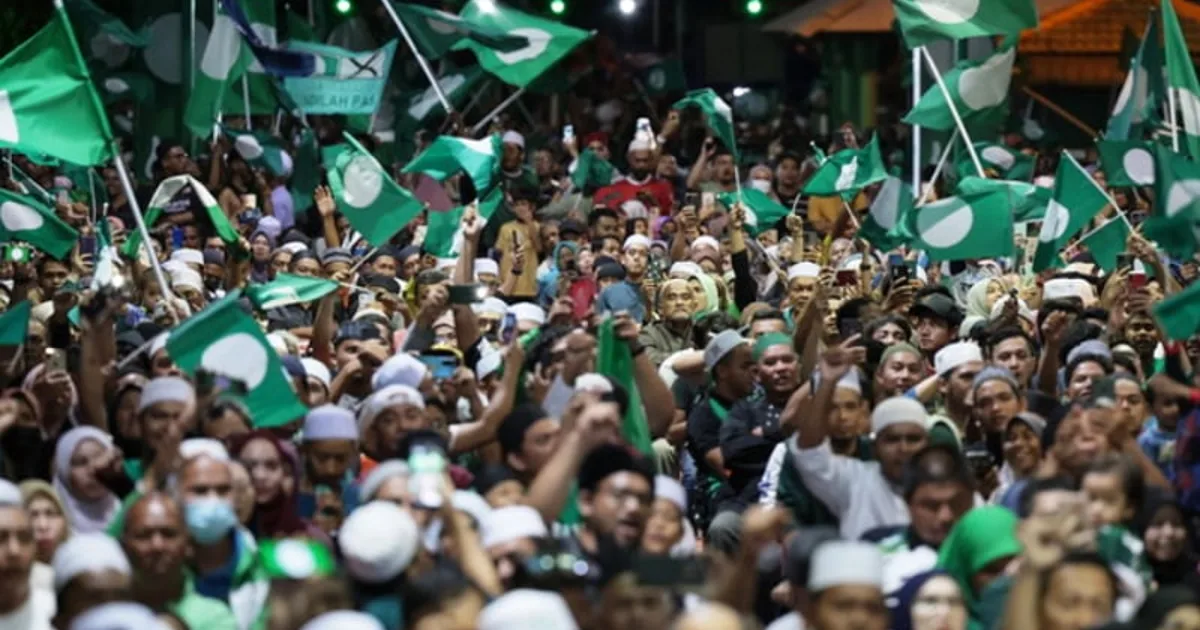
The Islamic party PAS has made a calculated move to consolidate the Perikatan Nasional (PN) electoral strategy by withdrawing its campaign machinery from parliamentary and state assembly constituencies where its coalition partner Bersatu is contesting. This reallocation of resources signals a deeper coordination within the opposition alliance, directing PAS election apparatus toward seats where the party itself and other PN component parties are competing instead.
Such tactical repositioning reflects the maturation of PN as a cohesive political bloc, moving beyond the fragmentation that has historically plagued opposition alliances in Malaysia. By concentrating organisational resources where PAS has direct electoral stakes, the party aims to maximise the coalition's overall seat wins while avoiding the wasteful duplication that occurs when multiple allies compete in identical constituencies. This approach demonstrates a pragmatic understanding of first-past-the-post electoral mechanics, where a divided opposition vote hands victories to stronger competitors.
The decision holds particular significance for Malaysian electoral politics given the fractious nature of opposition coalitions. Where the Democratic Action Party (DAP), Pakatan Harapan (PH), and PN have competed simultaneously in previous elections, the opposition vote has been systematically split, allowing ruling coalition candidates to secure seats with minority support. PAS's withdrawal from Bersatu-contested seats represents an attempt to reverse this pattern, creating clearer electoral lanes for PN components.
Bersatu, the relatively newer party within the Perikatan structure, has emerged as a significant political force since 2018. The party's leadership, previously aligned with the United Malays National Organisation (UMNO), brought considerable organisational heft when joining PN. By concentrating resources in seats where Bersatu competes, PAS implicitly acknowledges its coalition partner's competitive advantage in specific constituencies while building its own electoral strength elsewhere. This division of labour suggests sophisticated internal discussions about seat allocation and strategic positioning.
The reallocation also underscores the delicate internal balance within Perikatan Nasional, which encompasses PAS, Bersatu, and numerous smaller parties and independent politicians. Each component requires sufficient electoral victories to justify continued membership in the coalition and maintain leadership credibility among party members. When PAS redirects resources toward its own strongholds and toward constituencies where other PN allies contest, it preserves the electoral prospects of those smaller partners who might otherwise be overwhelmed by larger parties.
For Malaysian voters and political observers, this development offers insight into how opposition coalitions function behind public rhetoric. The formal announcement of such tactical withdrawals is relatively rare, as parties typically downplay coordination to maintain an appearance of independent vigour. PAS's explicit repositioning therefore suggests either significant confidence in PN's electoral prospects or acknowledgment that internal coordination no longer requires dissimulation. Alternatively, the party may be signalling to its base that PN is sufficiently coherent to merit support as an alternative government.
The implications for Bersatu are similarly noteworthy. The party benefits directly from PAS's withdrawal, facing reduced intra-coalition competition in constituencies where it has chosen to contest. This advantage becomes particularly valuable in marginal seats where PAS supporters might have split the opposition vote. Conversely, Bersatu's absence from seats where PAS competes creates space for the Islamic party to mobilise its traditional voter base without internal coalition fragmentation.
Regionally, this arrangement contributes to the broader pattern of opposition consolidation across Southeast Asia. Thailand, Indonesia, and the Philippines have witnessed similar efforts by opposition blocs to coordinate candidate placement and resource allocation. While such coordination does not automatically guarantee electoral success—governing coalitions often command state resources and media advantages—strategic vote splitting remains among the most effective tools available to ruling parties seeking to maintain power despite declining overall support.
For other PN component parties, PAS's decision carries mixed signals. Smaller parties benefit from the reduced competition, with electoral resources more likely to be concentrated where their candidates stand. However, the implicit hierarchy revealed by such arrangements—where larger parties like PAS strategically position themselves to maximise returns—may frustrate smaller coalition members who lack equivalent organisational capacity. This tension between coalition unity and individual party advancement will likely shape PN's internal dynamics throughout the electoral cycle.
The Malaysian electoral landscape has been characterised by fluid alliances and frequent reconfiguration since 2018. The Perikatan Nasional coalition itself is a relatively recent construction, formed partly as a reaction to developments within the Pakatan Harapan government and partly reflecting genuine ideological and strategic realignments. PAS's willingness to subordinate its campaign machinery in certain constituencies suggests a degree of commitment to PN's success as a unified coalition, though whether this coordination survives post-election bargaining remains uncertain.
Looking forward, this arrangement will serve as a test case for opposition coalition discipline in Malaysia. If PAS maintains its commitment to the division of labour and other PN components reciprocate, the coalition could present a substantially more formidable challenge to the governing alliance than previous opposition efforts. Conversely, if parties revert to independent strategies once campaigning intensifies, the strategic withdrawal of resources will have accomplished little beyond providing fodder for internal recriminations.
Ultimately, PAS's repositioning of election machinery reflects the ongoing evolution of Malaysian opposition politics, where ballot-box mathematics increasingly shapes coalition behaviour. Whether this arrangement enhances PN's competitive position will become apparent only when results are tallied, but the decision itself reveals how sophisticated contemporary Malaysian political strategy has become, with parties carefully calculating resource allocation based on competitive advantage and coalition dynamics.

